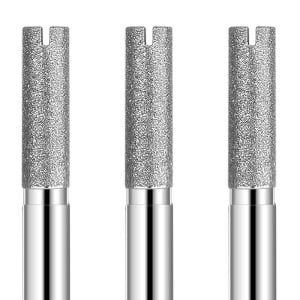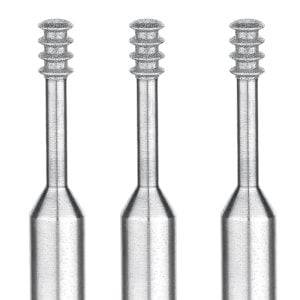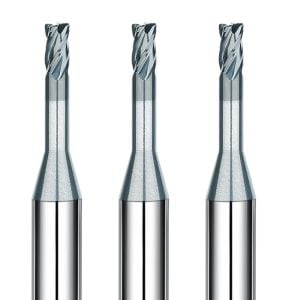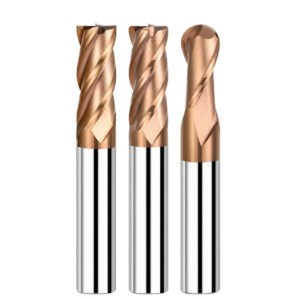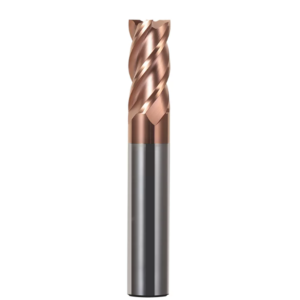
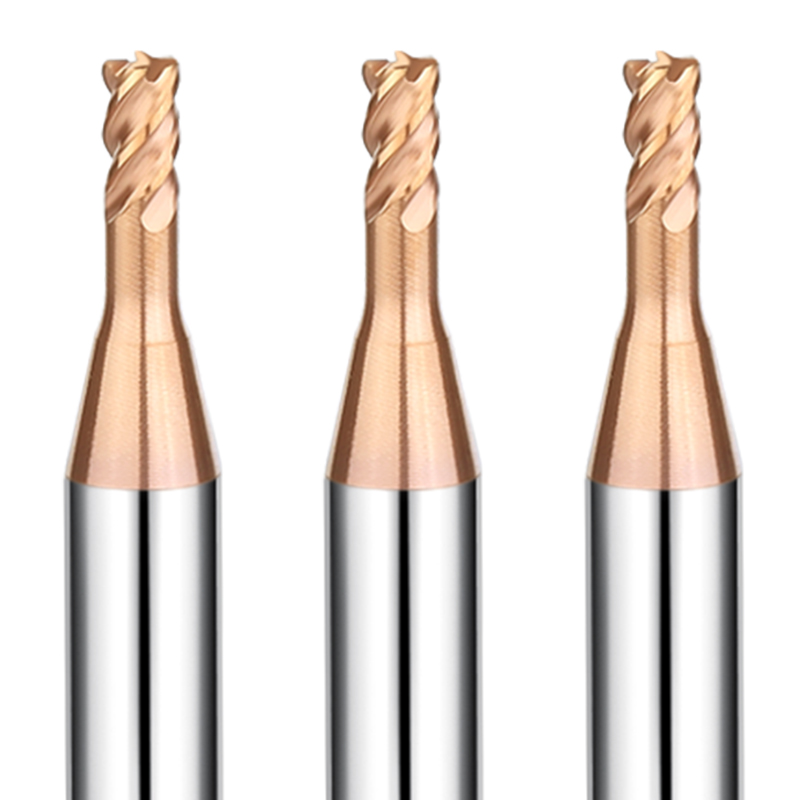
To be honest, whenever I chat with seasoned machining veterans in the US or Europe—folks who have been at the trade for thirty years—the question I get isn’t about price. It’s usually: “When I’m cutting HRC65 mold steel, will your tool tip survive that critical first hour?”
As an engineer who spent 15 years cutting teeth on the shop floor before leading the technical outreach for a carbide end mill manufacturer, I understand that skepticism. Trust in this industry is earned in microns and minutes, not in marketing brochures.
Just last month, we took an urgent call from a client in Detroit. They were using a “big name” brand to finish a set of precision die-casting molds. During the final pass, the tool lost its hot hardness. The resulting micro-chipping scrapped a workpiece worth tens of thousands of dollars. It wasn’t just the money; it was a catastrophic hit to their delivery schedule.
In project after project, we see the same thing: shops have great machines, but they lack end mill manufacturers who understand the “why” behind the geometry. We don’t just grind carbide into a shape. We use a 0.2μm ultra-fine substrate and precisely controlled liquid honing after coating. This ensures that every HRC65 end mill we ship maintains a cutting-edge consistency within 3 microns.
We aren’t here to be a “cheap alternative.” We leverage millions of data points from real-world tests to solve the problems you won’t find in a standard catalog—like harmonic vibration and chip evacuation at extreme hardness. After all, we’re all in this together. Nobody wants to be standing by a machine at 3:00 AM because a corner radius failed.
So, beyond the price tag, what is the technical “trump card” that allows high-end Chinese tools to hold their own in Western workshops?
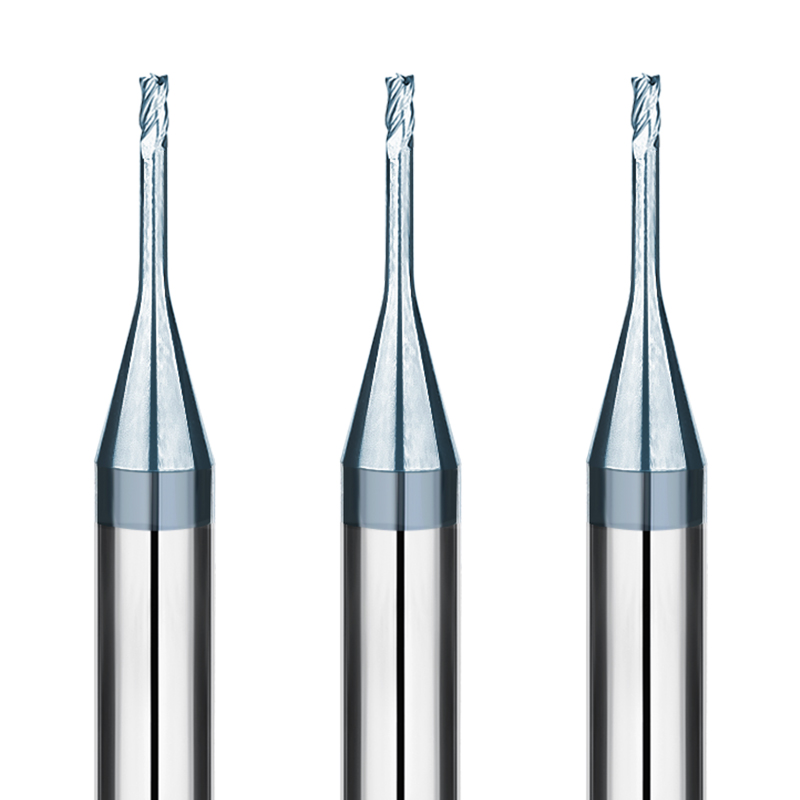
The Real Story Behind Our Long-Term Collaboration with Chinese Carbide End Mill Manufacturers
Over the last decade, our work has evolved from standard 45# steel to aerospace components and molds exceeding HRC60. Initially, our stance toward domestic carbide end mill manufacturers was cautious. Our first collaborations were “forced experiments” because the big Western brands couldn’t keep up with our lead times. But through that high-pressure environment, we discovered something critical: the sheer speed of iteration.
We realized we weren’t just buying tools; we were building a real-world database. If we saw an abnormal spindle load or a weird surface texture, we could talk directly to the factory’s technical team. They could adjust the chip-breaker geometry and have a solution within 24 hours. This responsiveness changed our entire view of the supply chain. It’s no longer a buyer-seller relationship; it’s an integrated technical partnership.
The Real Pain Points for Western Clients When Machining with End Mills for Hardened Steel
For B2B clients in North America, the biggest headache isn’t tool cost—it’s unpredictability. When using end mills for hardened steel in deep-cavity milling, thermal fatigue is the enemy. If that edge chips, a mold cavity worth more than the machine itself can be ruined in seconds. This “zero-tolerance” environment requires tools with exceptional hot hardness and impact toughness. Those aren’t just numbers on a spec sheet; they are the difference between a finished part and a pile of scrap.
Another frequent complaint is “tool deflection.” If the core rigidity is weak during side or plunge milling on hard materials, a deviation of just a few microns kills your accuracy. We hear it all the time: “The tool worked in the lab, but failed in the shop.” Real-world shops are full of vibrations and uneven cooling. Bridging that gap between lab data and shop reality is our primary focus.
Why We Began Focusing on Carbide End Mill Manufacturers
We concentrated our resources on leading carbide end mill manufacturers who master material science. In hard milling, grain size is everything. During our factory audits, we looked for manufacturers who maintain 0.003mm tolerances and invest heavily in raw stock and dynamic balancing. That obsessive attention to detail is what we demand for our own production.
Flexibility is the other factor. When you’re cutting HRC65, a standard off-the-shelf tool usually gives you only 70% of the potential efficiency. By working with a specialized carbide end mill manufacturer, we can “bespoke tailor” the tool. We might fine-tune the variable helix on a 4-flute design to match the specific rigidity of a client’s machine. That’s how you maintain high yield rates in a competitive market.
From Prototypes to Mass Production: The Real Differences in Stability Among End Mill Manufacturers
We’ve all seen it: the samples work great, but the mass order is a nightmare. For a professional carbide end mill manufacturer, the real “moat” isn’t making one great tool—it’s making the 1,000th tool identical to the first. This stability comes from rigorous control over grinding fluid temperature, wheel dressing frequency, and furnace pressure.
When we inspect a factory, we look at their automated compensation systems. If they still rely on manual spot-checks for mass production, they will eventually fail in the hardened steel market. An exceptional partner structures data at every stage. This repeatable consistency is why we can confidently guarantee quality to our Western clients.
Have you ever wondered how many intricate grinding details are hidden beneath a tool that runs for 100 hours without annealing? The answer is usually found in the consistency of the manufacturer’s process.
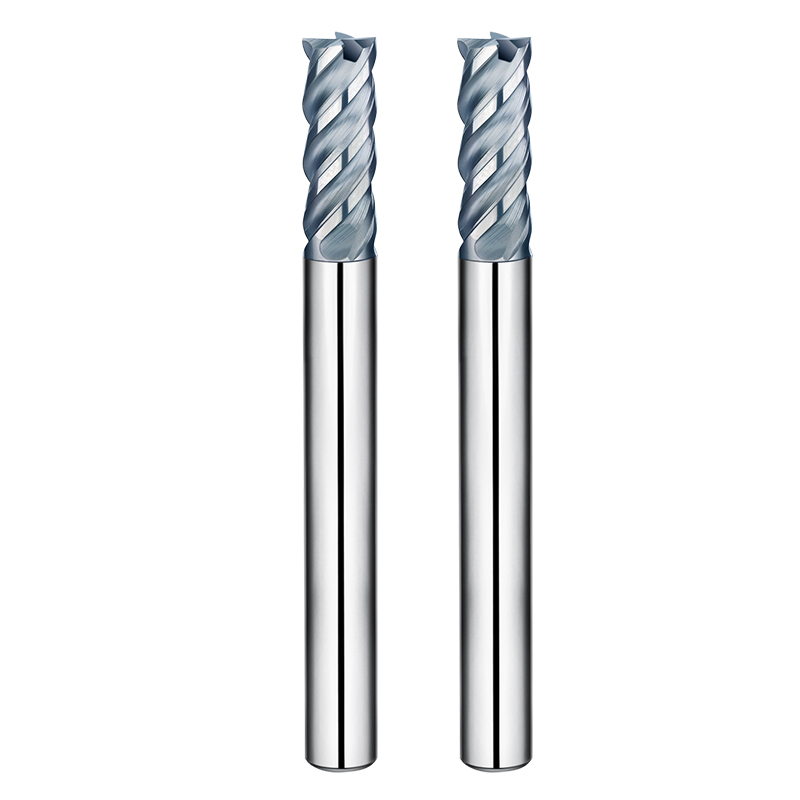
Our Criteria for Selecting Carbide End Mill Manufacturers for HRC65 Machining
In hard milling, many can grind a tool to be “aggressive,” but very few can make one “stable.” When you’re pushing into HRC65—materials at the absolute limit of machinability—factory size doesn’t matter. What matters is the manufacturer’s mastery of substrate microstructure. We’ve audited countless facilities; the elite ones implement total control over grain size. For these applications, we mandate a carbide grain size between 0.2μm and 0.4μm. This ultra-fine structure is the only way to maintain high hardness without losing fracture toughness.
Post-processing is our second non-negotiable. A top-tier carbide end mill manufacturer uses rigorous passivation and polishing before and after coating. Most premature edge chipping starts at microscopic serrations or due to excessive internal stress in the coating. We demand edge prep data under 500x magnification. If the edge doesn’t have a mirror-like finish and the coating doesn’t pass a scratch test, they don’t make our supplier list.
Tool Breakage Challenges in Mold Steel (HRC58–HRC65)
In finishing or corner-clearing, the “silent killer” isn’t gradual wear—it’s sudden, catastrophic failure. This is a nightmare in deep-cavity work with high L/D ratios. Even a tiny hitch in chip evacuation causes heat to spike instantly, annealing the tool or snapping it. We learned this the hard way on a cold-stamping die: a slightly cramped flute design caused “secondary chip welding.” The chips fused back to the tool under heat, destroying a workpiece worth six figures.
These failures usually point to a flawed balance between rake angle and core thickness. Excessive core thickness provides rigidity but chokes the chip space. A rake angle that is too positive makes the edge too weak for HRC60+ impacts. In the real world, you have to pre-calculate thermal shock resistance before you ever hit “Cycle Start.”
Real-World Edge Strength Across Different Carbide End Mill Manufacturers
We often say the cutting edge is the tool’s Achilles’ heel. When comparing carbide end mill manufacturers, we look at the precision of the corner radius (R-angle). If there is axial runout (TIR) during the grinding of that R-angle, only one or two flutes will actually do the work. This uneven loading leads to rapid fatigue, and you’ll see the edge collapse in less than 30 minutes, killing your dimensional accuracy.
Conversely, manufacturers who use reinforced edge designs show almost zero micro-chipping, even at HRC62. The secret is usually high-precision 5-axis grinding machines with in-process compensation. This ensures every flute is geometrically symmetric. That micron-level commitment is what separates a tool that survives extreme side-milling from one that fails.
How We Determine if HRC65 End Mills Are Ready for Mass Production
We use a “pragmatic” test for 24-hour, unattended production: spindle current stability. If the current fluctuates more than 5% during a 90-minute cycle, the coating or wear resistance is unstable. Mass production hates surprises. We need tools that maintain constant resistance over the tool’s life—not “lottery winners” that run for hours once but fail the next time.
We also analyze “wear predictability.” If a used HRC65 end mill shows uniform flank wear, it’s a candidate for mass production. But if we see “chipping” or “root fractures,” it’s out—no matter how fast it cuts. In a real shop, a controllable replacement cycle is worth far more than an unpredictable, high-speed burst.
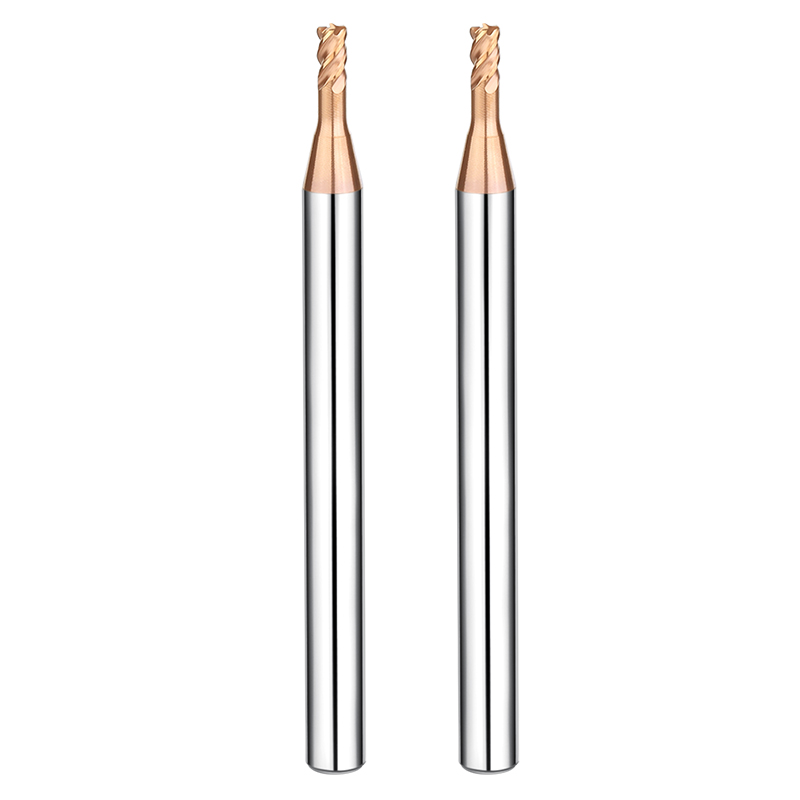
Selection Logic for End Mills for Hardened Steel: Results Over Parameters
In our shop, we don’t blindly follow the speeds and feeds in a catalog. When selecting end mills for hardened steel, we care about two things: dimensional consistency and surface integrity. On paper, high-speed parameters look great. But if the workpiece’s perpendicularity drifts by 5 microns after two hours because of “tool deflection,” those parameters are useless. We’ll take a “conservative” tool that holds tolerance over the entire cycle any day.
We call this “Results-Oriented Selection.” Look at your chips: they should be fine, uniform, and a consistent deep blue or purple. If they turn black or lose their shape, the tool is done. This field observation is more accurate than any theoretical lifespan on a website. It’s the ultimate filter for mass-production readiness.
Comparing Tool Lifespans in Continuous Hardened Steel Machining
The real divide between carbide end mill manufacturers shows up in the mid-to-late stages of a run. Some tools are “sprinters”—they look amazing for the first 30 minutes. But once the edge wears, friction spikes, and the coating spalls at the grain boundaries because it lacks thermal toughness. This leaves your production schedule in shambles and risks unexpected spindle downtime.
We prefer a gradual wear curve. A superior tool will show a uniform flank wear band after several hours of high-speed cutting, without any notching. This proves the bond between the substrate and the coating can handle extreme thermal loads. Predictable tool life is the goal; chasing high material removal rates (MRR) at the cost of stability is a losing game in an automated shop.
Disparities in Chip Evacuation and Thermal Stability
Chip evacuation isn’t just about the shape of the hole; it’s surface physics. Tools with ultra-mirror polished flutes outperform standard tools in dry cutting every time. In hard milling, the chips carry the heat. If the flutes aren’t smooth, chips stick to the edge, heat flows back into the tool, and you get thermal fatigue cracks.
Thermal stability shows the manufacturer’s “internal mastery.” We’ve seen tools that, after an hour, show increased radial runout simply because the substrate expanded unevenly. That minute expansion causes chatter marks on the part. Top-tier manufacturers optimize their alloy compositions to ensure the tool stays geometrically stable at high temperatures. This is what you pay for in a three-shift production cycle.
Selecting Manufacturers for Stable Supply Based on Test Results
A test cut should validate the absolute limits of a manufacturer’s process. We give potential carbide end mill manufacturers a “nightmare” workpiece: deep narrow slots, thin walls, and multiple radius transitions. They have to rough and finish with a single tool. Measuring the geometric tolerances of that final part tells us the tool’s true rigidity under complex loads.
Finally, we look at the used tools under a stereomicroscope. Is the wear even across all flutes? If only one side is worn, the manufacturer has a consistency problem or a grinding runout issue. This systematic screening is why our chosen carbide end mill manufacturer partners show almost zero variability over thousands of units. That’s how we keep our credibility with demanding clients in the US and Europe.
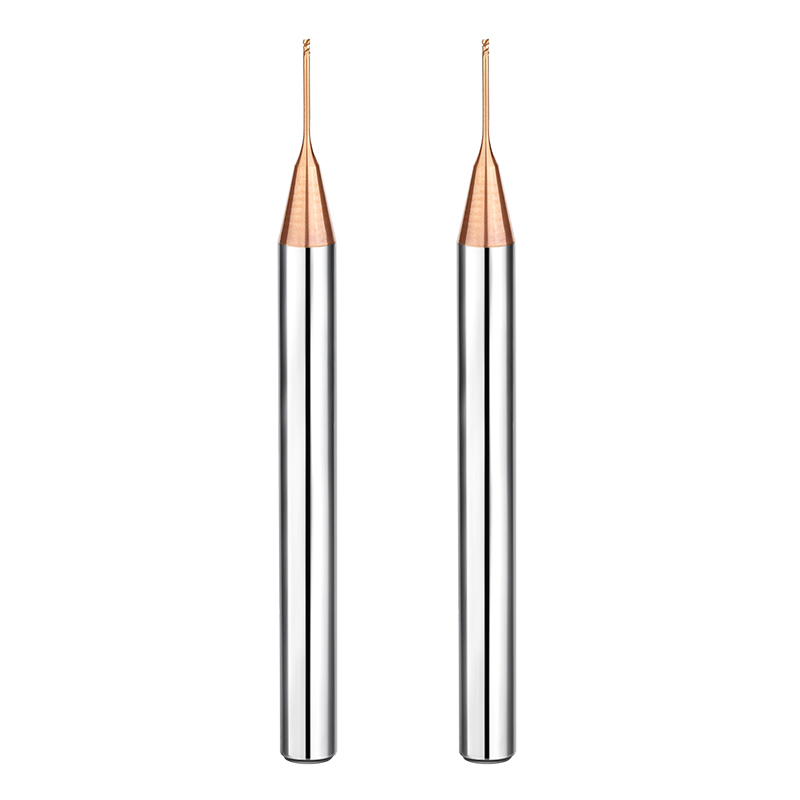
Consistency of Chinese Carbide End Mill Manufacturers in Mass Production
There is a massive technical gap between a single “hero tool” performing well and the stable output of ten thousand units. When we evaluate a carbide end mill manufacturer, our primary concern isn’t the first tool—it’s the 500th. In a high-volume shop, poor consistency forces operators to constantly adjust tool offsets. For Western clients running fully automated or “lights-out” shifts, this is an unacceptable cost.
We’ve shifted our audit focus from simple performance tests to Process Capability (Cpk) analysis. The elite Chinese manufacturers in the global supply chain have invested heavily in climate-controlled grinding rooms, automated wheel compensation, and inline laser metrology. This hardware, backed by rigorous SOPs, allows them to hold radial runout (TIR) and diameter tolerances within ±0.002mm across massive batches. This predictability is why we trust them with large-scale orders.
Solving Dimensional Drift in Multi-Batch Orders
Nothing is more frustrating for a field engineer than a tool from last month cutting at +0.005mm, while a new batch—using the same offsets—cuts at -0.01mm. This drift usually stems from two things: late grinding wheel compensation or slight hardness variations in the raw carbide rods. Even a few microns of error can ruin the fit-up of high-hardness mold components.
To stop these “invisible” fluctuations, we use a strict incoming inspection protocol. If a factory relies on manual micrometers instead of a fully automated CNC measuring center, they simply cannot maintain the consistency required for hardened steel. We only partner with end mill manufacturers who provide detailed batch inspection reports. We aren’t just buying a tool; we are buying a guaranteed production workflow.
Coating Stability: The Difference Between Mediocre and World-Class
Coating is the “body armor” of the tool, but in mass production, it is harder to control than the grind itself. We’ve seen tools that look identical in color but show completely different peeling patterns when cutting HRC60+ steel. This points to a failure in process control—usually vacuum levels, bias voltage, or pre-coating surface activation. Coating instability can cause a 30% swing in tool life between batches.
The best carbide end mill manufacturers treat coating like a science. They use post-coating polishing to remove microscopic “droplets,” which slashes the coefficient of friction. Our data shows that manufacturers with this level of control produce tools that perform the same in the humid summer as they do in the dry winter. That obsessive control over micro-parameters is what defines a top-tier supplier.
How We Mandate Batch Consistency Verification
We no longer settle for “golden samples.” For long-term agreements, we require a closed-loop “first-piece/last-piece” inspection system. We pick a benchmark scenario—like side-milling hardened steel at 5D depth—and require the manufacturer to run full-life tests on five random tools from every batch. We look for a high degree of overlap in their wear-data curves.
Traceability is also non-negotiable. We require every batch to be linked to a specific carbide heat number and coating furnace run. If a tool fails on a client’s machine, the manufacturer must be able to flag all related tools within two hours. This digital verification, from raw material to the finished edge, is the only way for “Made in China” tools to win in the high-end global market.
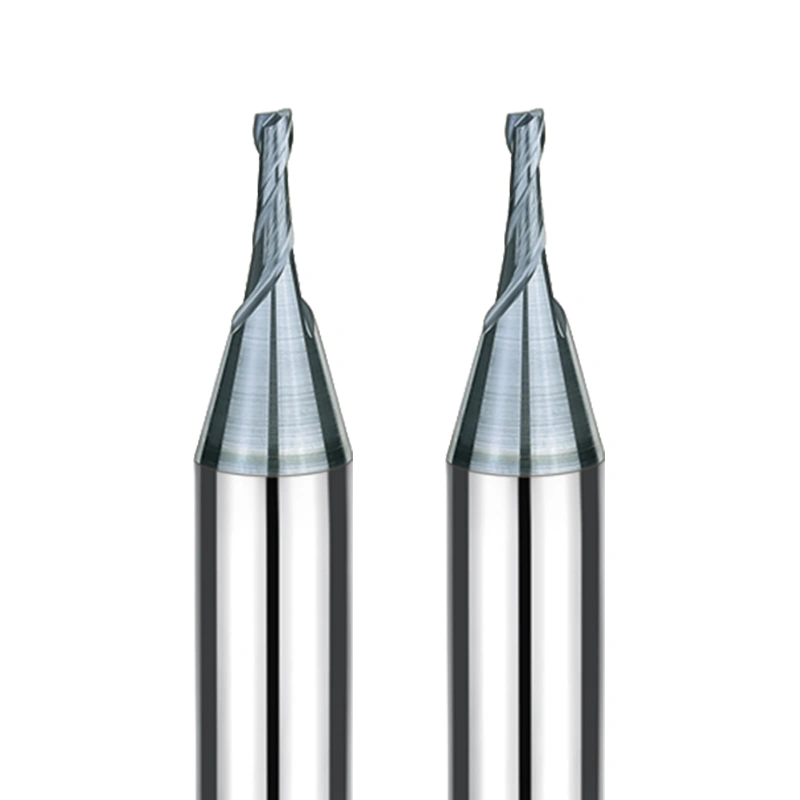
Evaluating Engineering Prowess Over Marketing Hype
I’ve learned to ignore the glossy brochures. To see the truth, you have to walk into the grinding shop and listen. When evaluating a carbide end mill manufacturer, look at how they handle “non-standard” problems. If you report a vibration issue and they just tell you to “slow down the feed,” they lack engineering depth. A real partner will analyze the tool holder’s clamping force, the overhang, and the micro-geometry of the edge.
True engineering isn’t just buying expensive machines; it’s about the software and the people running them. The best shops use custom software and inline measurement to hold 0.003mm TIR year after year. This mastery over the manufacturing process is far more valuable than a fancy marketing pitch.
Refining Tool Design Through Shop Floor Feedback
The best designs come from “worn-out” tools. We frequently bring used cutters back for analysis. If a client’s end mills for hardened steel are triggering overload alarms in corners, we don’t just blame the programmer. We look at the wear scars. Often, a 1-to-2 degree tweak in the differential helix angle is all it takes to kill that high-pitched harmonic chatter.
Design validity is proven at the spindle, not in a simulation. We analyze the color and curl of the chips at various depths. If the thermal discoloration is uniform, the rake-to-flank-wear ratio is in equilibrium. This feedback loop allows our tools to have a wider “Machining Window,” meaning they won’t snap if the operator deviates slightly from the recommended parameters.
Our Failure Analysis Process for Hardened Steel Tools
When a tool fails early, we do a “post-mortem” under 200x magnification. For end mills for hardened steel, we look at the crack trajectory. A transverse crack through the substrate usually means mechanical shock or thermal fatigue. Fish-scale spalling on the coating usually means the pre-treatment cleaning was poor. This quantitative analysis tells us if the fault lies with the operator or the tool itself.
We also use SEM/EDS to look for chemical diffusion or material adhesion on the fracture. This level of failure analysis is how we build authority. By using scientific evidence, we can tell a client: “If you see this specific pitting at HRC60, check your coolant concentration or your toolpath strategy.” That’s how you earn an engineer’s trust.
HRC65 Tool Performance Across Different Machine Rigidities
Marketing for HRC65 end mills often assumes everyone is using a $500k high-speed machining center. Reality is messier. A tool that runs perfectly on a linear-motor machine might fail on a gear-driven spindle. On rigid machines, we go aggressive with negative rake angles. On older machines or long overhangs, we have to trade some wear resistance for a “freer” cutting action to avoid micro-vibration.
A mature tool design has a “reserve of toughness” to handle non-ideal conditions. When evaluating a carbide end mill manufacturer, ask how their tools perform in “sub-optimal” setups. Laboratory data is an illusion; the oil-stained, vibrating reality of a real workshop is where the truth comes out. On your line, is it the machine limiting the tool, or is the tool’s rigidity making up for the machine?
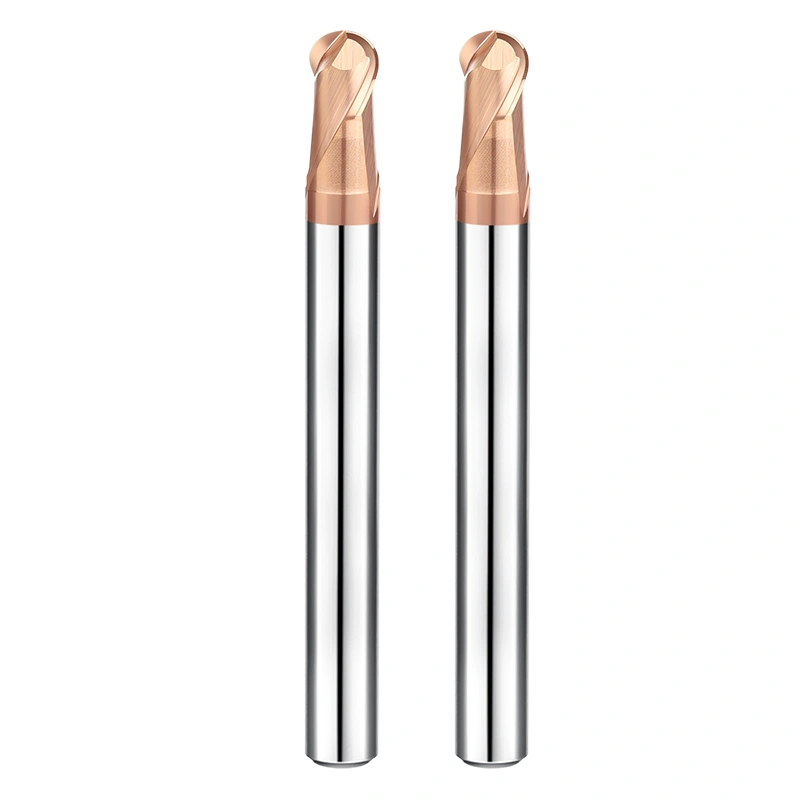
Why We Partner with Specific Chinese Carbide End Mill Manufacturers
After watching countless tools fail when hitting steel over HRC60, we’ve learned that trust isn’t built on certificates. It’s built on the shop floor across thousands of cycles. We chose to partner with specific carbide end mill manufacturers in China because they moved past the “standard catalog” mentality. They were willing to dive into our most demanding environments and iterate fast based on our feedback.
In hard milling, a tiny design flaw becomes a disaster very quickly. If you are finishing high-value molds with zero room for error, you need a manufacturer that speaks the language of your machine tools. Our partners don’t just have high-end grinding hardware; they understand how heat-treatment fluctuations change the stress at the cutting edge. This mastery allows us to promise our Western clients exactly what they need: No chipping. No runout.
Proven Results: Reducing Tool Change Frequency
In one of our major export projects, we had to cut hardened mold blanks for 48 hours straight. The only way to protect our margins was to reduce tool changes. By working with our carbide end mill manufacturer, we optimized the relief angles and edge polishing. The result? Our tool life jumped from four hours to over twelve.
This didn’t just save time; it eliminated the positioning errors that happen during frequent tool setting and boosted our spindle utilization by 15%. If you are still paying staff to babysit machines at night because tool life is inconsistent, you need to re-evaluate your tool’s thermal shock resistance. In a real production environment, a predictable wear curve is worth more than a “hero” tool that fails without warning.
Case Study: Solving Harmonic Chatter in Thin-Walled HRC62 Parts
We once faced a nightmare task: a thin-walled component at HRC62. Every standard tool we tried created massive chatter. Instead of giving up, we sat down with the manufacturer’s engineering team. We analyzed the resonant frequency of the setup and designed a custom tool with a variable helix and asymmetrical geometry. That “scalpel-like” approach solved the vibration and saved the surface finish.
Engineering breakthroughs happen in the details. If you are struggling with non-standard materials or extreme deep-cavity work, share your data with your manufacturer. If they can’t modify geometry to solve a physical conflict, they aren’t the right partner. True progress comes from engineers talking to engineers.
The Impact of Engineering Support on Your Bottom Line
In B2B, bad technical support is a bigger headache than bad tool quality. Our end mill manufacturers provide failure analysis reports and parameter adjustments within 24 hours. This agility is vital when a client in the US or Europe changes a spec mid-stream. When your line stops, a fast expert solution is worth ten times the cost of the tool itself.
If your supplier is slow to respond, they are a bottleneck to your growth. Supply chain agility is a technical strength. If you are hitting a wall with HRC65 steel or powder metallurgy, or if you aren’t sure about your current toolpath strategy, let’s talk. Bring your drawings or your machining videos. Often, a quick peer-to-peer exchange is the fastest way to find the solution you’ve been missing.