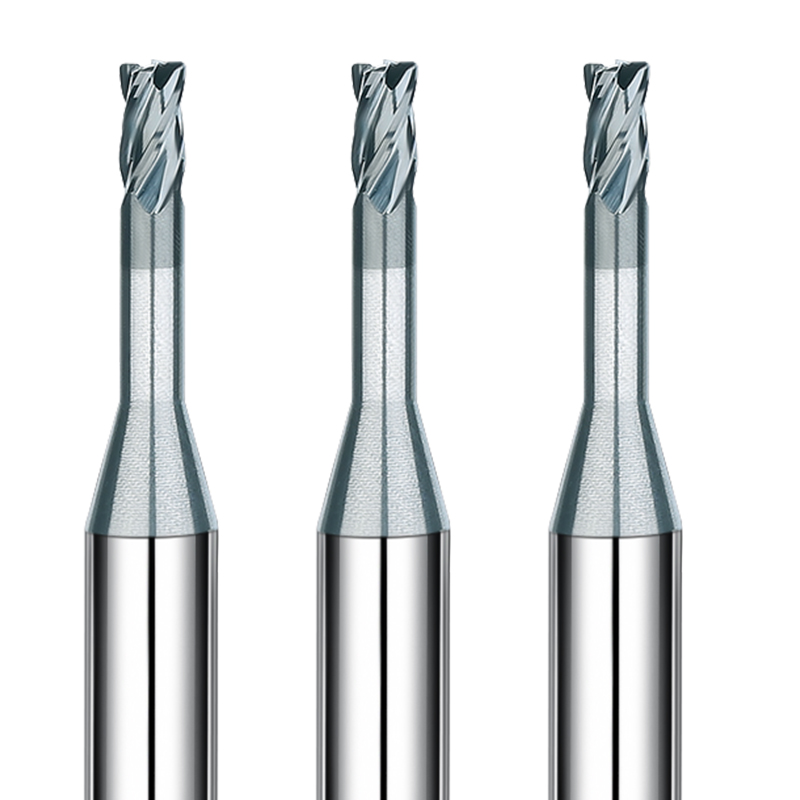
Exceptional Wear Resistance and Thermal Stability for High-Density Materials
SAMHO’s specialized end mills for Tungsten Copper are designed to tackle the unique challenges of machining W-Cu composites (W60-90). These materials combine the extreme hardness of tungsten with the high thermal conductivity of copper, often leading to rapid tool wear and material adhesion. By utilizing sub-micron carbide substrates and advanced multi-layer coatings, our tools deliver superior chipping protection and dimensional accuracy, making them the ideal choice for mold electrodes, aerospace components, and high-performance electronics.
Core Technical Features
Advanced Coating Technology (HG/HT/HB/HD Series)
Extreme Hardness & Oxidation Resistance: Our range of coatings, including the HD Nano Diamond (10,000 HV) and HG AlTiSi+N, provides a formidable barrier against the abrasive tungsten particles. These coatings resist oxidation at temperatures up to 1300°C, ensuring the cutting edge stays sharp during high-speed engagement.
Superior Thermal Conductivity
Rapid Heat Dissipation: Designed to complement the thermal properties of tungsten copper, our carbide substrate quickly dissipates cutting heat away from the tool-workpiece interface. This prevents localized overheating, ensuring consistent tool life and preserving the surface integrity of high-precision parts.
Optimized Cutting Geometry
Reduced Adhesion & Chipping Protection: The specialized rake and relief angles are fine-tuned to shear through ductile copper while resisting the impact of hard tungsten. This geometry minimizes the risk of material “welding” to the tool and protects the cutting edge from premature micro-chipping.
Micron-Level Precision Control
Strict Tolerance for Demanding Industries: Each end mill undergoes rigorous inspection, with outer diameter and R-accuracy measurements clearly labeled. This level of precision meets the strict requirements of the electronics and aerospace sectors, where tight tolerances are non-negotiable.
Tungsten Copper Tooling Coating Matrix
| Coating Name |
Hardness (HV) |
Friction Coeff. |
Oxidation Temp (°C) |
Characteristics |
| HG AlTiSi+N |
3700 |
0.4 |
1300 |
Ultra-high hardness; super oxidation resistance. |
| HT AlTiSi+N |
3700 |
0.36 |
1200 |
High density; ideal for deep cavity machining. |
| HB AlTiCr+N |
3500 |
0.3 |
1100 |
Ultra-low oxidation; low friction for smoother flow. |
| HD Nano Diamond |
10000 |
< 0.1 |
600 |
Maximum wear resistance for highly abrasive W-Cu. |
Product Series & Configurations
Square End Mills
-
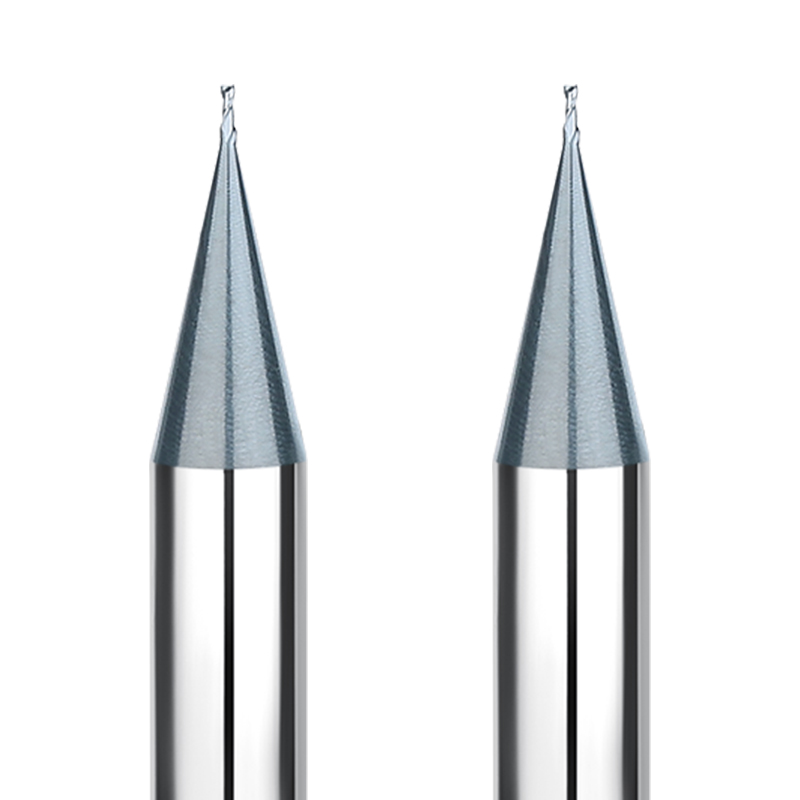
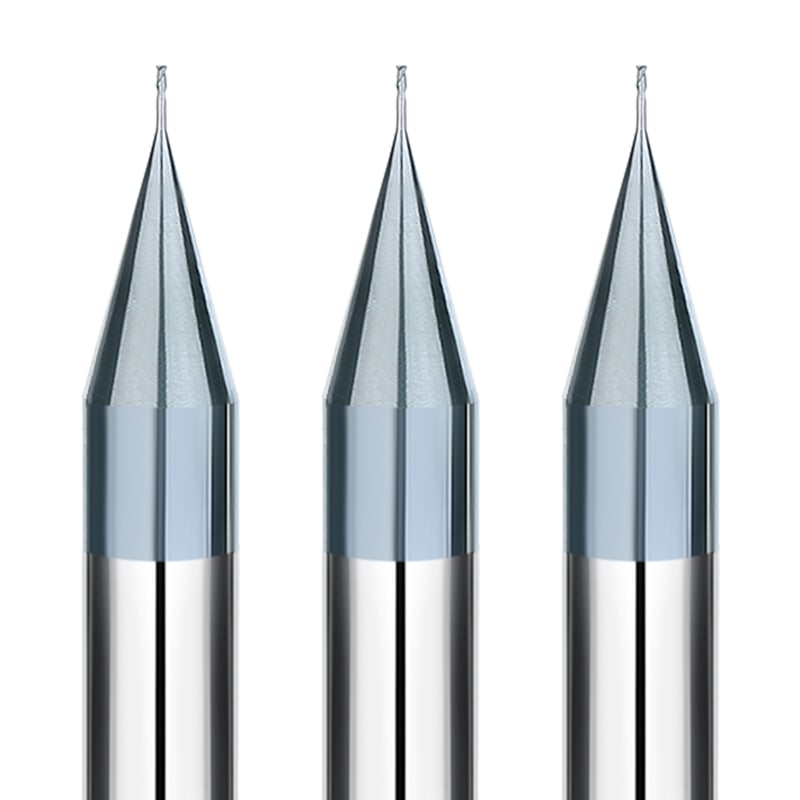
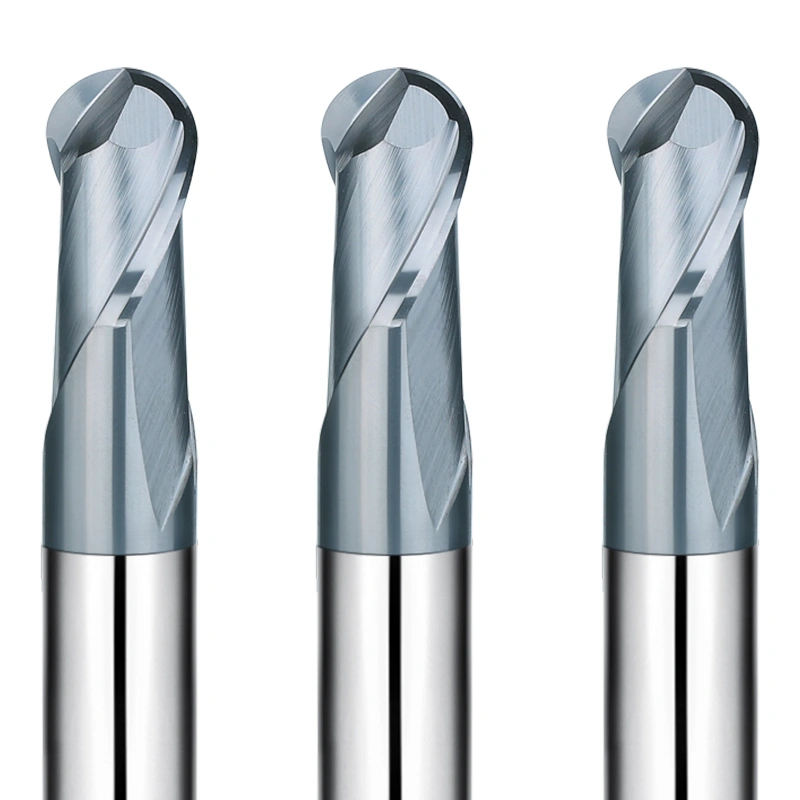
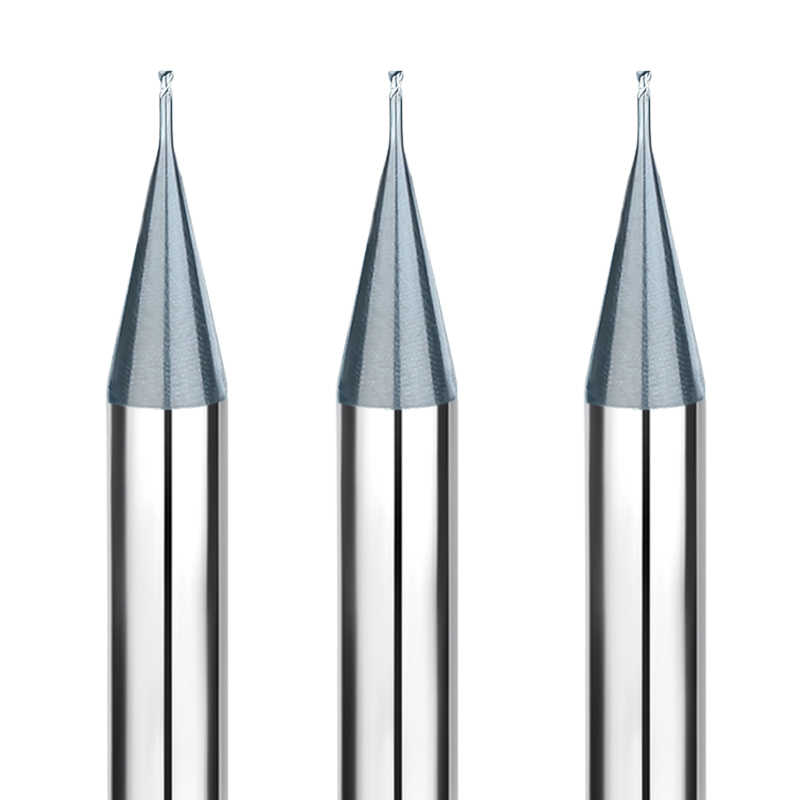
2-Flute Flat (Φ0.1-6): Ideal for slotting and micro-machining with maximum chip space.
-
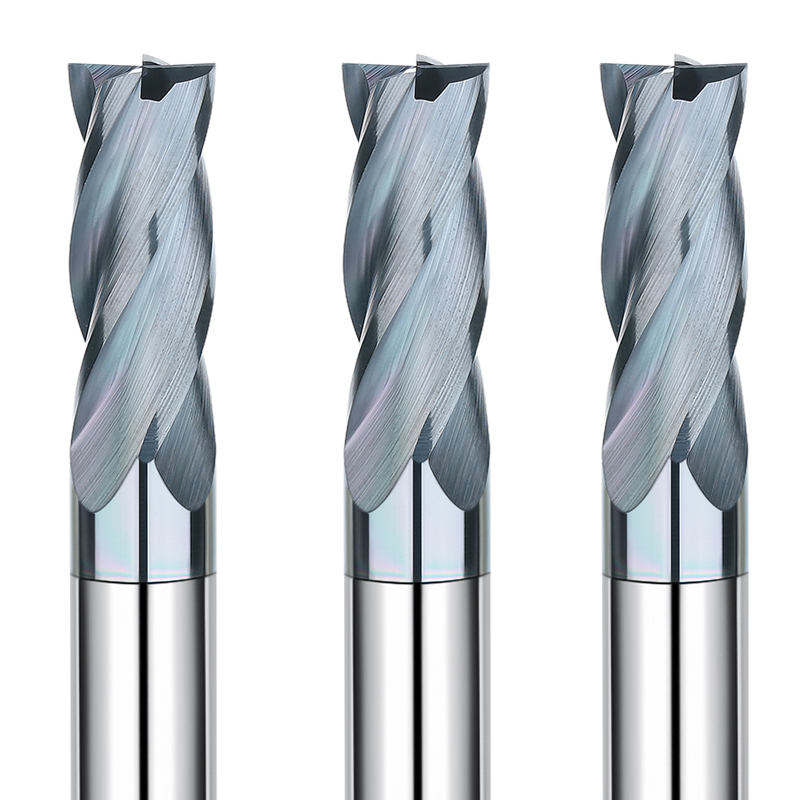
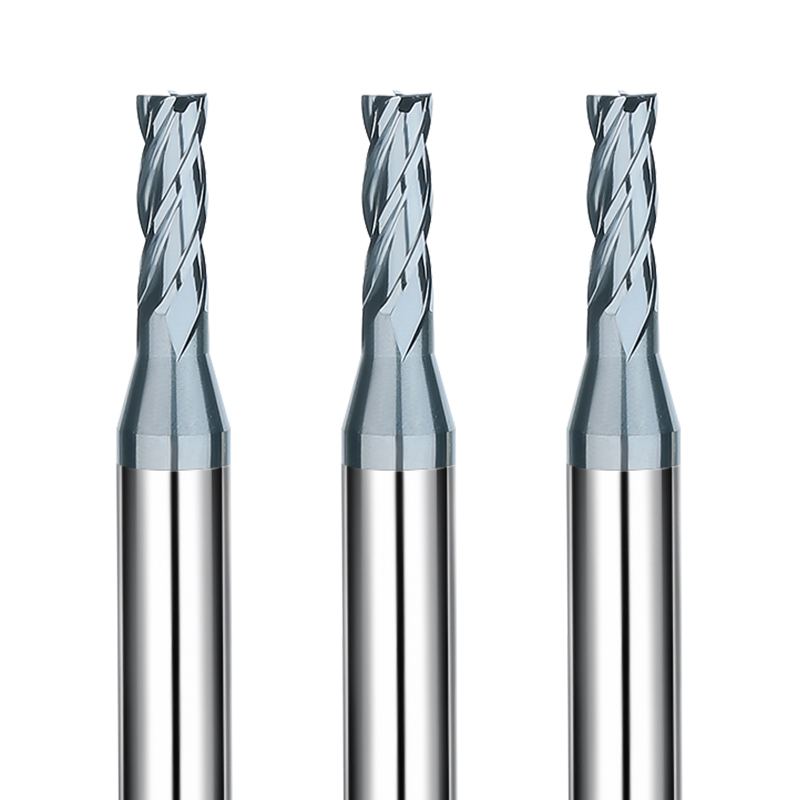
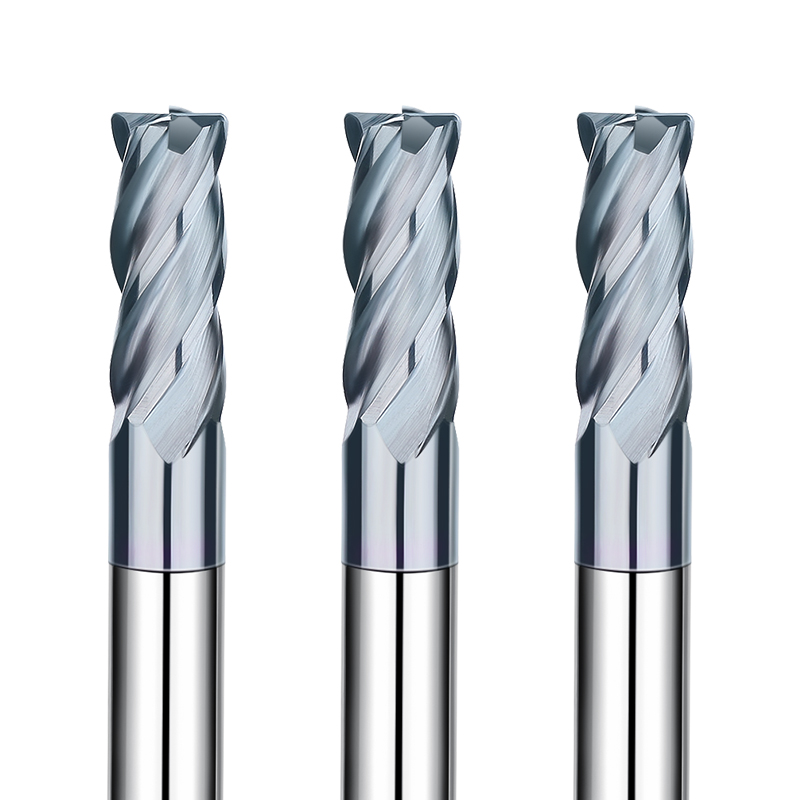
4-Flute Flat (Φ1-12): Optimized for high-speed finishing and structural rigidity.
-
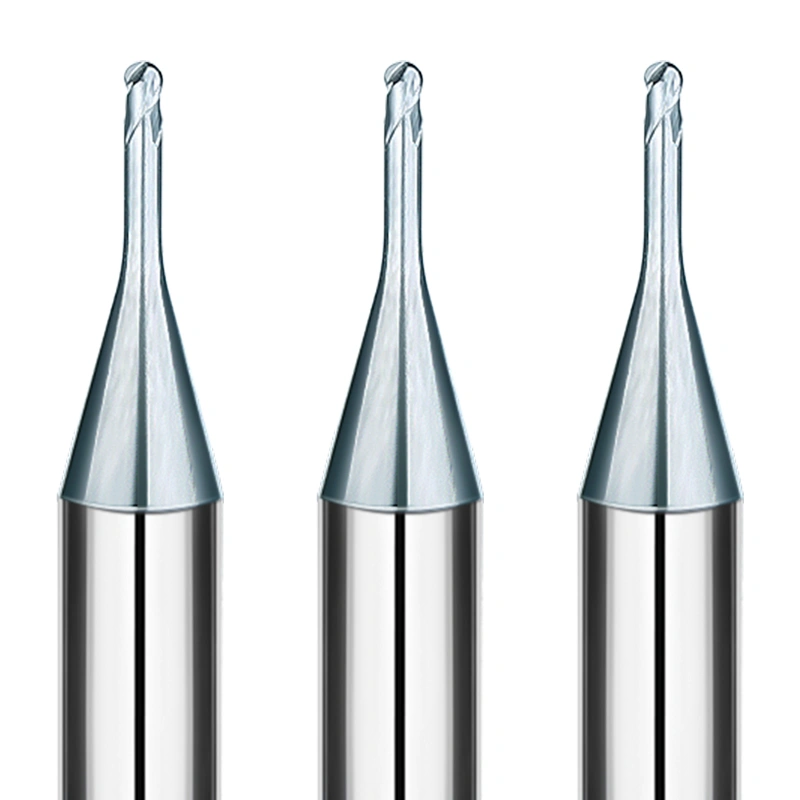
Long Neck Series: Specifically designed for reaching into deep mold cavities without deflection.
Ball Nose & Corner Radius
-
2-Flute Ball Nose (R0.1-R6): Perfect for 3D contouring and complex electrode surfaces.
-
Corner Radius Series: Provides edge protection to prevent chipping on the workpiece corners while allowing high feed rates.
FAQ: Tungsten Copper Machining & Maintenance
Q1: Why is Tungsten Copper considered difficult to machine?
Tungsten Copper is a “pseudo-alloy” consisting of hard tungsten particles in a soft copper matrix. The tungsten acts as an abrasive that wears down standard tools, while the copper is ductile and prone to sticking, leading to built-up edges and tool breakage.
Q2: Which coating is best for high-tungsten content (e.g., W80 or W90)?
For higher tungsten content, we recommend the HD Nano Diamond or HG AlTiSi+N coatings. The extreme hardness (up to 10,000 HV) is essential to resist the abrasive wear caused by the dense tungsten particles.
Q3: How does the number of flutes affect W-Cu milling?
A 2-flute design is generally preferred for roughing and slotting to allow for better chip evacuation and thermal control. A 4-flute design is excellent for finishing operations where surface smoothness and higher feed rates are required.
Q4: Can I use standard carbide end mills for Tungsten Copper?
While possible for short runs, standard tools will wear out extremely quickly. Our specialized W-Cu series is engineered with specific substrates and geometries that extend tool life by 3-5 times compared to general-purpose carbide tools.
Q5: What are the ideal cutting conditions for W-Cu?
High-speed machining with relatively light feed rates is generally effective. However, constant chip evacuation (via air blast or MQL) is critical to prevent hard tungsten chips from being re-cut, which would rapidly damage the tool.
Q6: Does SAMHO offer custom tools for specific electrode designs?
Yes. We undertake high-precision tool customization, including specialized neck lengths, diameters, and specific R-accuracies to fit your unique mold or electronics manufacturing requirements.
Q7: How do I prevent chipping when machining thin-walled W-Cu parts?
Choose a tool with a Corner Radius design. The radiused edge distributes cutting forces more evenly, significantly reducing the impact on both the tool edge and the delicate workpiece wall.
Q8: What is the role of the Cobalt binder in these end mills?
The cobalt binder provides the “toughness” that holds the hard carbide together. Our sub-micron carbide uses an optimized cobalt ratio to ensure the tool isn’t so brittle that it snaps under the impact of tungsten particles.
Q9: How do I identify the exact accuracy of the tool I received?
Every precision-version SAMHO tool has its measured outer diameter and accuracy R-value provided directly on the label, ensuring you have the data needed for high-precision CNC setups.
Q10: Is flood coolant or air cooling better for Tungsten Copper?
MQL (Minimum Quantity Lubrication) or high-pressure air blast is often preferred. Because tungsten copper dissipates heat so well, air cooling is often sufficient to prevent thermal shock while ensuring chips are cleared immediately from the cutting path.