Engineered for Abrasive Graphite and Ceramic Machining with Advanced Diamond Coating
SAMHO’s graphite end mills are the definitive solution for the highly abrasive nature of graphite and ceramic materials. By integrating premium tool substrates with state-of-the-art Diamond Coating technology, these tools maintain a razor-sharp cutting edge over significantly longer machining cycles. In continuous production environments, our specific models have been verified to achieve a service life of up to 18 hours, drastically reducing tool change frequency and lowering the total cost-per-part in mold and electrode manufacturing.
Core Technical Features
High-Quality Diamond Coating Extreme Wear Resistance: The diamond coating on these end mills provides a surface hardness second only to natural diamond. This creates a formidable barrier against the abrasive “sandpaper” effect of graphite, preventing edge rounding and ensuring that the tool maintains its dimensions throughout long-term stable machining.
Extremely Low Friction Coefficient Smoother Cutting & Reduced Heat: The ultra-smooth diamond surface offers an exceptionally low friction coefficient. This minimizes cutting resistance and heat buildup during high-speed milling, which is essential for preventing localized thermal expansion and ensuring a superior surface finish on delicate graphite electrodes.
Exceptional Thermal Conductivity Rapid Heat Dissipation & Temperature Control: Graphite end mills are designed to dissipate heat almost instantaneously. By preventing localized temperature spikes in both the tool and the workpiece, these mills ensure a stable machining process and prevent surface defects or micro-cracking caused by overheating.
Optimized Tool Geometry Precision-Engineered for Brittle Materials: Designed specifically for the brittle characteristics of graphite, our milling cutters feature specialized rake and relief angles that effectively reduce the risk of material chipping and tool breakage. This results in high-precision finished surfaces that meet the strictest requirements for mold manufacturing.
Graphite End Mill Product Series
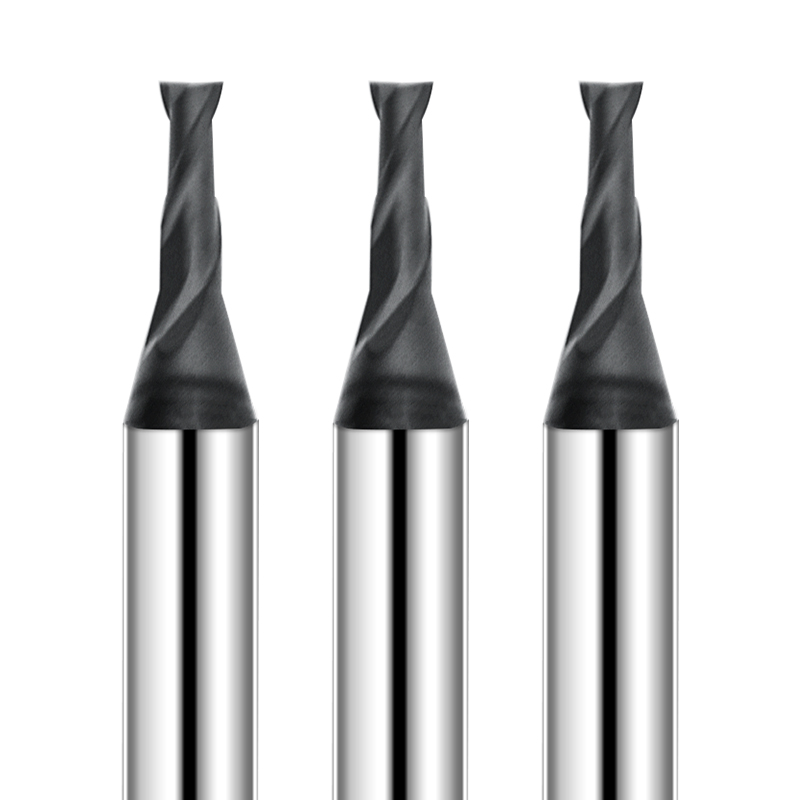
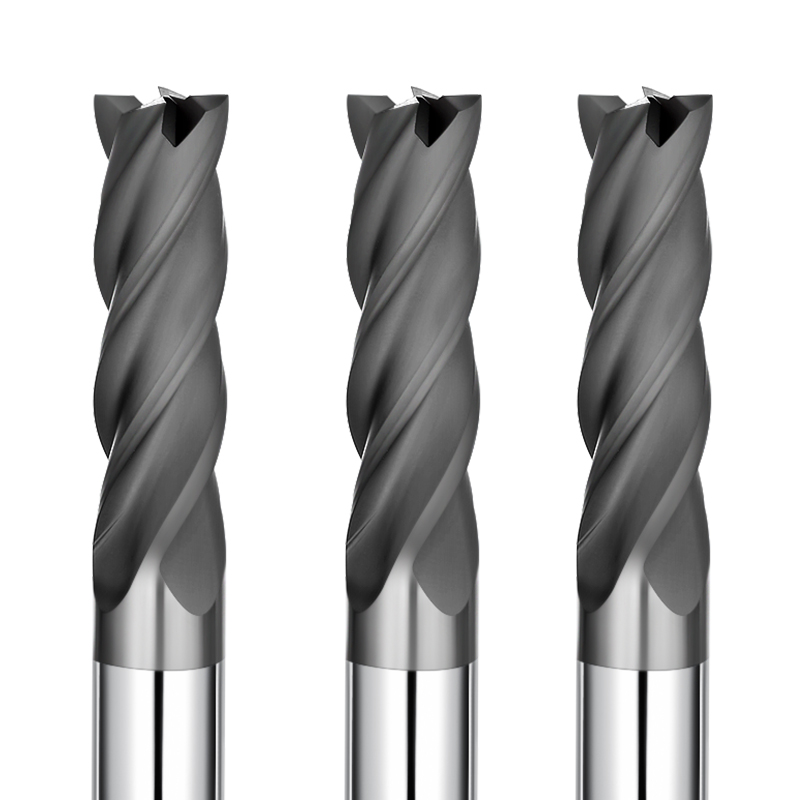
Square End Mills (2 & 4 Flutes)
-
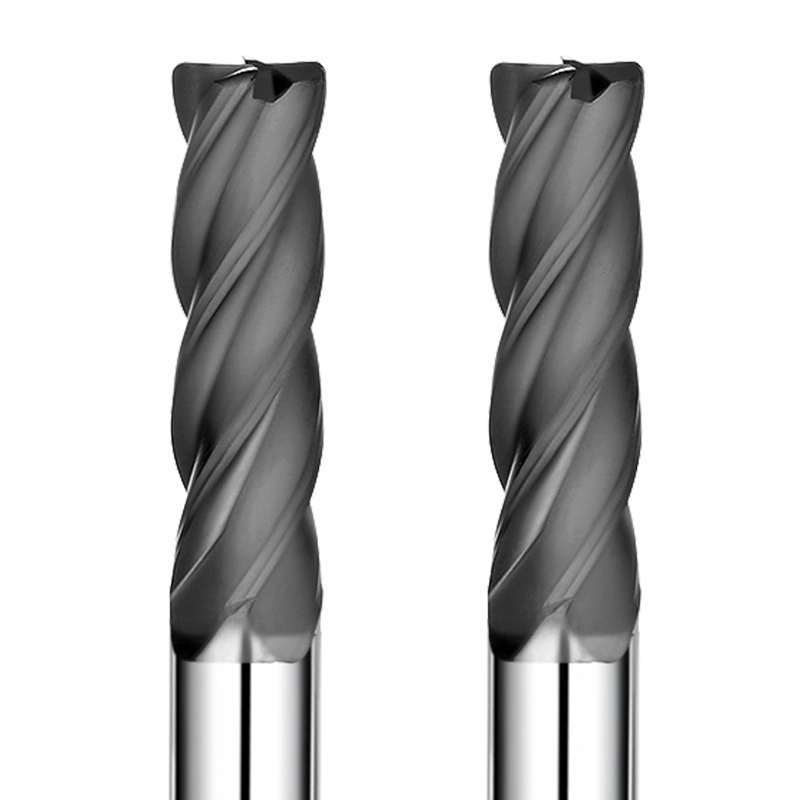
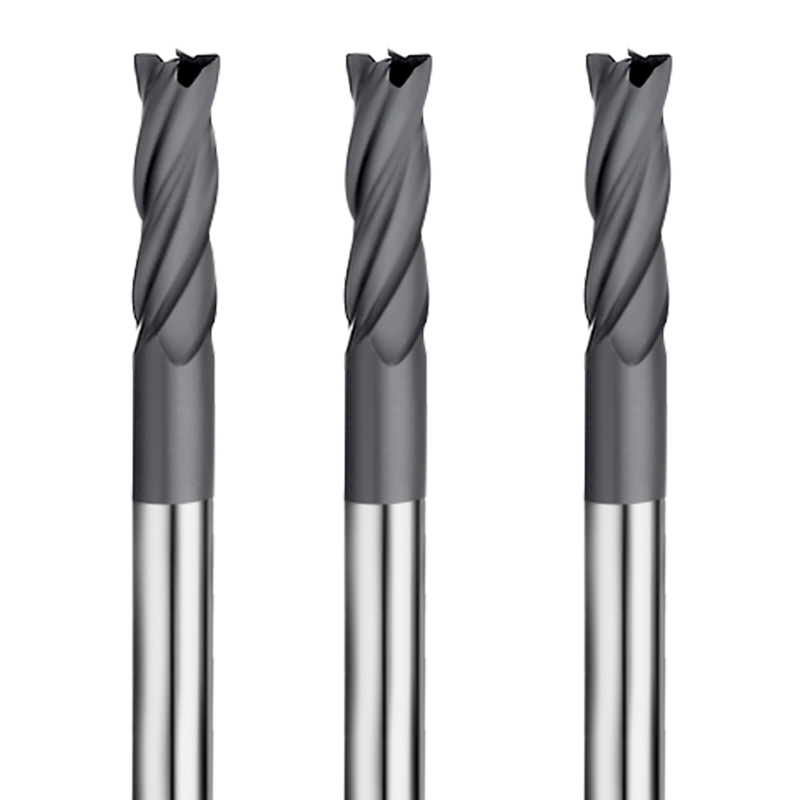
Standard Square (Φ0.2-12): Ideal for 90-degree shoulder milling, slotting, and general-purpose graphite electrode fabrication.
-
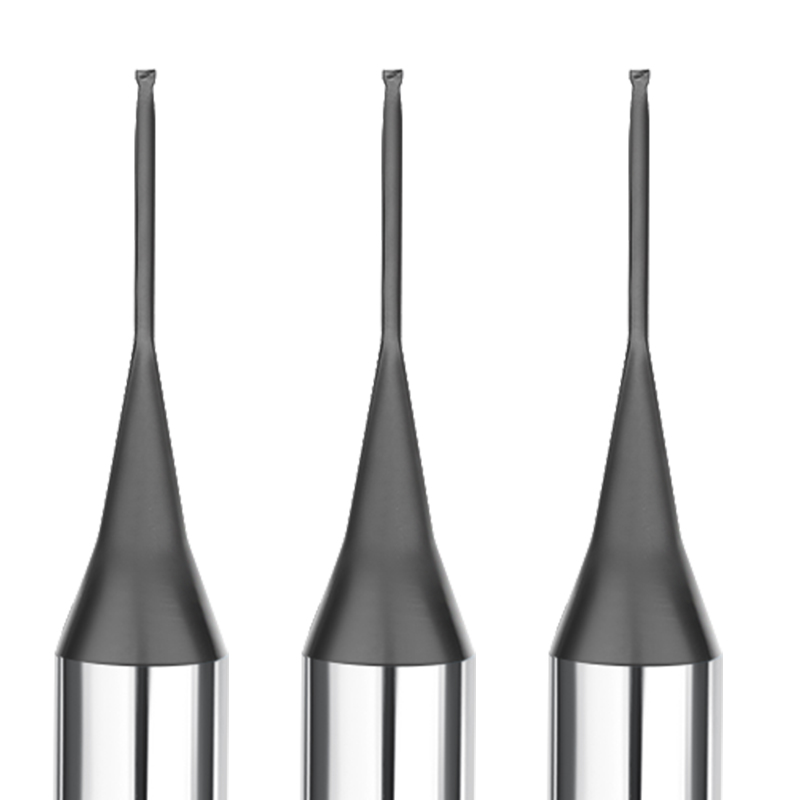
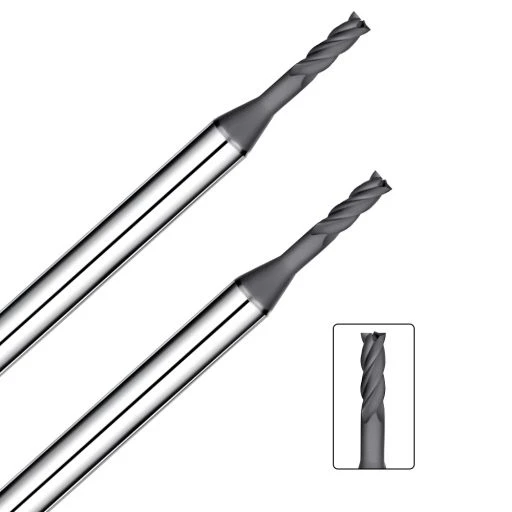
Long Neck Series (Φ0.2-3): Specifically engineered for deep cavity and rib machining, offering high rigidity and minimal vibration.
Ball Nose End Mills (2 Flutes)
-
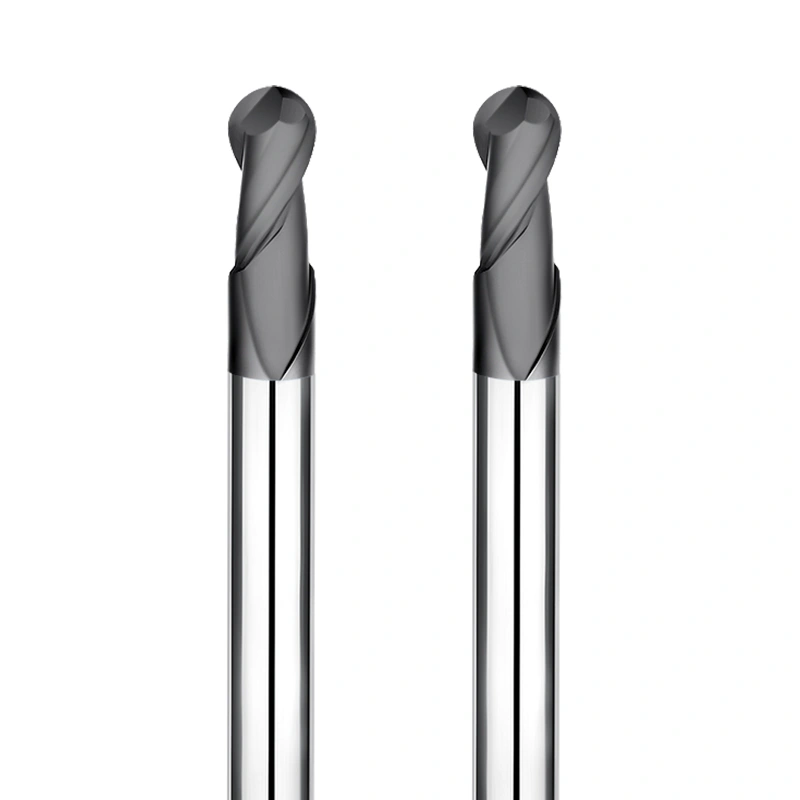
Standard Ball Nose (R0.5-R6): The primary choice for 3D contouring, complex surface machining, and intricate mold work.
-
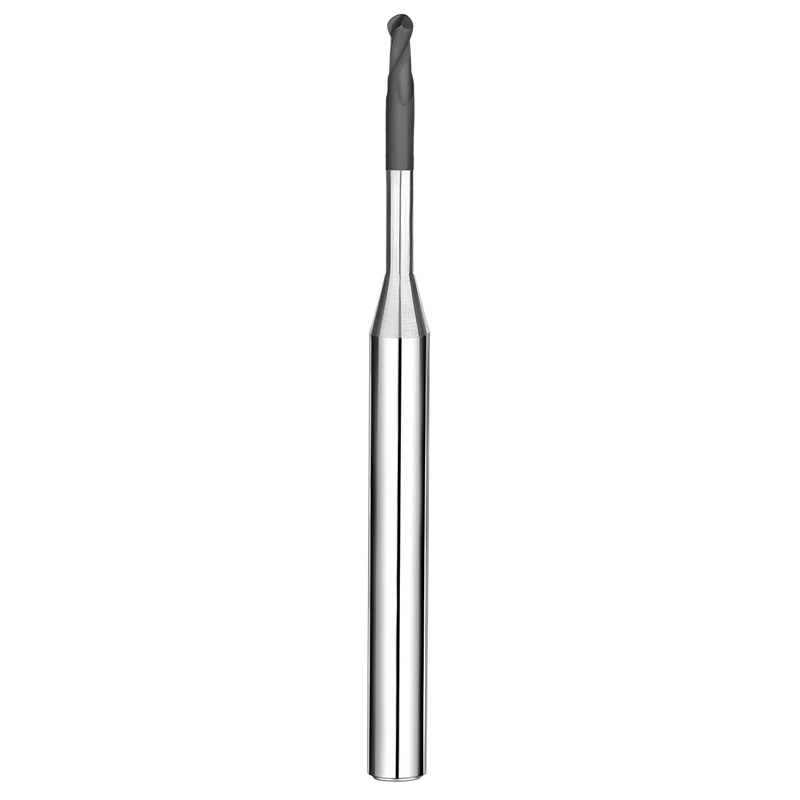
Long Neck Ball (R0.1-R2): Essential for micro-contouring in deep, hard-to-reach areas of a graphite mold.
Corner Radius End Mills (4 Flutes)
Typical Applications for Graphite Tooling
-
Die and Mold Industry: High-speed milling of intricate and detailed graphite molds for plastic injection and die casting.
-
EDM Electrode Fabrication: Precision machining of graphite electrodes used in Electrical Discharge Machining processes.
-
Aerospace & Automotive: Production of high-precision heat-resistant parts and engine component molds.
-
Semiconductor & Electronics: Micro-machining of graphite carriers and specialized electronic components.
FAQ: Graphite Machining & Diamond Coating
Q1: Why is diamond coating mandatory for graphite machining?
Graphite is highly abrasive; it acts like a fine-grit sandpaper on cutting tools. Standard carbide tools will lose their sharp edge within minutes. Diamond coating provides the necessary hardness to resist this abrasion, extending tool life by 10 to 50 times compared to uncoated carbide.
Q2: What is the benefit of the 18-hour service life mentioned?
In automated shops, tool life is the bottleneck. An 18-hour stable life means a machine can run unattended through two full shifts without the risk of dimensional drift or tool breakage, significantly reducing labor costs and machine downtime.
Q3: Is coolant required when milling graphite?
No. Graphite is almost always machined dry. Using liquid coolant turns graphite dust into a thick slurry that can clog the machine’s moving parts and the tool’s flutes. Instead, a high-vacuum dust extraction system is essential for safety and tool performance.
Q4: How does flute count affect graphite milling results?
For graphite, 2-flute end mills are typically used for roughing to allow maximum space for the high volume of dust/chips. 4-flute tools are preferred for finishing operations where a smoother surface and better dimensional stability are required at higher feed rates.
Q5: What causes chipping on the edges of a graphite workpiece?
Chipping usually occurs due to excessive cutting force or a dull tool. Using a SAMHO diamond-coated mill with a low helix angle and sharp geometry minimizes these forces. Additionally, adopting a “climb milling” strategy can help produce cleaner edges.
Q6: Can these tools be used for ceramic machining?
Yes. These end mills are highly effective for green ceramics or soft ceramics. The diamond coating handles the abrasive nature of ceramic powders similarly to graphite, ensuring precise dimensions and a long tool life.
Q7: How do I handle graphite dust to protect my machine?
Graphite dust is electrically conductive and abrasive. You must use a dedicated dust collection system with high suction power at the spindle. It is also recommended to use a machine with protected (bellows-covered) ways and rails.
Q8: What is the advantage of a Long Neck design for graphite?
Deep ribs and thin fins are common in graphite electrodes. The Long Neck design allows the tool to reach deep into these features while the reinforced shank provides the stiffness needed to prevent vibration, which is the main cause of electrode breakage.
Q9: How do I know when to replace a diamond-coated tool?
Since graphite is abrasive, the tool won’t “snap” like it would in steel; instead, the diamond coating will eventually wear through. Look for a change in the surface finish of the part or a slight increase in the noise level during cutting as indicators for replacement.
Q10: Can SAMHO customize tools for specific electrode geometries?
Absolutely. We undertake high-precision tool customization, adjusting neck lengths, diameters, and coating thicknesses to fit the specific complexities of your mold designs and graphite grades.