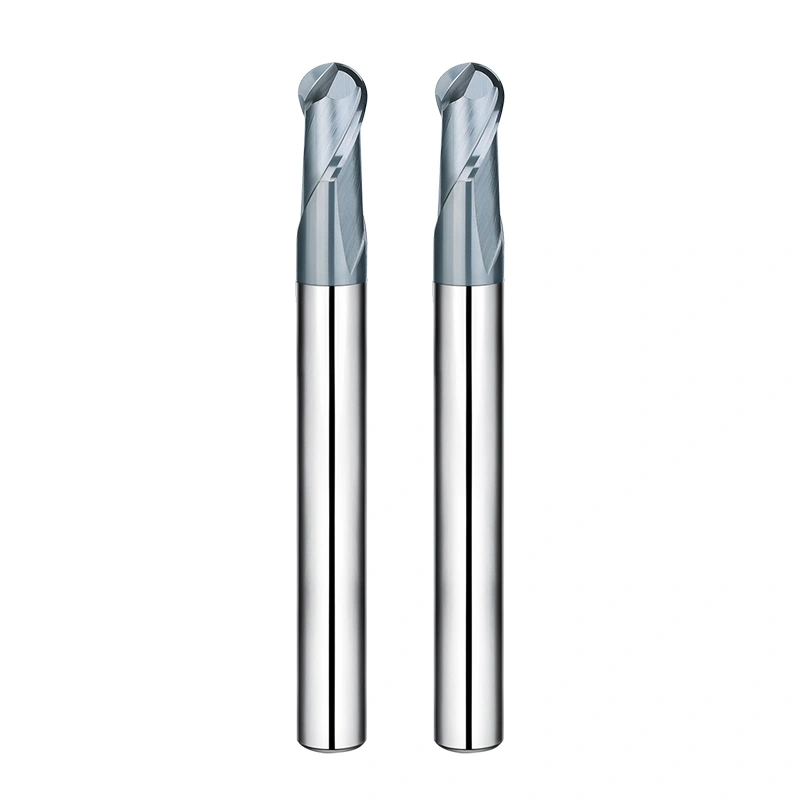
Engineered for Flawless Surface Finishes and Complex Geometry Machining
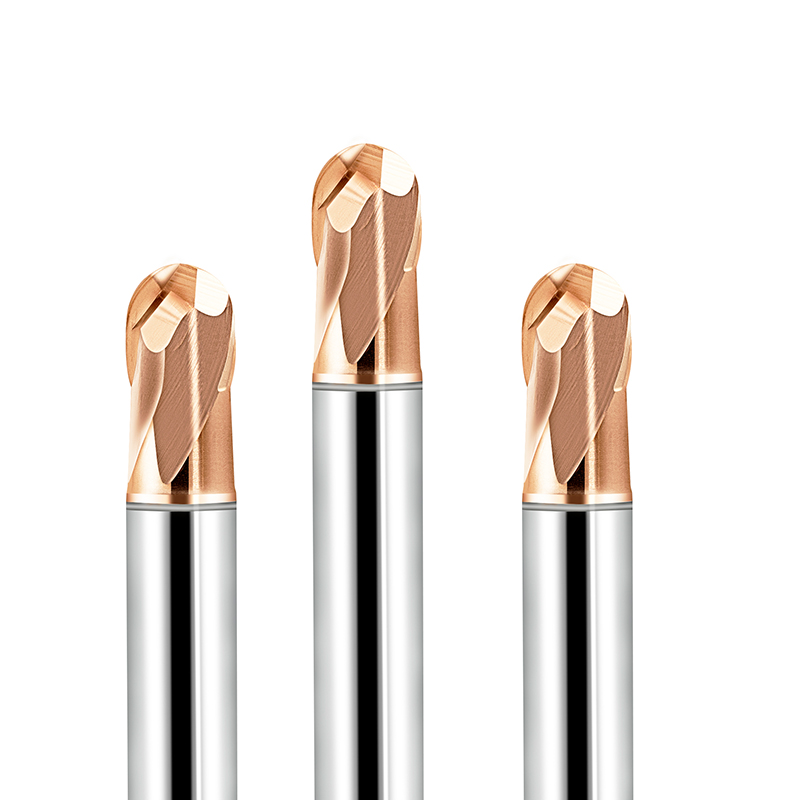
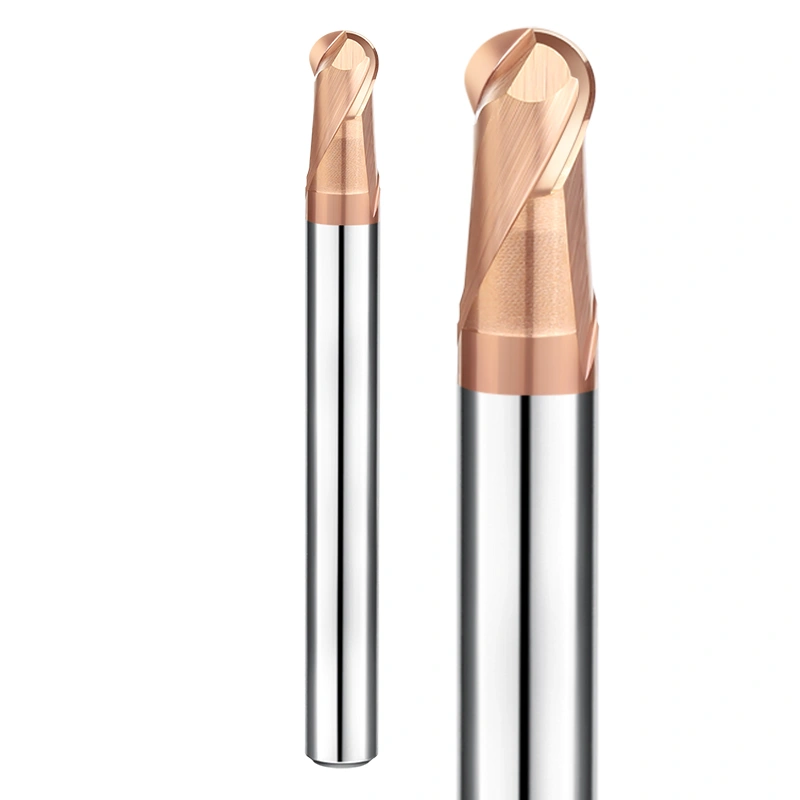
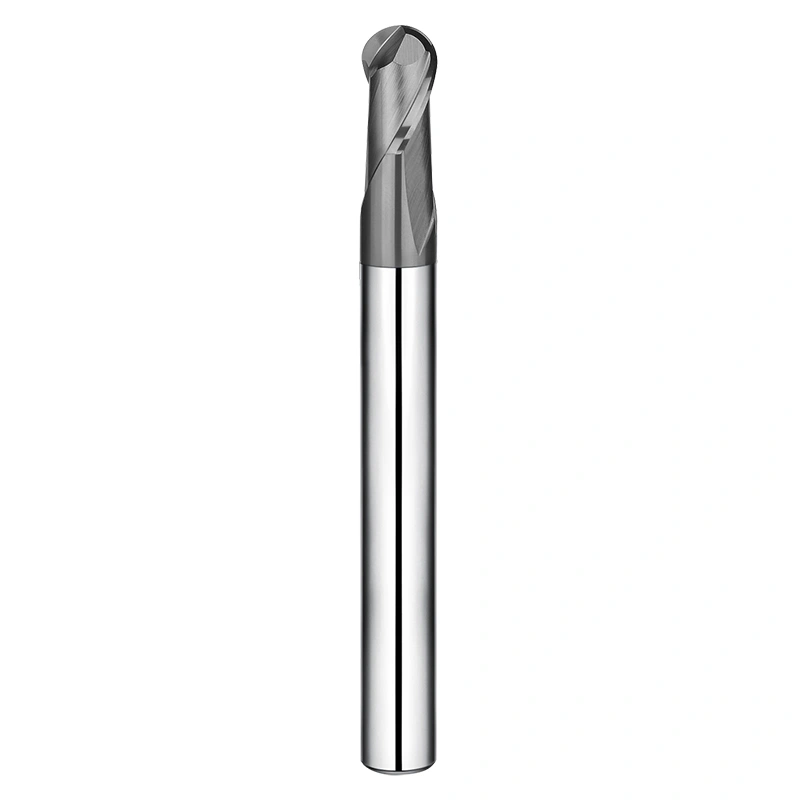
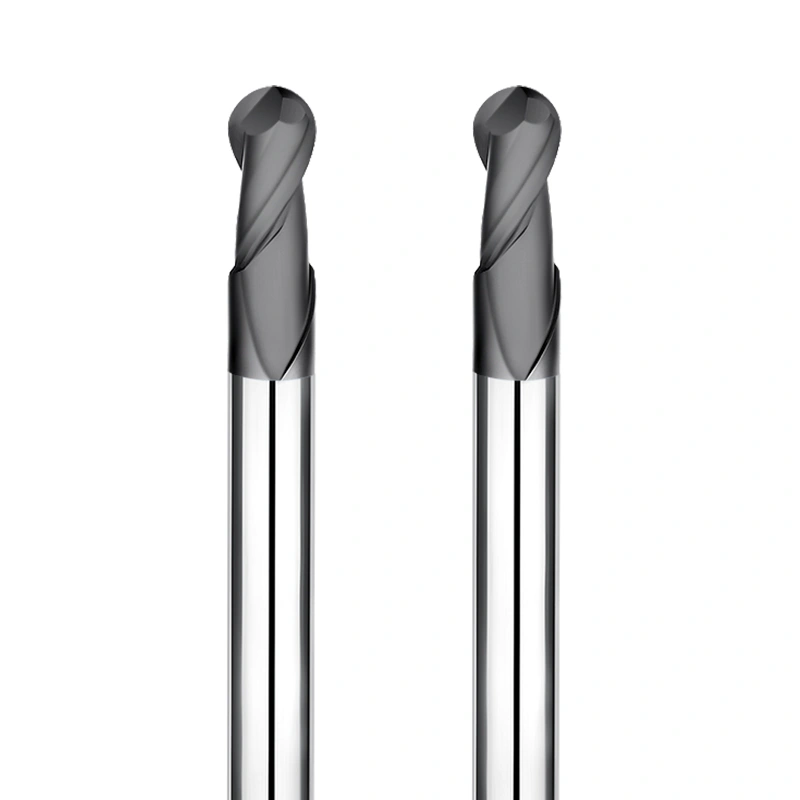
SAMHO’s High-Precision Ball Nose End Mills are premium cutting tools specifically developed for the most demanding 3D profiling applications. Capable of achieving machining accuracy up to 0.001 mm, these tools are the ideal solution for complex curved surfaces, precision mold cavities, and high-finish component manufacturing. By combining optimized spherical cutting edges with advanced carbide substrates, SAMHO ensures uniform cutting forces, minimal vibration, and a superior surface profile across a wide range of industrial materials.
Core Technical Features
Optimized Spherical Geometry
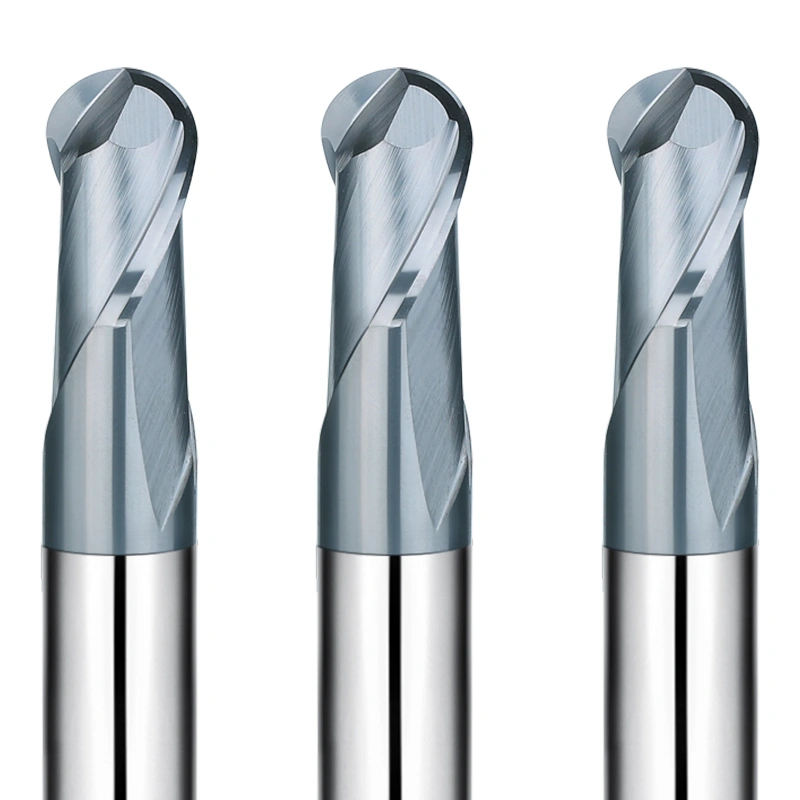
Smooth, Low-Force Machining: The precisely engineered hemispherical “ball nose” design ensures consistent contact points during multi-axis milling. This minimizes cutting resistance and harmonic vibration, resulting in exceptionally low surface roughness and perfect dimensional consistency in 3D finishing operations.
Micron-Level R-Accuracy Control
Strict Tolerance for Mold & Die: Every SAMHO ball nose cutter undergoes rigorous 5-axis CNC grinding and 100% optical inspection. We control the radius tolerance and sphericity within $\pm 0.005mm$, ensuring seamless blending between cutting passes and reducing the need for manual polishing.
Advanced Multi-Layer Coatings (HG/HT/HB/HD)
Thermal Stability and Wear Protection: Our proprietary coating matrix—ranging from HG AlTiSi+N (3700 HV) for high-heat oxidation resistance to HD Nano Diamond (10000 HV) for abrasive graphite—provides a thermal shield that extends tool life by 20-30% during extended high-speed runs.
Ball Nose End Mill Coating Matrix
| Coating Name |
HG |
HT |
HB |
HD |
| Composition |
AlTiSi+N |
AlTiSi+N |
AlTiCr+N |
Nano Diamond |
| Color |
Bronze |
Bronze |
Dark Grey |
Dark Grey |
| Hardness (HV) |
3700 |
3500 |
3500 |
10000 |
| Key Features |
Ultra-high hardness, excellent oxidation resistance, high density |
Ultra-high hardness, excellent oxidation resistance, high density |
Ultra-low oxidation, low friction |
Ultra-high wear resistance |
| Coefficient of Friction |
0.40 |
0.36 |
0.30 |
<0.1 |
| Oxidation Onset Temperature (°C) |
1300 |
1200 |
1100 |
600 |
| Coating Thickness (μm) |
2–4 |
2–4 |
2–4 |
6–10 |
Comprehensive Product Series
-
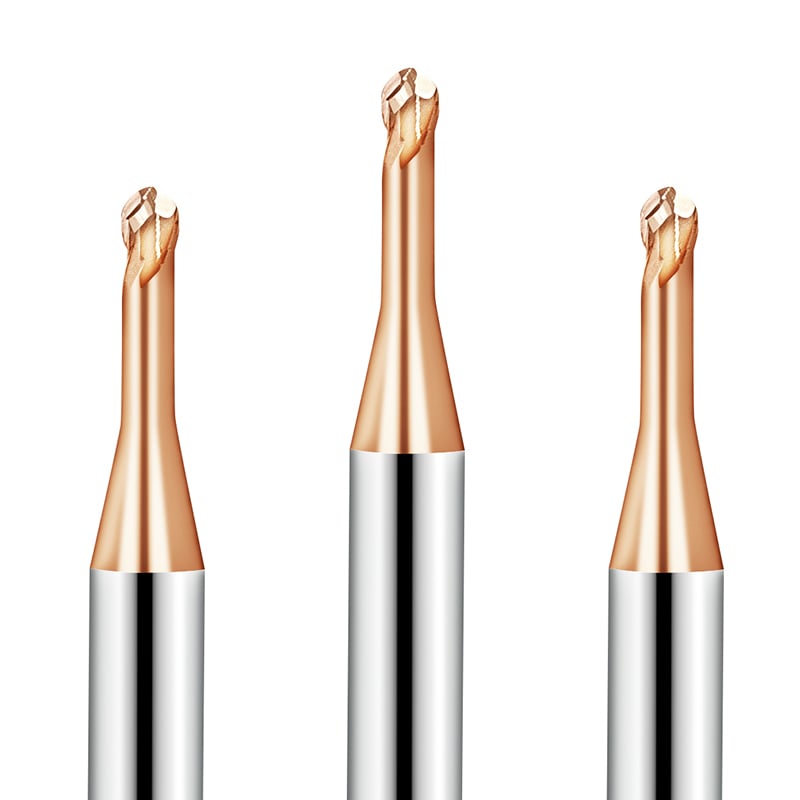
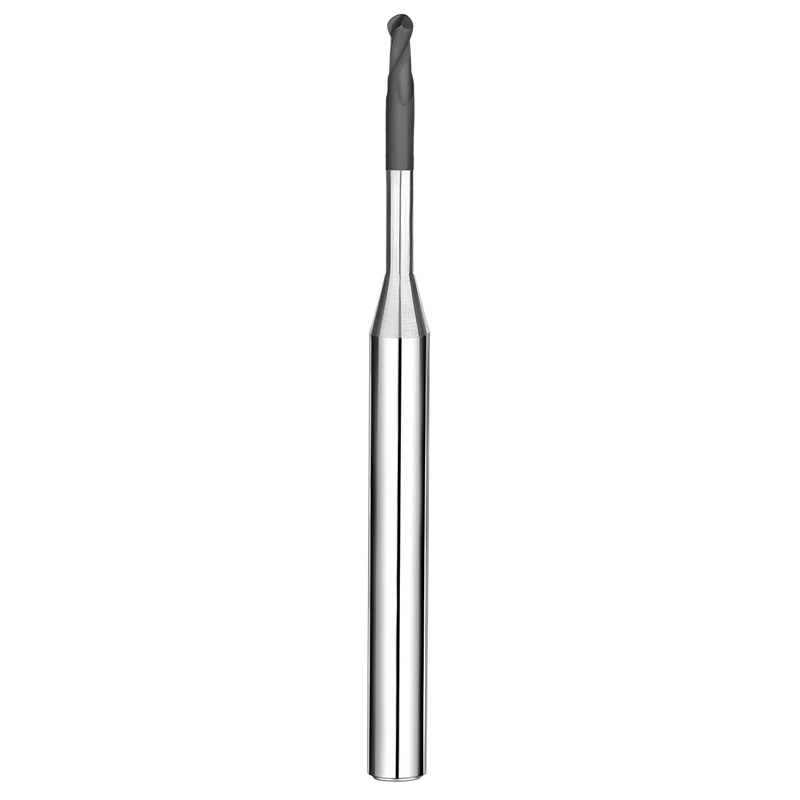
Hardened Steel Series (HRC55/HRC65): Optimized for pre-hardened and quenched mold steels. Available in standard and Long Neck versions for deep-reach profiling.
-
Aluminum & Copper Series (DLC Coated): Features ultra-sharp edges and mirror-polished flutes to prevent material adhesion in ductile non-ferrous metals.
-
Tungsten Copper Series: Specialized geometry to handle the unique abrasive-ductile composite nature of W-Cu electrodes.
-
Graphite & Ceramic Series: Diamond-coated solutions designed to withstand the “sandpaper” effect of abrasive non-metallic materials.
FAQ: Precision Ball Nose Machining & Optimization
Q1: What is the main advantage of using a Ball Nose End Mill over a Flat End Mill?
A: Ball nose mills are designed for 3D contouring. Unlike flat mills which leave steps on curved surfaces, the spherical tip allows for smooth transitions on 3D geometries, making them essential for molds, dies, and aerodynamic parts.
Q2: How does “Stepover” affect the surface finish in ball nose milling?
A: “Stepover” is the distance between adjacent tool passes. A smaller stepover reduces the “scallop height” (the tiny ridges between passes), resulting in a much finer surface finish. For high-precision parts, a stepover of 5% to 10% of the tool diameter is common.
Q3: When should I choose a Long Neck Ball Nose End Mill?
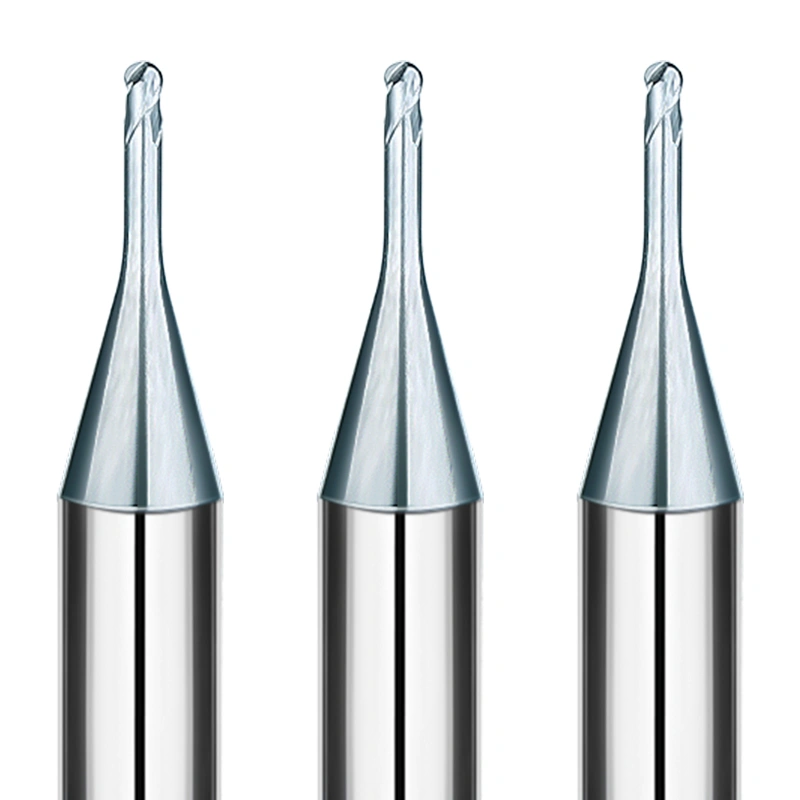
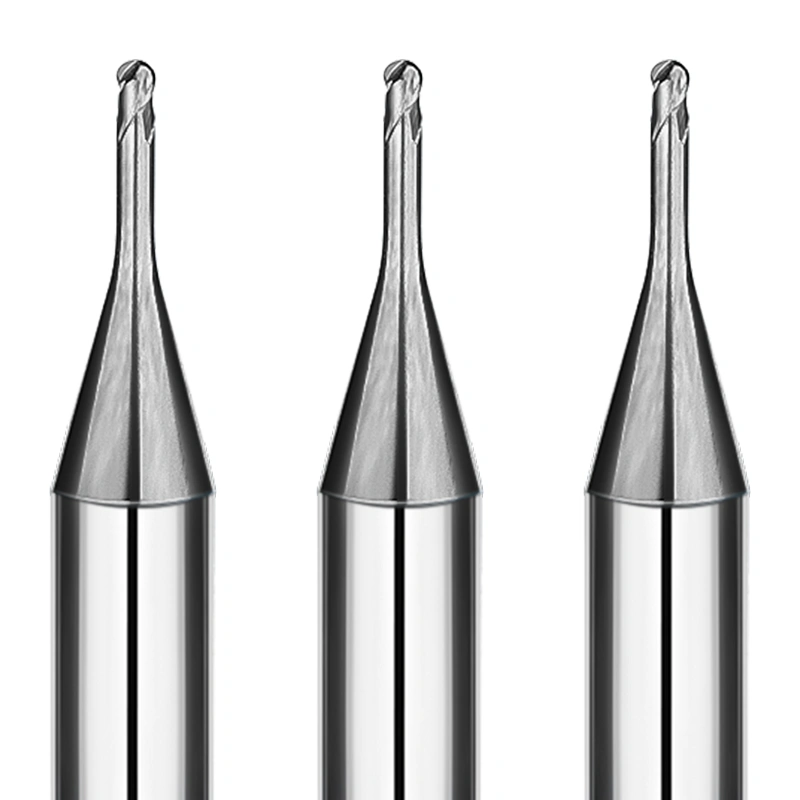
A: Use Long Neck versions when you need to machine deep cavities or narrow ribs where a standard shank would interfere with the workpiece. Our long-neck design features a reinforced tapered neck to minimize deflection and vibration.
Q4: Is a 2-flute or 4-flute ball nose better for 3D finishing?
A: A 2-flute design is the industry standard for ball nose milling because it provides more chip space, which is critical for the center-cutting action of the ball tip. It also allows for deeper cuts in softer materials.
Q5: What causes “chatter” during ball nose profiling and how can I stop it?
A: Chatter is usually caused by excessive tool reach or incorrect spindle speeds. To stop it, try reducing the tool overhang, using a Variable Helix design, or increasing the spindle speed while decreasing the feed per tooth.
Q6: Can SAMHO ball nose end mills handle HRC 65+ materials?
A: Yes. Our HRC65 Series is specifically engineered with sub-micron carbide and HG/HT coatings to maintain edge integrity when machining ultra-hard quenched steels.
Q7: How do you ensure the R-accuracy of the ball tip?
A: We use advanced 5-axis CNC grinding technology and verify each tool with high-resolution laser measuring systems. The actual R-accuracy is often labeled on the product packaging for high-precision setups.
Q8: Why is DLC coating recommended for copper and aluminum ball nose mills?
A: DLC (Diamond-Like Carbon) has an extremely low friction coefficient, acting as a “non-stick” layer. This prevents soft metals like copper from welding to the tool tip, ensuring the spherical profile stays clean and accurate.
Q9: What is the significance of the 0–0.003 mm shank tolerance?
A: High-speed 3D milling is sensitive to “run-out.” A tight shank tolerance ensures the tool is perfectly centered in the holder, which prevents uneven wear on the flutes and ensures the ball nose rotates on a true axis.
Q10: Can SAMHO provide custom ball nose radii for specialized medical implants?
A: Yes. We offer OEM customization for non-standard radii (e.g., R0.15, R0.35) and specialized neck lengths to fit the unique requirements of medical, dental, and electronic micro-machining.