
Engineered for Excellence in Heat-Treated and Pre-Hardened Steels
Product Overview
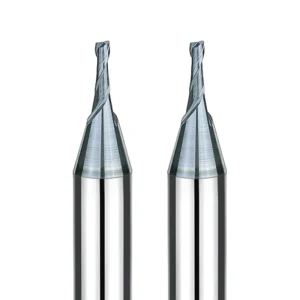
SAMHO’s high-performance steel milling bits are specifically engineered to tackle the challenges of modern mold making and precision component manufacturing. Optimized for materials ranging from standard carbon steel to high-hardness quenched steels (up to 65HRC), these tools provide the thermal stability and structural rigidity required for high-speed CNC operations. Whether you are performing roughing or fine-contour finishing, our end mills ensure maximum uptime and superior surface integrity.
Core Technical Features
Premium Sub-Micron Carbide Substrate
Superior Hardness & Strength: Constructed from ultra-fine grain carbide, our steel milling bits offer hardness levels approaching that of diamond. This allows the tools to maintain a sharp cutting edge even under the high-stress conditions of machining high-tensile and heat-treated steels.
Advanced Nano-Coating Technology
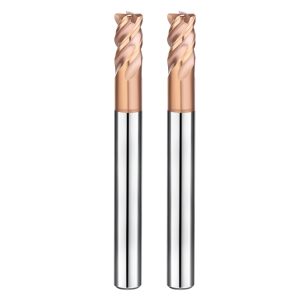
Thermal Shielding for High-Speed Cutting: Each bit is enhanced with specialized coatings (such as AlTiN or AlCrN) that can withstand oxidation temperatures up to 1100°C. This significantly reduces friction and heat buildup, allowing for efficient dry machining or MQL (Minimum Quantity Lubrication) operations.
Ultra-Tight Shank Tolerance (0–0.003 mm)
Unmatched Dimensional Consistency: We maintain a rigorous shank diameter tolerance of 0–0.003 mm. This precision ensures excellent run-out control and repeatability, which is critical for maintaining tight tolerances in complex mold cavities and high-accuracy parts.
Optimized Geometry for Smooth Chip Evacuation
Vibration Reduction & Process Stability: Featuring an engineered variable helix and rigid tool body, our cutters minimize chatter during high-speed engagement. This leads to improved surface finishes and prevents the premature tool failure often associated with machining tough steel alloys.
Steel Milling Bit Coating Characteristics
| Coating Name | HG | HT | HB | HD |
| Ingredient | ALTiSi+N | ALTiSi+N | ALTiCR+N | Nano Diamond |
| Colour | Bronze | Bronze | Dark grey | Dark grey |
| Characteristics | Ultra high hardness, super oxidation resistance, high density. | Ultra high hardness, super oxidation resistance, high density. | Ultra low oxidation low friction | Ultra high wear resistance |
| Hardness | 3700 (HV) | 3500 (HV) | 3500 (HV) | 10000 (HV) |
| Coefficient of Friction | 0.4 | 0.36 | 0.3 | <0.1 |
| Oxidation Onset Temperature | 1300 | 1200 | 1100 | 600 |
| Coating Thickness | 2-4um | 2-4um | 2-4um | 6-10um |
Industry Applications
Mold & Die Manufacturing: High-precision milling of mold cavities, cores, and ejector pin holes in pre-hardened and quenched steels.
Automotive Engineering: Machining of high-strength chassis components and engine parts.
Consumer Electronics: Micro-milling of stainless steel frames and internal structural components.
Heavy Industrial Machining: Reliable performance in bulk material removal and heavy-duty profiling of structural steels.
FAQ: Steel Milling & Tool Selection
Q1: What is the main advantage of Carbide over HSS for steel milling?
Carbide offers much higher hardness and heat resistance. This allows for significantly higher spindle speeds and feed rates, resulting in faster production times and a much longer tool life when working with abrasive steels.
Q2: When should I choose a 65HRC end mill over a 55HRC version?
Choose the 65HRC series for materials that have been fully heat-treated or quenched (such as H13 or D2 steel). For pre-hardened or standard carbon steels, the 55HRC series provides an excellent balance of toughness and cost-efficiency.
Q3: Is coolant necessary when using AlTiN or AlCrN coated bits?
These coatings are specifically designed for high-temperature stability, making them ideal for dry machining or air-cooling. In many hardened steel applications, dry cutting actually prevents “thermal shock,” which can lead to tool cracking.
Q4: How does the number of flutes affect steel milling?
For steel, 4-flute end mills are standard as they provide a good balance between tool strength and chip space. For finishing operations where surface quality is the priority, a higher flute count (6 or more) may be used to achieve a smoother finish.
Q5: What causes tool deflection during deep cavity milling?
Deflection is usually caused by excessive tool length or high cutting forces. To minimize this, use the shortest possible tool or a reinforced tapered neck design, and ensure your CNC parameters match the material hardness.
Q6: Can SAMHO steel milling bits be used for stainless steel?
Yes, our AlTiN and TiAlN coated carbide bits are highly effective for stainless steel. However, for 300-series stainless, we recommend specific feed adjustments to manage work-hardening.
Q7: How do I choose the correct coating for dry machining?
AlCrN is the premier choice for dry machining due to its high oxidation temperature (1100°C). It creates a protective aluminum oxide layer that lubricates the cut without the need for fluid.
Q8: What is the benefit of the 0–0.003 mm shank tolerance?
This tight tolerance ensures that the tool sits perfectly in the holder, reducing run-out. Lower run-out means more even wear on the flutes and much higher accuracy on the finished workpiece.
Q9: Do you offer specialized end mills for roughing steel?
Yes, our roughing end mills feature a “corncob” or chip-breaker profile that breaks chips into smaller pieces, allowing for much higher material removal rates (MRR) with less vibration.
Q10: How can I optimize tool life when machining HRC 60+ steel?
Ensure high machine rigidity, use the correct high-hardness coating (like AlTiN), and prioritize constant chip evacuation through air-blast to prevent re-cutting of hardened chips.