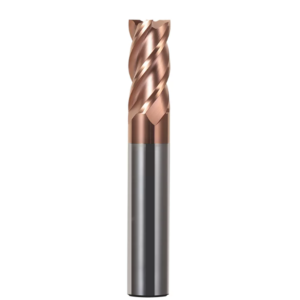
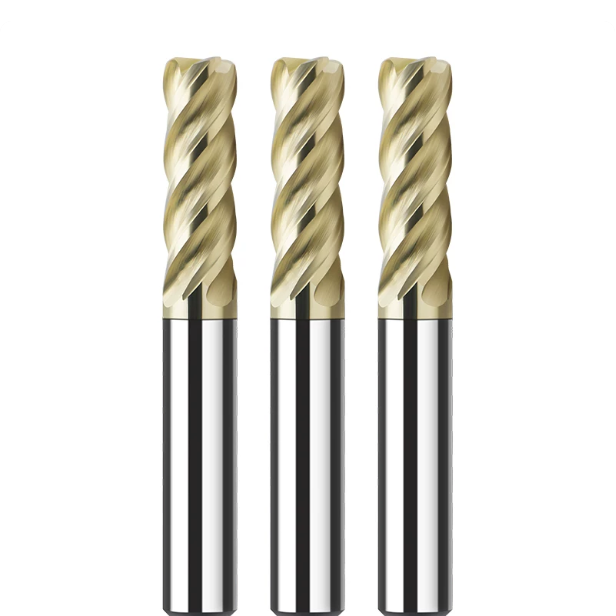
Recently, a long-standing U.S. client reached out with an urgent problem. While machining a batch of 316L stainless steel thin-walled parts, his carbide end mill for stainless steel—which usually lasts through 50 parts—suffered catastrophic chipping by the 12th piece. His first instinct was to blame a “bad batch” of tools. However, after analyzing his wear photos and cutting data, we identified the true “invisible killer”: thermomechanical fatigue.
In our 16 years of manufacturing and technical support as a dedicated end mill manufacturer, we’ve seen that most failures aren’t due to tool quality. Instead, they stem from a misunderstanding of stainless steel’s physical properties. Its high work-hardening rate and poor thermal conductivity mean you cannot use carbon steel logic. Many shops try to play it “safe” with low speeds and feeds, but in reality, that is the fastest way to kill your tool.
Even if you buy the best end mill for stainless steel, you won’t get half its potential if you neglect chip evacuation, coolant angles, or toolholder runout. Paying a premium for high-end tools only to produce scrap is a scenario we see far too often. We’ve compiled the core misconceptions we encounter in the field. These issues go beyond simple math; they challenge your fundamental understanding of metal cutting. If your costs are high and your tool life feels like a “mystery box,” you might be trapped by conventional wisdom.
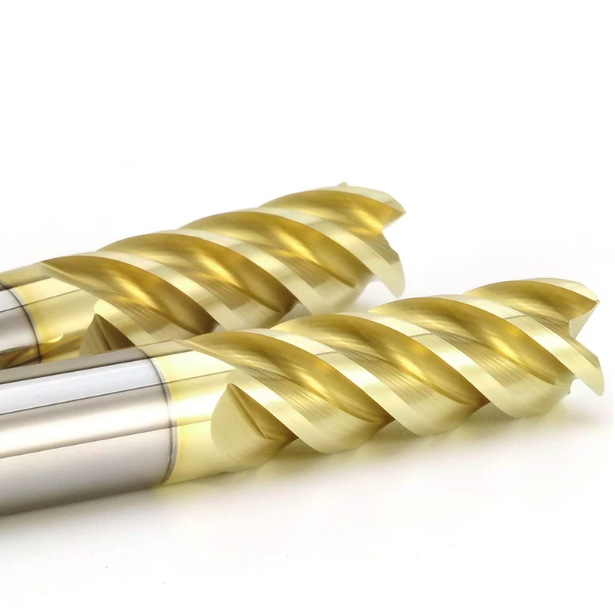
The Most Common Fundamental Operational Errors When Using End Mills for Stainless Steel
During on-site diagnostics in North America and Europe, we often find that crashes aren’t caused by complex geometry, but by flawed basic logic. Stainless steel is deceptive. Its toughness and work-hardening traits leave zero margin for error. Many veteran machinists, used to the forgiving pace of aluminum or carbon steel, bring those “instincts” to a carbide end mill. Unfortunately, those habits often sow the seeds of failure from the very first cut.
Machining stainless steel is like walking a tightrope. We frequently see operators crank up spindle speeds for a better finish without increasing the feed rate. This causes the tool to rub rather than cut, leading to rapid heat friction and premature failure. These basic errors can make even the most expensive CNC center useless. Our first step in optimizing a line is always correcting these “minor” deviations. If your fundamental setup is wrong, the most expensive carbide substrate in the world won’t save your yield.
Case Study: Why the “Best” End Mill for Stainless Steel Can Still Fail
We once worked with a German client machining aerospace-grade stainless housings. He was adamant about using a high-helix, 6-flute (and sometimes 8-flute) tool. He assumed more flutes meant better efficiency and a smoother finish. Instead, he got severe chatter and snapped the tool during a corner-clearing operation.
This is a classic mistake: chasing a “premium” tool without considering chip evacuation. Stainless steel is gummy and viscous. If you use too many flutes, the chip gullets are too small. The chips clog, heat spikes, and the tool snaps under the pressure. We stepped in and moved him to a 4-flute tool with unequal-pitch geometry. Even with a higher load per tooth, the chip evacuation was far superior. Remember: there is no “absolute best” tool—only the tool that balances the specific demands of your job.
Tool Rigidity: The Overlooked Factor in Carbide End Mill Performance
For deep cavities or mold work, engineers often choose long, necked-down carbide end mills to avoid interference. However, many underestimate how much rigidity drops as the length-to-diameter ratio increases. In one medical device project, we saw a tool “deflect” the moment it hit the workpiece due to excessive overhang and poor dynamic balancing. This didn’t just cause dimensional errors; it triggered a fatigue fracture at the tool’s root.
When dealing with long overhangs, the physics are unforgiving. Even high-modulus solid carbide follows the inverse-cube law for rigidity. In a real shop environment, we mitigate runout by optimizing the clamping strategy. Whenever possible, use shrink-fit holders or high-grip milling chucks instead of standard collets to protect those delicate cutting edges.
Typical Failure Modes from Mismatched Cutting Parameters
The two biggest headaches in stainless machining are “adhesion” and “chipping.” We worked with an Italian client who tried to “save” his carbide end mill by drastically dropping the feed rate. His tool life actually dropped by 70%. Because the feed was too low, the edge was just rubbing against the work-hardened layer from the previous pass. This friction created extreme heat, causing Built-Up Edge (BUE). When the chip finally tore away, it took the coating and the carbide tip with it.
On the other hand, if the feed is too high, mechanical impact will shatter the edge. When we help clients optimize parameters, we hunt for the “sweet spot”: a feed heavy enough to penetrate the hardened layer but light enough to stay within the tool’s structural limits. If your tool life is inconsistent, look at your chips. Their color and shape are the most honest feedback you’ll ever get.

Common Process Errors We Repeatedly Observe When Machining Stainless Steel
Over years of providing technical support, we have realized that most machining bottlenecks don’t come from machine precision or tool material. Instead, they stem from a lack of logic in process planning. Stainless steel has a high chemical affinity and thermal strength. This requires engineers to look at the “big picture” of heat flow. We often see experienced operators apply their old carbon steel logic—standard engagement and toolpath settings—to stainless. This traps the process in a vicious cycle: the material becomes harder the more it is cut, and hotter the harder it gets.
We believe the essence of process planning is the dynamic regulation of cutting forces and heat. When optimizing carbide end mills for stainless steel, consistency is everything. If improper roughing degrades the material surface, your finishing operations are destined for disaster. We don’t just sell tools; we collaborate with peers to map out stress-release pathways. We ensure every tool operates under its most optimal, stress-free conditions from start to finish.
How Improper Cooling Destroys End Mill Lifespan
During a visit to a factory in Poland, we saw a client using external cooling for deep slots. The problem? The fluid never reached the cutting zone. This “nominal cooling” is dangerous. It doesn’t lower the temperature; instead, it causes intermittent thermal shock, leading to cracks in the end mill for stainless steel. Because stainless has low thermal conductivity, heat concentrates at the cutting edge. Without high-pressure through-spindle cooling or pinpoint spray, tool tip temperatures can exceed 1000°C in seconds.
We’ve demonstrated the devastating effects of thermal fatigue to many clients. In specific cases, we might even suggest MQL or pure dry cutting—but only if you use extremely high air pressure to blast chips away instantly. We don’t favor one specific medium, but we insist that cooling must have “penetrative power.” If you see blue or purple temper colors on your tool tip, or if the coating flakes off like fish scales, your cooling strategy is failing to reach the edge.
Dealing with Work Hardening and Abnormal Wear
The most frustrating trait of 304 and 316 stainless is how easily they work-harden. We once handled a valve project where the client used a worn drill bit in the previous operation. It left behind an incredibly hard surface. When they used what they thought was the best end mill for stainless steel for side milling, the tool suffered massive flank wear the moment it touched that hardened layer. Many engineers blame the tool’s wear resistance, overlooking that the material was “artificially altered” before the mill even started.
Our advice is simple: your feed rate must exceed the thickness of the hardened layer. If you take cautious, shallow cuts, you are “rubbing” rather than “cutting,” which triggers secondary hardening. We solve this by adjusting the axial depth (Ap) and feed per tooth (Fz). This ensures the tool tip always cuts into the unhardened base material. It increases the load on the machine, but it delivers a stable tool life and a predictable production cycle.
The Risk of Poor Toolpath Design on Stability
When programming, many clients still rely on traditional full-slotting or large radial engagement. In a project for a Nordic client, we watched a carbide end mill round a corner. The sudden spike in the engagement angle caused cutting forces to multiply instantly, visibly deflecting the tool shank. These load fluctuations are a primary cause of breakage. Even though carbide is extremely hard, it is very sensitive to sudden impacts.
We now recommend dynamic or trochoidal milling strategies. By maintaining a constant engagement angle and high surface speeds, the carbide end mill stays in a state of force equilibrium. While the programming is more complex, it drastically reduces the risk of snapping a tool. If your tools consistently chip at corners or entry cuts, the issue isn’t the tool—it’s a toolpath that needs a “stress-relief” overhaul.
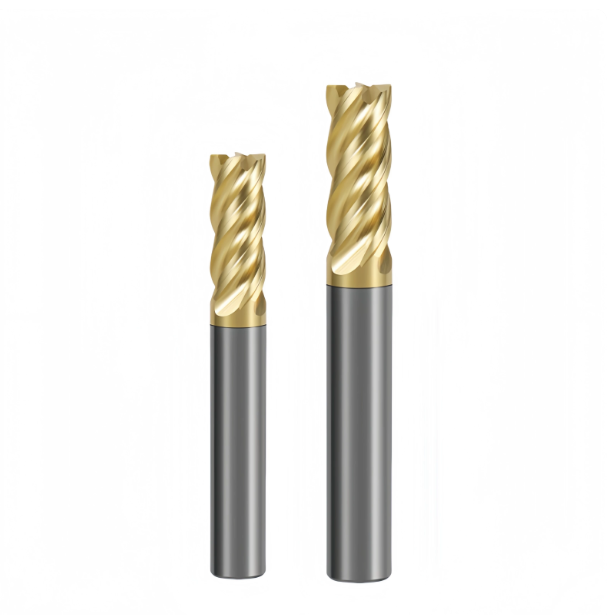
Common Misuses of Carbide End Mills in the Workshop
During our global workshop visits, we’ve found that severe delays rarely stem from the tool’s physical limits. Usually, they come from deeply ingrained habits. Habits that work on carbon steel can become “profit black holes” on stainless. As a carbide end mill manufacturer working directly on production lines, we know that an operator’s mental paradigm is often harder to correct than a cutting parameter.
In the pursuit of efficiency, many factories ignore the physics of stainless. They rigidly apply old templates without analyzing how alloy compositions affect thermal expansion. This lack of flexibility forces high-performance tools to operate in “overload” conditions. True efficiency comes from correcting actual workshop details—not just buying expensive tools.
The “One-Tool-Fits-All” Mentality
We once met a North American supervisor who tried to machine everything—from 304 and 316L to Duplex—with one standard carbide end mill. The results were a disaster. On 316L, the material adhered to the tool and wrapped around the flutes. On Duplex, the tips suffered thermal cracking because the coating wasn’t designed for that heat. This mentality is dangerous.
304 requires a focus on thermal expansion, while Duplex needs rigorous edge-strengthening. They are both “stainless,” but the shear stresses on the cutting edges are worlds apart. You don’t need to stock a thousand different tools, but you must differentiate for your core processes. If your tool life fluctuates wildly between materials, it’s a clear signal to re-evaluate your geometry for that specific alloy.
Why Machine Rigidity Matters More Than You Think
At a European facility, a client complained that our recommended parameters didn’t work—tool life was half of what we promised. On-site, we found they were using a decade-old vertical machining center with significant spindle runout and poor clamping rigidity. In that environment, even the best recommendations from an end mill manufacturer are nullified by low-frequency vibrations.
Rigidity is the bedrock of cutting, especially for stainless, which demands high torque. If your setup isn’t rigid, cutting forces cause minute deflections and rebounds. These micro-vibrations make the carbide coating flake off rapidly. Don’t try to fix a shaky machine with an expensive tool. In these cases, we recommend sacrificing some efficiency—reducing the radial depth of cut—to get a stable process.
The Danger of High-Speed Dry Machining on Stainless
We handled a case for a precision instrument maker who wanted a “clean” shop and tried high-speed dry machining with the best end mill for stainless steel. Within minutes, the tool melted. Because stainless has such low thermal conductivity, heat stays at the tool tip. Without cutting fluid, that heat cannot be carried away by the chips.
Unless you are doing very specialized fly-cutting or high-pressure air-cooled trochoidal milling, dry machining stainless is a waste of resources. Even with heat-resistant silicon coatings, the material’s adhesion will ruin your surface finish without proper dissipation. For maximum tool life, pinpoint, high-pressure fluid delivery is always a better strategy than searching for a “miracle” dry tool.
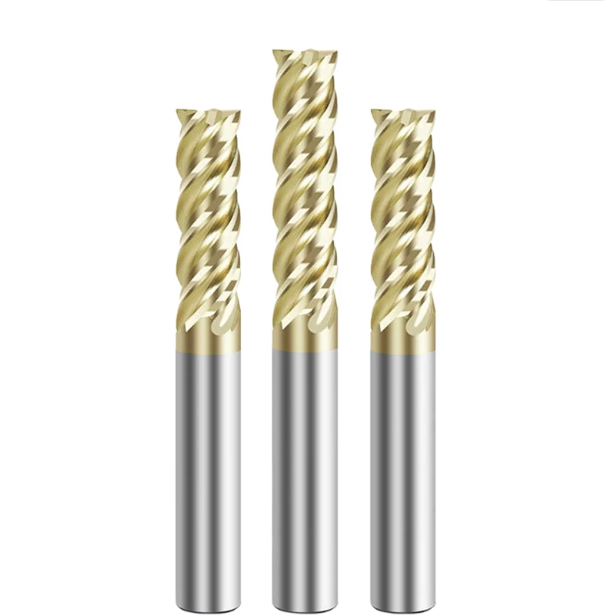
Tool Misuse—An End Mill Manufacturer’s Perspective
From our production floor, we often see a strange phenomenon: tools returned for failure analysis exhibit wear patterns that completely contradict their design. In our factory, we invest heavily in micro-geometry—using edge honing to increase strength or variable helix designs to cancel out harmonics. However, if a shop doesn’t understand the design intent, these precision features can actually become liabilities.
An exceptional tool is only a “semi-finished” product. it is only truly complete when paired with the right application logic. When we help Western clients set tool standards, we tell them to “listen” to the tool. A dull, low-frequency hum or scorched-black chips are distress signals. As a carbide end mill manufacturer, our biggest concern isn’t just wear; it is seeing a high-performance tool lose its value because it was used in the wrong context.
Mismatching Tool Design with Actual Conditions
We once handled a complaint where a client couldn’t achieve a specific surface finish. We discovered they were using a “wavy-edge” roughing mill for the final finishing pass. Wavy-edge tools are designed to break up chips and reduce resistance during heavy removal. Using one for finishing is a mistake—it imprints minute step-patterns onto the surface, ruining dimensional tolerances.
This is a classic case of misapplication. Roughing tools have wide flutes for chip evacuation, while finishing tools have a larger core diameter for maximum rigidity. If you use a delicate precision tool for deep slots, or a robust rougher for a mirror finish, you are working against the tool’s geometry. Always distinguish between functional boundaries. High efficiency and high precision require different tool “DNA.”
The High Cost of Coating Misunderstandings
A coating isn’t just “paint”; it is the primary chemical shield against the “stickiness” of stainless steel. We once helped a client in Southeast Asia whose tools were dying instantly on 304 stainless. They had chosen a zirconium-based coating—meant for aluminum—because it looked “slippery.” At high cutting temperatures, that coating had zero chemical resistance to stainless. The edges suffered “cold welding” almost immediately.
The nanocomposite coatings we develop for the best end mill for stainless steel (like AlTiN or TiSiN) form a protective film that prevents molecular diffusion. If you pick the wrong coating, the heat will bypass the shield and soften the carbide tip. Think of a coating like sunscreen: you must choose the right “SPF” based on the instantaneous temperatures of your specific cut. When the match is right, chips slide away; they don’t stick.
Structural Load vs. Hardness Specs
Many buyers focus only on the hardness listed in a catalog and ignore structural load capacity. A Northern European client once used one of our long-neck, small-diameter precision mills for heavy-duty step cutting. While the tool was high-quality, its slender shank couldn’t handle the lateral bending forces of deep radial engagement. It suffered a systemic fatigue fracture.
Rigidity and flexibility are an eternal paradox in design. There is no “universal” geometry. For high-load jobs, we recommend anti-vibration geometries with unequal spacing and large core diameters, even if it means less chip space. For light-load, high-speed work, a more flexible geometry yields a better finish. If your tools keep breaking, ask yourself: is the tool’s “skeleton” strong enough for the load you’re giving it?

Insights into Stable Machining for Western Markets
Through years of supporting high-end Western manufacturers, we’ve learned that stable stainless steel machining isn’t luck—it’s the result of controlling every variable. Western shops often prioritize “predictability” over raw speed. They will gladly reduce cutting speeds by 20% if it means eight hours of unattended, “lights-out” production. As an end mill manufacturer, we know that real efficiency comes from eliminating systemic errors, not just pushing limits.
Stability is about “dynamic equilibrium.” If your tool life fluctuates wildly during a batch, look at your process through the lens of stress relief and thermal balance. Compensating for machine thermal displacement and keeping cutting fluid concentration consistent can drastically change tool performance. Don’t just stare at the tool tip; look at the entire manufacturing loop.
Matching the Tool to the Material Condition
The metallurgical state of your stainless steel changes the stress on the cutting edge. For solution-treated austenitic stainless (very ductile), you need a carbide end mill for stainless steel with a large rake angle and sharp edge to reduce heat. But for age-hardened steel like 17-4PH, sharpness is a liability. You need a reinforced “negative land” design to prevent the edge from chipping under the high pressure.
Always verify the material’s supply condition. Annealed? Focus on anti-adhesion. Hardened? Focus on impact resistance. If you see rapid crater wear, your material’s hardness might be exceeding your coating’s thermal limit. Even within the same grade, trace elements change the strategy. This is why we often ask to see our clients’ technical drawings and material certs before making a recommendation.
Avoiding the “Systemic Pitfall”
A successful cut is a “trinity” of machine, workholding, and tool. If you use a $500,000 5-axis mill but pair it with a cheap collet having over 0.02mm of runout, your tool will fail. The uneven load distribution will wear out one side of the cutting edge prematurely. This is the “barrel effect”—your performance is only as high as your weakest link.
We advise all our peers to run systematic rigidity checks. If a brand-new tool still leaves blend lines or chatter, the problem is likely your workholding or spindle balance. We’ve seen efficiency jump 30% just by switching to a better clamping strategy—without ever changing the tool. A systemic approach is always more pragmatic than hunting for a “miracle tool.”
Our Logic for Selecting the “Best” Tool
In mass production, the best end mill for stainless steel is the one with the highest “error tolerance.” For long-run, unattended automation, choose robust designs with equidistant edges and ample chip clearance. For ultra-precision small batches, focus on manufacturing tolerances and toolpath fine-tuning.
Our logic is simple: Data-driven analysis and scenario-specific priority. If your costs are high or your yield is stuck at a bottleneck, document the wear patterns of your failed tools. Compare them to your machine’s load curves. We welcome engineers to share their operating conditions or drawings with us. In the world of CNC, real-world data always beats theoretical concepts.