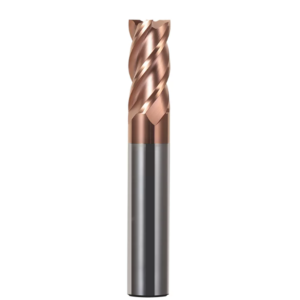
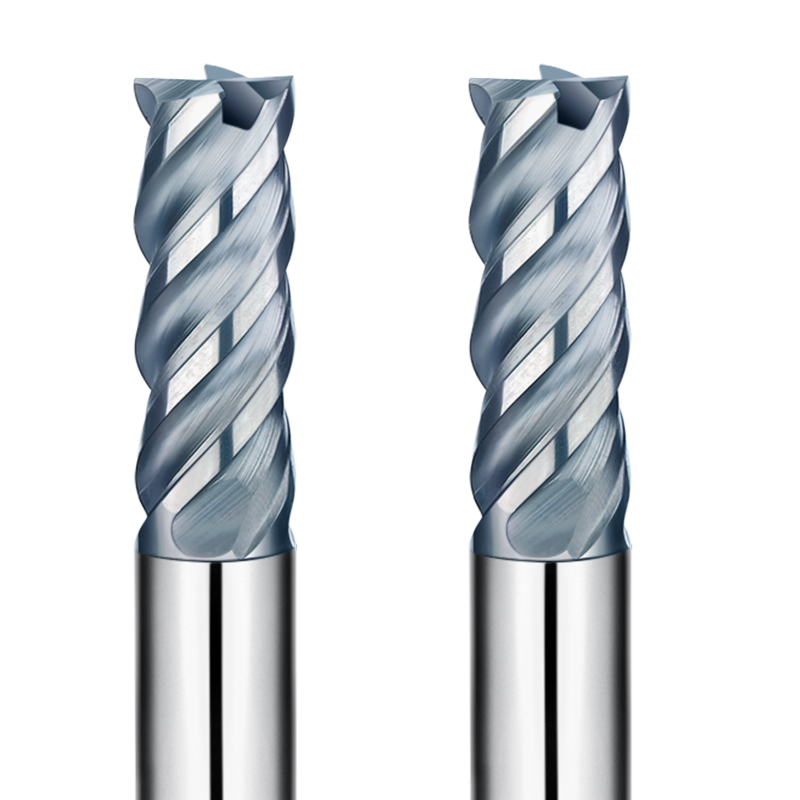
Last week, we received an urgent call. A client was machining 4140 alloy steel (annealed). To maximize chip evacuation, they insisted on using a 2-flute carbide end mill for a slotting operation. The result? Within thirty minutes, three tools snapped. The workpiece finish looked like it had been gnawed by a dog.
In our 16 years of manufacturing and technical support, we’ve seen this a hundred times. Even seasoned operators get distracted by the textbook definition of “chip clearance.”
As a end mill manufacturer who has spent over a decade at the grinding wheel, we know the truth. When machining steel—especially materials requiring an HRC55 end mill—tool rigidity is far more critical than mere chip space.
Forget abstract theories. Let’s discuss how to choose the best end mill for steel based on real-world shop experience. This isn’t just about flute count; it’s about core thickness, heat dissipation, and how coatings behave on different steel grades.
Do you really think a fraction of extra chip space can stop the high-frequency chatter caused by a flimsy tool body?
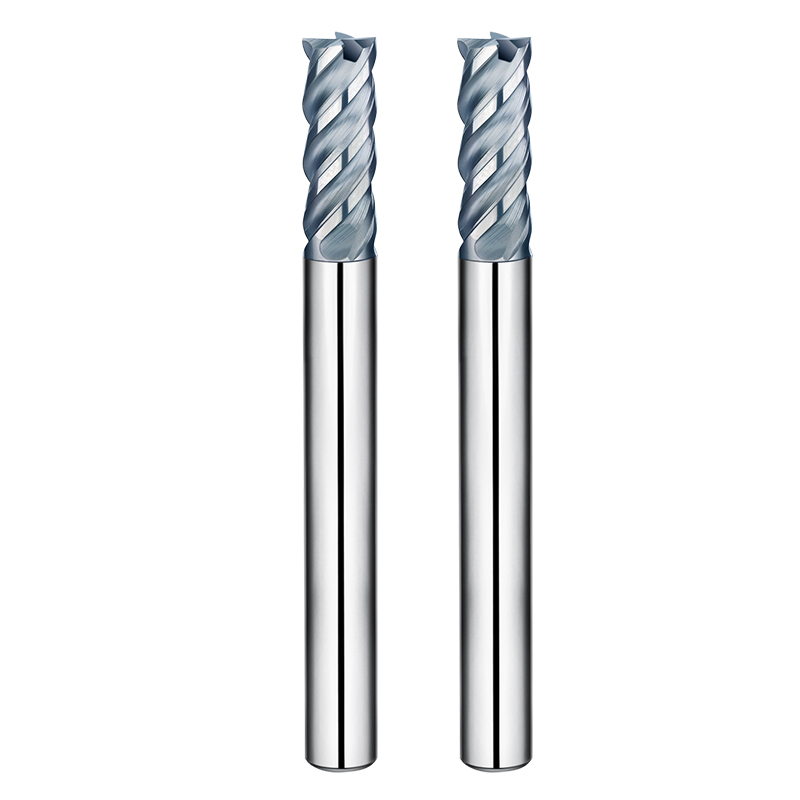
End Mills for Steel: Choosing Between 4-Flute and 2-Flute in the Shop
In our workshop, debates over flute counts are common. Selecting the right end mills for steel isn’t actually that complicated. It’s a balance between chip room and tool strength. When cutting tough steels like 4140 or P20, cutting forces multiply. Here, core thickness is the decisive factor. We often see novices choose 2-flute cutters to avoid clogging, only to have the tool snap from deflection before the first chip even clears.
When we assist clients in the US or Europe, we look at their strategy first. If you’re using high-speed trochoidal milling, the lateral forces are massive. A 4-flute cutter provides structural support that a 2-flute simply can’t match. However, if you’re cutting extremely narrow, deep slots, you might have to sacrifice speed. In those cases, we step down to a 3-flute or 2-flute tool just to “make room.” There are no absolute rules—only the right response to the cutting force in front of you.
The Real Impact of Steel Types (Low-Carbon, Alloy, and Stainless) on Flute Selection
Low-carbon steel produces long, gummy chips. This puts a massive demand on evacuation. But once you move to alloy steel, the hardness causes heat to build up fast at the tip. We ran a test on high-strength alloy steel and found that 4-flute cutters distribute thermal loads more evenly. Because more edges engage the workpiece, each individual edge carries less of the heat burden. This is why an HRC55 end mill usually performs better with more flutes in hard milling.
Stainless steel is a different beast entirely because it work-hardens instantly. When we handle 316 stainless orders, we prefer 4-flute cutters with unequal indexing. Why? Because the vibration from a 2-flute cutter often triggers that dreaded hardened “crust.” Once that layer forms, your subsequent cutting edges are finished. The chemical and physical properties of your material must dictate how often your tool edge makes contact.
The Misconception: Why “More Flutes” Isn’t Always Better
Many customers call us asking for 6-flute or 8-flute cutters immediately. They assume more flutes automatically mean the best end mill for steel or a better finish. In reality, if your flute depth is too shallow, steel chips will heat up, expand, and jam. If they don’t evacuate, your spindle load will spike, and the tool will burn out in seconds. Higher flute counts require precision feed rates and high-end cooling.
We also see veteran machinists who think more flutes mean they can just double the feed rate. If you increase flutes but don’t adjust your “Feed Per Tooth,” the tool will just “rub” the steel instead of cutting it. This friction creates massive heat. It destroys your AlTiN coating and warps the workpiece. Multi-flute cutters are for distributing load, not for masking a lazy feed rate.
Logic Validated by Batch Machining, Not Theory
As a end mill manufacturer, our logic is simple: watch the chips. During a production run, if your 4-flute cutter spits out tight, compact curls with a light purple tint, you’ve hit the “golden zone.” If the chips are fragmented, fine, or blackened, your cutting zone is overheating. You either need more coolant or a tool with deeper flutes to help with heat dissipation.
For high-efficiency lines, we recommend 4-flute cutters with a corner radius. In steel machining, sharp corners are the first to chip. A subtle radius, combined with a 4-flute carbide end mill geometry, can cut tool-change frequency by 30%. This isn’t a lab calculation. It’s wisdom bought with the thousands of broken tools we’ve analyzed over the years. In steel, stability beats theoretical speed every time.
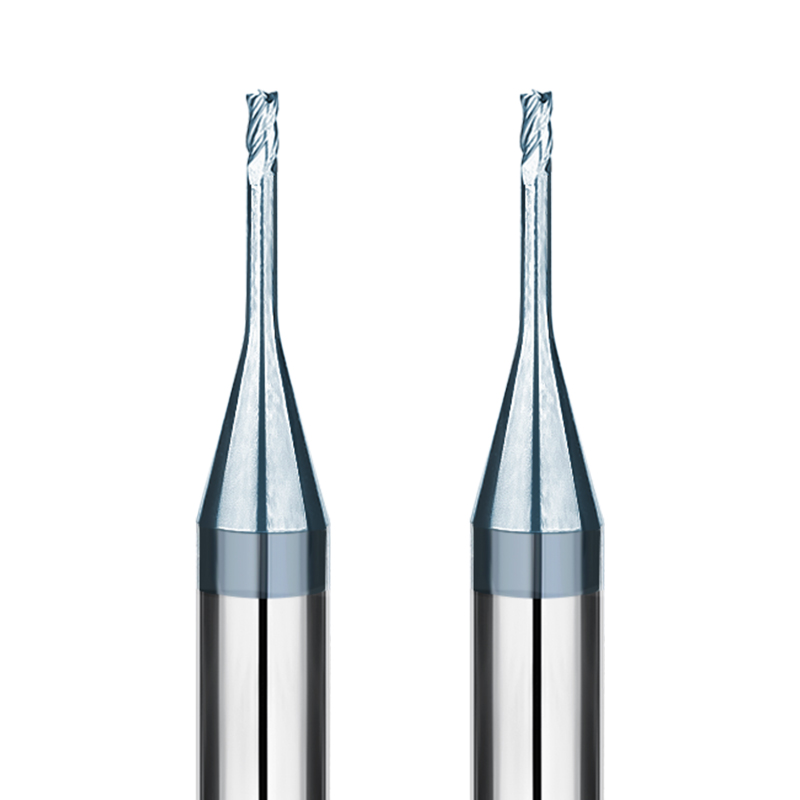
Performance of 4-Flute End Mills in Real-World Scenarios
Our experience shows that 4-flute end mills are the true “workhorses” of steel. Recently, a client machining P20 mold steel complained about chatter. We switched them to a 4-flute design with an enhanced core. The rigidity immediately dampened the spindle vibration. In deep-reach operations, that extra support replaces high-pitched shrieks with a steady, solid cutting tone.
Mathematically, 4 cutting edges double your cutting frequency compared to a 2-flute end mill tool. On-site, we’ve seen feed rates hit 1,500 mm/min while maintaining a perfect finish. This reduces the load on each individual flute. If your shop prioritizes surface finish, this setup doesn’t just save time—it eliminates hours of manual polishing.
Stability in Continuous Side Milling
Side milling hates “tool deflection.” If the tool veers off, your tolerances are gone. Our carbide end mill designs use optimized helix angles to keep the tool on track. In one aircraft connector project, our client needed deep-wall finishing. The 4-flute geometry kept two edges engaged at all times. This “continuous engagement” balanced the radial forces and kept the walls perfectly perpendicular.
If you’re cutting narrow, deep walls, you’ll feel the vibration-dampening effect of 4 flutes immediately. We tell our peers: don’t just max out the RPM. Use the rigidity of a 4-flute tool with a sensible radial depth (Ae). When your axial depth (Ap) is more than 1.5 times the diameter, the smooth finish will prove you made the right call.
Tool Life in Medium-to-High Hardness (HRC 30–50)
When steel hits HRC 30–50, heat resistance is your biggest hurdle. During the development of our HRC55 end mill series, we found that 4 flutes distribute heat better across the tool head. One client cutting 4340 steel saw crater wear on a 3-flute tool in under an hour. Switching to 4 flutes with a nano-coating increased tool life by 40%. More edges meant less heat per edge.
In these hardness ranges, chips are fine and brittle. They hit the tool hard. The compact spacing of a 4-flute tool helps eject chips the second they are cut. This prevents “re-cutting,” which causes microscopic chipping on your edges. It might not be the “fastest” cut, but for unattended, automated machining, consistency is king.
The Problem: Chip Packing and Edge Chipping
4-flute tools aren’t invincible. Their Achilles’ heel is deep slotting. We often see broken tools returned because of chip packing. Steel chips expand when hot. If all four flutes jam, coolant can’t get in. The chips then weld themselves to the tool.
This “Built-up Edge” (BUE) kills 4-flute tools instantly. We once saw a customer attempt a vertical plunge with a 4-flute tool. It snapped in two seconds. Unless you have high-pressure through-tool coolant, never force a 4-flute tool into a deep cavity. When the space is choked, even the best carbide can’t survive the pressure.
Common Misapplications: Learning from Failure
Last year, a client used a high-end 4-flute end mill tool on ultra-soft A3 carbon steel. Because the steel was gummy and they lacked high-flow coolant, the chips stuck like chewing gum. The tool choked and shattered. This proves that 4-flute tools aren’t a “magic wand” for every steel grade—especially the sticky ones.
The other pitfall is mismatched speed and feed. If you use 2-flute feed rates on a 4-flute tool, your “feed per tooth” is too low. The tool just rubs. The friction creates heat, which anneals the carbide and softens it. We find that “wearing out” a tool through bad parameters is often more expensive than snapping one. Have you checked if your conservative feed rates are actually killing your tools?
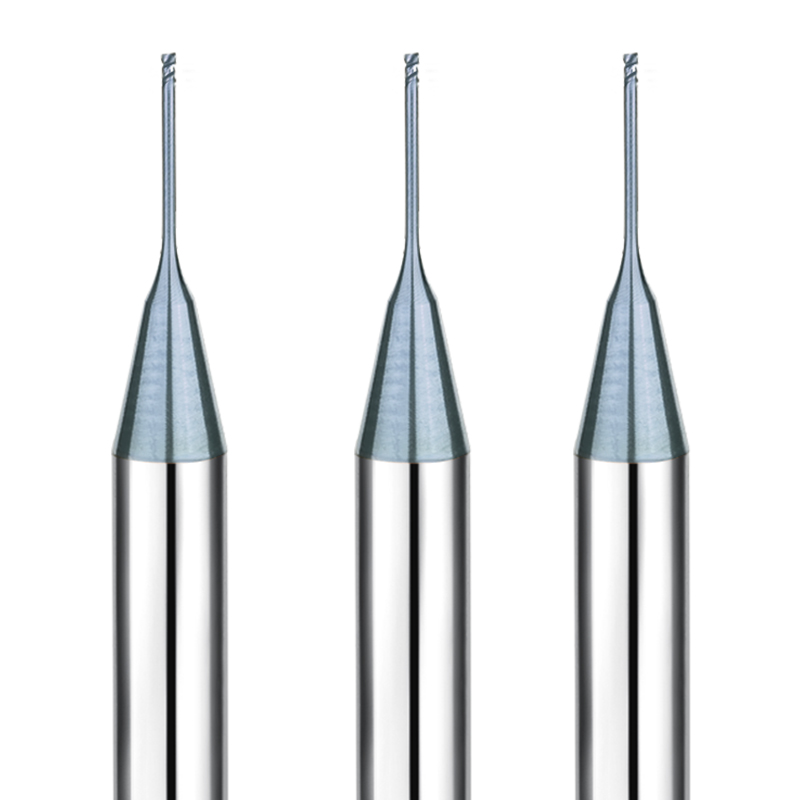
Real-World Applications and Limitations of 2-Flute End Mills for Steel
In our years of manufacturing, we’ve come to view 2-flute tools as the “special forces” of steel machining. Conventional wisdom favors multi-flute cutters for steel, but 2-flute end mills offer an irreplaceable spatial advantage. They excel in deep slotting (Full Slotting) or enclosed cavities where chip evacuation is a nightmare.
We once handled a project involving deep, narrow slots in steel. Due to thermal expansion, chips were jamming instantly. Our 4-flute tools snapped every time they hit the workpiece. By switching to a 2 flute carbide end mill with larger flutes—and dropping the spindle speed while pushing the feed per tooth—we cleared the batch without a single broken tool.
However, the trade-off is “torsional rigidity.” To make room for those big flutes, you have to sacrifice the tool’s core thickness. This makes the tool prone to radial deflection (chatter) in high-strength steel. In our labs, we’ve seen 2-flute tools undergo subtle elastic deformation under heavy loads. This kills your tolerances and causes the edges to chip. Our advice: Never use a 2-flute for finishing steel unless you are absolutely desperate for chip space.
The Chip Evacuation Advantage in Deep Slots and Heavy Cuts
When you’re cutting gummy, low-carbon steel or milling deep slots, chips have significant “bulk.” If you use a tool with too many flutes, there’s no room for the chips to curl and eject. We assisted a hydraulic valve block manufacturer who needed to mill blind slots at 1.5x the tool diameter.
The wide flutes of a 2-flute carbide end mill tool act like a high-speed highway, allowing scorching-hot chips to exit the zone along the helix. This prevents “re-cutting,” which is the fastest way to kill a tool. Even with a large axial depth of cut (Large Ap), two flutes allow coolant to actually reach the cutting edges. Our tests show that without high-pressure internal coolant, 2-flute tools are roughly 35% more efficient at dissipating heat than 4-flute versions. This is a massive win during roughing where heat buildup is the enemy.
Performance on Low-Rigidity Machine Tools
Many small shops run older machinery with tired spindles. Trying to force a 5-flute tool on these machines often triggers catastrophic resonance (screaming). In these cases, we tell our clients to take a step back and use a 2-flute tool. Why? Because fewer edges are hitting the workpiece at once, lowering the aggregate instantaneous cutting force.
This “stability” comes at a cost: surface finish. You’ll avoid the high-pitched screeching, but the texture will be coarser. As a end mill manufacturer, we believe shop-floor survival means getting the job done reliably. Don’t blindly chase “high-performance” multi-flute tools if your machine can’t handle the frequency. Use a 2-flute to keep the spindle safe and the job moving.
Common Wear Issues in Steel Machining
On hard steel, a 2-flute tool’s corner radius wears out fast. With only two engagements per revolution, the impact energy of each hit is much higher. When we inspect an HRC55 end mill sent back for regrinding, we usually see chipping at the outermost extremities of the corners. A 2-flute structure lacks lateral support; if your feed rate fluctuates even slightly, that immense resistance will snap the slender tip right off.
“Flank wear” is another killer. To stay efficient, 2-flute tools usually run at high feed rates, increasing friction against the flank face. If your cooling isn’t perfect, the coating will peel off due to extreme heat. This wear is deceptive—many operators don’t realize the tool is annealed (softened) until they hear that terrifying screech of metal-on-metal friction.
The Misconception: Why “2-Flute” is Often Mistaken as the Best Choice
It’s a fascinating trend: machinists moving from aluminum to steel often assume the 2-flute is the best end mill for steel. They fear tool breakage and think bigger flutes equal safety. In reality, the real enemies of steel are heat and vibration.
Because of the low cutting frequency, 2-flute tools are prone to low-frequency chatter, which shatters the expensive alloy substrate. This logic was fine twenty years ago when spindle speeds were lower. But today’s high-speed, shallow-depth strategies require multi-flute tools to boost the Metal Removal Rate (MRR). Don’t stay shackled to old habits. If you need a mirror finish or your material is over HRC 40, a 2-flute tool will only drag down your efficiency and drain your tool budget.
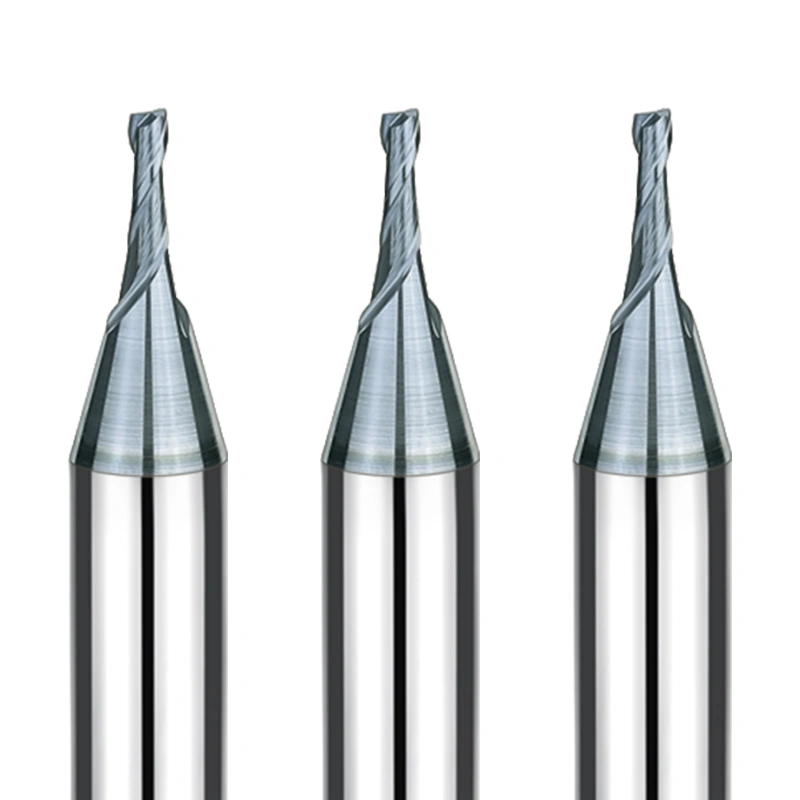
2-Flute vs 4-Flute HRC55 End Mills: The Practical Gap
In our shop, the HRC55 end mill is the “watershed” for pre-hardened steels. The difference between 2 and 4 flutes at this hardness is a battle between toughness and compressive strength. In HRC 40 alloy steel, a 4-flute tool uses its superior rigidity to withstand radial forces without chattering. The 2-flute version might look like it has better evacuation, but it usually “bounces” against hard surfaces because the impact per tooth is just too high.
From a manufacturing standpoint, HRC55 end mill tools use micro-grain carbide—extremely hard but brittle. A 4-flute tool has a thicker core that dissipates thermal stress much better. If you’re doing high-speed side milling on high-precision mold parts, that structural stability determines your final tolerance.
Limits of HRC55 Tools in General Machining
A common mistake is thinking “harder is better” and using an HRC55 end mill for soft, low-carbon steel. This is a mistake. Tools for hard steel use small or even negative rake angles to protect the edge. If you use this on soft, gummy steel, you won’t get a clean cut—you’ll get Built-Up Edge (BUE).
“Pitting hard against soft” wastes money and tears the workpiece surface. We only recommend these tools once you cross the HRC 35 threshold. If you’re cutting standard 45# or A3 steel, a high-hardness coating might actually peel off because it lacks the necessary toughness for those materials. The true arena for these tools is when chips are fine, fragmented, and carry high thermal energy.
Load Distribution: “Divide and Conquer”
Under an electron microscope, you can see that a 2-flute end mill tool carries its load unevenly when cutting steel. Every entry is a violent impact. This causes microscopic stress cracks in HRC 55 substrates. A 4-flute tool, however, divides that same workload into four points.
You can hear the difference. A 2-flute tool gives a dull, rhythmic “thumping.” A 4-flute tool produces a silky, high-frequency hum. We always recommend increasing the flute count to reduce the load per tooth. It protects the edges and saves your spindle bearings. Stable load distribution is the secret to long tool life.
Mold Steel Lifespan: Real Data
In a test targeting NAK80 mold steel, we recorded the data. Using our 4-flute carbide end mill at 0.05 mm per tooth, we hit 120 minutes of stable cutting with only 0.15 mm of wear. The 2-flute tool, under the exact same parameters, chipped at the 45-minute mark. In high-precision mold making, the durability of multi-flute tools is simply superior.
However, there is a catch. The 4-flute tool requires perfect cooling. If the fluid isn’t hitting the zone exactly right, the tool life plummets. The 2-flute tool is more “rugged”—it handles temperature spikes better without a total meltdown. So, while we push for multi-flute performance, we always remind clients: your infrastructure (coolant/fixtures) must be as good as your tools.
Why Tools Really Break: Field Analysis
As a end mill manufacturer, we analyze thousands of broken samples. The #1 cause of failure in HRC 55 tools isn’t quality—it’s radial runout. We often see guys putting a high-end 4-flute tool into a standard ER collet. The runout creates a massive imbalance. One edge takes 80% of the load, chips, and triggers a chain reaction that snaps the tool.
Another silent killer is the “retraction path.” Many programmers retract the tool vertically the second a cut is finished. In hard milling, that’s a sin. When cutting force is released, the tool “snaps” back elastically. If it hits the wall during that recoil, it fractures laterally. Our rule: Always use an arc-based entry and exit. Have you ever had a “catastrophe” that was actually just a precision issue with your tool holder?
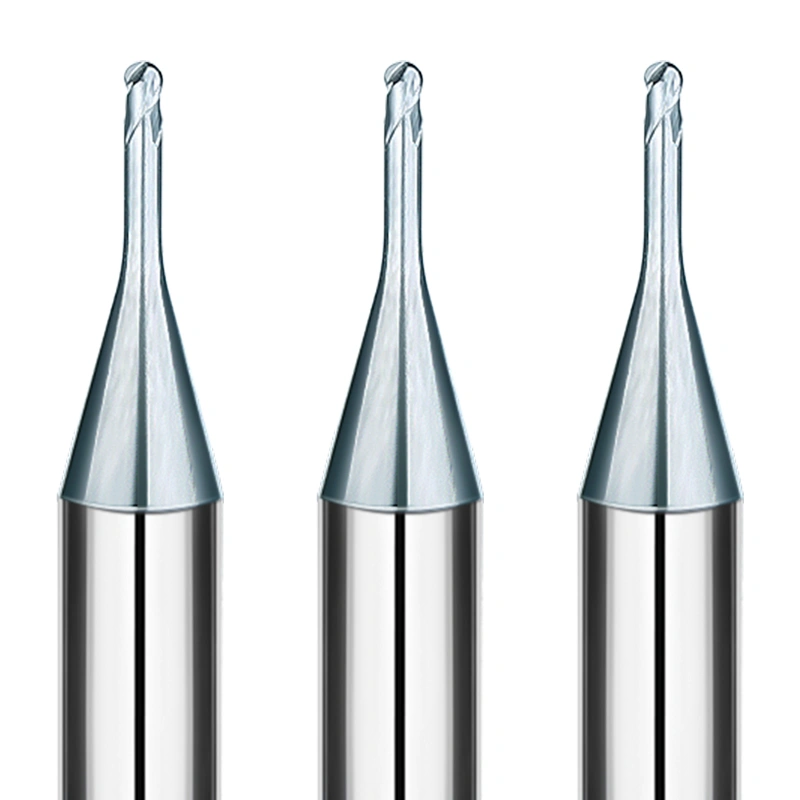
Key Factors Influencing the Choice of the “Best End Mill for Steel”
In our manufacturing careers, we’ve seen too many engineers choose the best end mill for steel based solely on catalog values. They overlook their own shop’s hardware environment. Laboratory data can fail you when a tool is moved from a massive gantry mill to a lightweight Vertical Machining Center (VMC). We once saw an identical tool perform perfectly on a heavy machine but chip instantly on a light VMC. This proves that real tool selection isn’t in a manual; it’s in your ability to adjust flute count and geometry based on real-time vibration and force feedback.
Success in steel machining hinges on “force balance.” High-strength steels exert lateral forces that want to deflect the tool. If you choose a thin-core tool just to get more chip space, your breakage risk skyrockets. When we optimize a client’s process, we start with the spindle load meter. If the current fluctuates wildly, your flute count or parameters are mismatched with the machine’s dynamics. This real-time adjustment is the only way to ensure stable, high-volume production.
The Impact of Machine Rigidity and Spindle Speed
When handling orders for older or lightweight BT40 machines, we take a conservative approach. While multi-flute tools increase your feed rate (mm/min), they demand much higher spindle rigidity. Trying to run a high-count carbide end mill on a flimsy machine turns micro-vibrations into severe resonance. This causes rapid fatigue cracks along the edges. In these cases, dropping the flute count and increasing the feed per tooth actually creates a more stable, reliable cut.
Spindle speed limits also dictate our choice. If your spindle is slow, a 2-flute or 3-flute tool allows for a higher chip load to maintain metal removal rates (MRR). On modern spindles exceeding 20,000 RPM, the high-frequency advantages of multi-flute tools can finally be realized. Before you order, understand your machine’s “temperament.” Ask yourself: can it really handle the high-frequency impact of an 8-flute tool?
Toolholding: ER Collets vs Shrink Fit
We’ve seen countless carbide end mills ruined by poor toolholding. Many shops still use standard ER collets for steel, which often results in significant radial run-out. For a 4-flute tool, a run-out of just 0.01 mm (0.0004″) can force one or two edges to bear 80% of the load. Our tests show that switching to shrink-fit or hydraulic holders can extend tool life by over 50%.
Steel machining is a marathon of precision. A shrink-fit holder makes the tool and spindle a single, monolithic unit. This rotational accuracy ensures all four edges slice with surgical precision. If your 4-flute tool always chips on the same tooth, or if you see chatter on the walls, stop looking at the tool and check your holder. A better holder is often a cheaper fix than a more expensive tool.
How Feed and Speed Change the Game
Parameters are the language we use to “talk” to the material. In our HRC55 end mill testing, we found that high RPM with a lagging feed rate causes the edges to rub rather than cut. This friction leads to rapid annealing (softening). With 2-flute tools, you can push higher feed rates to let chips carry the heat away. With 4-flute tools, the strategy is different: use smaller step-overs and rapid feeds to leverage the high cutting frequency.
We often tell customers to try “non-linear” adjustments. If side milling sounds shrill and high-pitched, try dropping the RPM but maintaining the feed rate. This increases the chip load per tooth and helps suppress vibration. This is especially effective with 4-flute tools—it helps the tool “bite” into the steel instead of bouncing off the surface. There is no single “correct” parameter; if the chip color is consistent and the sound is deep and solid, you’ve found the sweet spot.
The Reality of Cooling: Dry Cutting vs Flood
As a end mill manufacturer, we’ve seen the trade-offs of cooling firsthand. When steel is harder than HRC45, we actually prefer dry cutting or Minimum Quantity Lubrication (MQL). Rapid cycles of heating and cooling cause thermal shock cracks in carbide. Under heavy flood cooling, 4-flute edges are actually more prone to micro-chipping. Using an air blast to evacuate chips while relying on the “red hardness” of a quality coating usually yields a longer tool life.
However, in deep slotting, high-pressure water is a lifesaver. A 2-flute tool paired with high-pressure through-spindle coolant acts like a fire hose, clearing chips before they can be re-cut. Don’t be dogmatic about cooling—just ensure chips leave the zone the instant they are created. If a chip stays in the flute for more than a second, it becomes a “grinding wheel” that destroys your edge.
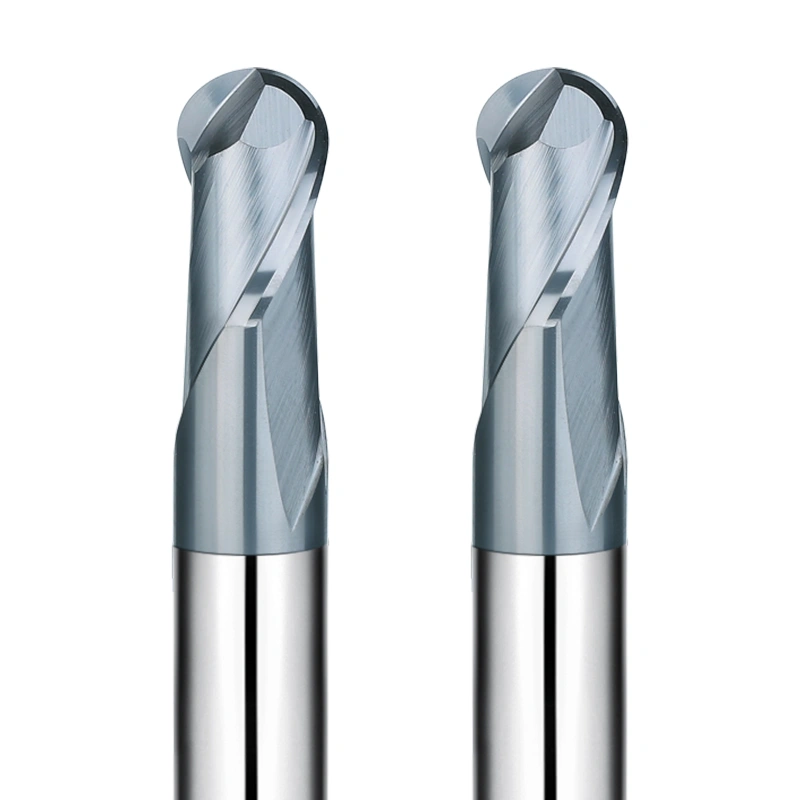
How We Recommend the Right Tool for the Job
We aren’t just a factory; we are the “emergency physicians” of the machine shop. When we see a drawing, we don’t just look at the material; we look at your machine and your workpiece geometry. Recommending a tool is about balancing cost and speed. In steel machining, even a tiny change in edge geometry can massively impact your profit-and-loss statement after 5,000 parts.
Stability is our priority. If you’re stopping the machine every hour to change a tool, high-speed theory doesn’t matter—you’re losing money. We ask about your fixturing, your coolant pressure, and your operators’ habits. The best recommendation is a tool that can run unattended through the night. This requires an experienced trade-off between the raw speed of multi-flutes and the rugged stability of a 2-flute design.
Selection by Industry: Mold, Auto, and General Specs
The “perfect” end mill for steel changes by industry. In mold and die, we deal with HRC50+ heat-treated steels. Here, we recommend high-rigidity 4-flute ball-nose tools for exact surface finishes. In automotive, where cycle time is king, we prioritize 4-flute tools with high-lubricity coatings for continuous, high-speed batch runs.
General machining is the most complex. One day it’s stainless, the next it’s 1018 carbon steel. We don’t push extreme-parameter tools here. Instead, we suggest a versatile stock of 4-flute carbide end mills. We’ve found that solving specific industry “pain points” is more effective than just chasing hardness ratings. A master mold maker and a tractor parts technician will never agree on what makes a tool “good.”
Diagnosing Problems, Not Just Quoting Specs
When a customer complains about short tool life, we don’t just tell them to slow down. We ask to see the tool. Thermal cracks suggest uneven cooling; chipping suggests a lack of system rigidity. We reverse-engineer the wear patterns to understand the forces in your cutting zone.
This “problem-first” approach helps us beat major European and American brands. If your sidewalls show vibration marks, we might suggest an unequal flute spacing or a variable helix design to break the resonance. Specs are static, but the feedback from the spindle is dynamic. If you listen to the anomalies, you’ll find the right tool.
Designing Custom Flute Counts
Customizing a carbide end mill involves rigorous math. We calculate the “chip evacuation space coefficient.” If you increase the core thickness too much to gain strength in a narrow slot, you’ll compress the chips, generate heat, and snap the tool. We precisely balance flute depth against core diameter to ensure a “smooth escape route” for every chip.
We also design for your spindle. If you have a low-RPM, high-torque machine, we’ll design a tool with fewer flutes to allow for aggressive, “heavy roughing” chip loads. If you have a high-speed center, we’ll add flutes and optimize the helix angle to minimize high-frequency impact. This level of customization is why we win. Every degree of helix angle change redistributes heat and energy.
Case Study: Upgrading from 2-Flute to 4-Flute
A client was machining Q345B steel components using old-school 2-flute tools for everything. Production was slow, and the spindle load was erratic. We suggested an upgrade to a 4-flute HRC55 end mill optimized for steel. The operators were worried about clogging. We solved this by shifting the strategy: shallower radial cuts (Ae) with much faster feed rates (Vf).
The results:
- Production cycles: Reduced by 45%.
- Vibration: Dropped by 30%.
- Surface Finish: Combined roughing and finishing into one pass.
This case proves that in modern steel machining, the stability of multiple edges often beats the raw physical space of a 2-flute tool. Are your production lines slow because you’re using 1990s methods for 2026 processes?
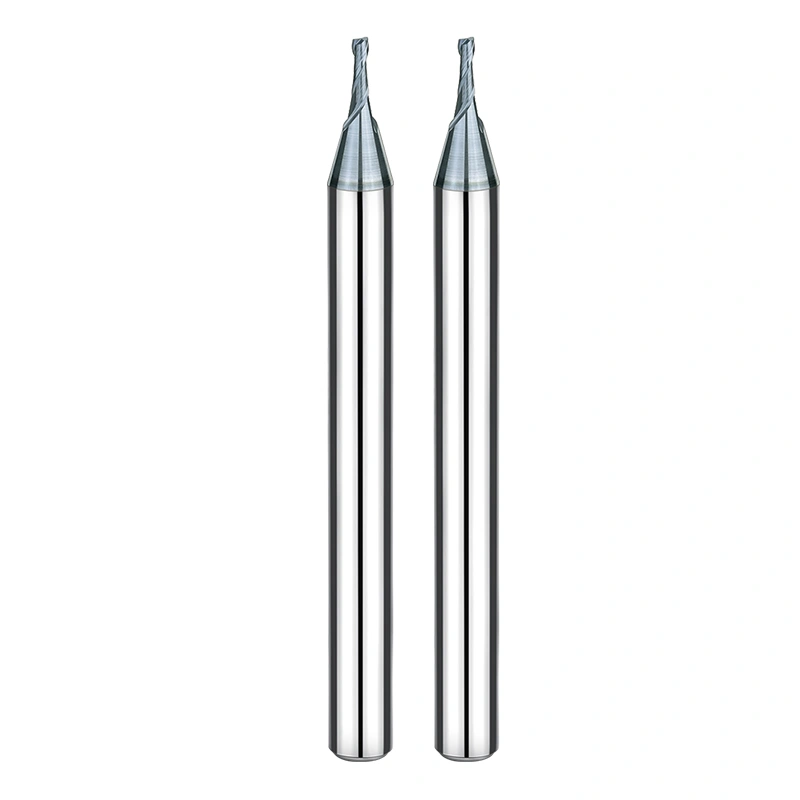
4-Flute vs 2-Flute: Our Final Recommendation for Real-World Production
After years of navigating both the shop floor and the lab, we know there is no “magic bullet” in the world of end mills for steel. Every recommendation depends on your machine’s rigidity, the part geometry, and your cycle time goals. If we had to set a definitive benchmark, the 4-flute end mill is our “performance standard,” while the 2-flute is the “lifeline” for extreme conditions. Modern CAM algorithms like trochoidal milling have made the stability of multiple edges far more valuable than raw chip space.
When deciding, look at your spindle load meter first. If the needle jumps like an erratic EKG, your flute count is likely fighting your feed rate. Don’t try to brute-force a cut with tool hardness if your setup lacks rigidity. Instead, use your flute count to compensate for your environment. By choosing between 4-flute and 2-flute tools strategically, you aren’t just making a part; you’re building a personalized library of cutting logic.
When Is the 4-Flute Truly the Best End Mill for Steel?
If you are side milling, finishing, or using high-efficiency paths on medium-to-hard alloy steels, the 4-flute carbide end mill is almost always the right choice. Four edges provide continuous support, which slashes the impact force on your spindle. If you have strict finish requirements or are running unattended batch production for hours, the stable wear curve of a 4-flute tool gives you peace of mind. You won’t wake up to a scrapped batch caused by a catastrophic tip failure.
If you’re running HSK or high-precision BT40 interfaces with shrink-fit holders, you must harness the high-feed potential of 4 flutes. Our tests show that 4-flute tools distribute heat more evenly because of the high frequency of edge contact. This delays annealing. As long as your radial depth (Ae) stays between 10% and 20% of the tool diameter, the efficiency of a 4-flute setup is decisive.
When to Prioritize 2-Flute Tools Over 4-Flute Tools
If you’re cutting deep, narrow blind slots or working with ultra-soft, gummy low-carbon steel, forget efficiency—switch to a 2-flute tool. In these cases, tool survival is the only priority. If chips aren’t flushing out and are turning a purplish-black color in the slot, you need the massive evacuation space of a 2-flute tool. On older, “tired” machines with spindle run-out, the lower instantaneous forces of 2-flute tools help you avoid low-frequency resonance.
Also, if you are plunge milling or ramping at steep angles, the clearance on a 2-flute tool prevents chip “nesting” at the bottom of the cut. We respect the laws of physics: when the space is too small for the chips, even the best end mill for steel will shatter. The 2-flute is your safety margin—the safeguard that ensures the job gets done when conditions get ugly.
Quickly Determining the Optimal Flute Count via Test Cuts
If you aren’t sure, check your chips. If they are tight, compact, and land with a “crisp” sound, your chip space utilization is perfect. If they look like powder or are crushed and deformed, you either need fewer flutes or a feed rate adjustment. Listen to the machine: a 4-flute tool should produce a steady, high-frequency hum. A 2-flute tool will have a deeper, more resonant thumping sound due to the longer intervals between hits.
Check the wear patterns early. Severe flank wear usually means your feed rate is too low, causing friction—try adding flutes and boosting the feed. If the edge is chipping, the impact is too high; step down in flute count or tighten up your workholding. This microscopic feedback is more accurate than any textbook formula.
Key Insights to Avoid Common Mistakes
To cut tool costs long-term, remember: never judge a tool without looking at the machine. If you keep your clamping run-out under 0.005 mm (0.0002″), a 4-flute HRC55 end mill will give you incredible results. But if you’re using worn-out collets, a high-end tool is just a waste of money. Look at the ratio between “core thickness” and “flute depth”—that’s where the real engineering happens.
Tool selection is a game of details. If you’re fighting uncontrollable chatter, frequent breakage, or short tool life, let’s talk. We can look at your specific machine power, material grades, and even photos of your failed tool tips to build a strategy that works. In the CNC world, the “best” tool is the one that moves chips at the lowest cost while holding the tightest precision.