Last month, we received a video from a German client specializing in automotive injection molds. A 5-axis machining center had triggered an emergency stop alarm; a standard drill bit snapped inside a large P20 pre-hardened steel slide block after 40 hours of machining. The break occurred at the intersection of a deep cooling channel and an angled ejector pin hole. To extract the broken bit without damaging the mold cavity, the workshop had to halt production for EDM, losing two full shifts of capacity.
Over the past 15 years, we have seen this costly scenario play out repeatedly with our mold-making clients in Europe and the US. Mold making is far from routine drilling. Whether dealing with HRC 38 pre-hardened steel, corrosion-resistant S136, or wear-resistant D2 tool steel, drilling is often the most unpredictable stage. Workshop supervisors frequently ask us how to choose the best drill bits for metal and steel. Why do general-purpose tools suffer from micro-chipping and hole drift in deep cooling channels?
The reality is that mold drilling principles have shifted. Maximizing throughput while maintaining perpendicularity requires more than just high tool hardness. From the thermal shock resistance of the micro-grain carbide substrate to nano-coatings matched to specific mold steels, every detail dictates whether a process succeeds. Why do workshops still select critical drill bits using the mindset applied to ordinary carbon steel when mold blanks cost thousands of dollars?
Practical Workshop Selection: Which Drill Bit is the Optimal Solution for Mold Machining?
If you spend your days monitoring machine tools, you know mold materials differ completely from standard structural components. When faced with frequent edge chipping, peers often switch cutting fluids or slow feeds, but the root cause usually lies in tool selection. When asked for what type of drill bit for metal suits mold making best, we never blindly recommend a universal model. Mold steels exhibit unique chip-breaking properties, and discussing selection without considering substrate toughness compromises cycle times.
Our selection criteria weigh hole wall tolerances against safety priorities. For single-piece prototypes on rigid machines, flexible materials act as a safety fuse. However, for high-volume lines demanding unmanned night shifts, a drill’s self-centering geometry and shock resistance are vital. Understanding material limits helps you avoid scrap parts far better than trusting nominal brand specifications.
Machining Realities for P20, 718H, and NAK80: Why We Recommend Against Cobalt-Bearing HSS Drill Bits
A North American client recently struggled with high tool consumption on deep cooling channels using 718H steel. The workshop relied exclusively on M42 cobalt-bearing drill bits, but deep drilling past three times the diameter traps heat at the hole bottom. Examination under a stereomicroscope showed plastic deformation due to annealing, followed by flank wear—a vicious cycle common with standard drill bits for drilling metal.
When machining materials like NAK80 containing hard segregation spots, material spring-back subjects the chisel edge to immense axial resistance. Cobalt-bearing drills tend to deflect under high thrust, causing severe bell-mouthing. Unless using aging machines with high runout, we recommend phasing out cobalt tools to prevent rigidity limitations from compromising dynamic accuracy.
From Hole Wall Roughness to Tool Failure: Real-World Performance and Lifespan of Various Steel-Drilling Bits in Mold Cavities
We conducted a test series comparing powder-metallurgy drills against tungsten carbide drills on 40CrMnMo7 blocks. At a depth of 8 meters, conventional tools exhibited severe built-up edge wear, and hole roughness deteriorated from Ra 1.6 to over Ra 6.3. Relying on basic drill bits for drilling steel in high-finish cavities necessitates hours of manual deburring by bench workers later on.
Solid carbide drills exhibit only minor wear on primary edges after drilling dozens of meters. In contrast, standard steel-bodied drills develop microscopic fatigue cracks at the clearance angle, snapping during breakthrough phases. Breakage extraction costs often exceed the initial price difference of the tool by over twentyfold.
An Engineer’s Primary Principle: Selecting the Best Drill Bit for Pre-hardened Steel (HRC 30–40)
Blueprints specifying HRC 32–38 present a challenge because the material offers high cutting resistance and triggers vibrations. When determining what is the best drill bit for steel, our guiding rule matches hardness while using speed for smooth chip evacuation. Once hardness exceeds HRC 30, the drill point must shift from a flat edge to an S-shaped chisel edge to reduce instantaneous load.
Coating oxidation resistance is also critical when machining steels harder than HRC 35, as shear temperatures exceed 700°C. Without an aluminum-titanium composite coating to form a protective film, thermochemical affinity leads to built-up edges. An internal-coolant drill bit combining high hot hardness and an ultra-fine-grained substrate represents a reliable choice for dimensional accuracy.
Conquering Hardened Mold Steels: How Carbide Drill Bits for Steel Eliminate Work Hardening and Chipping
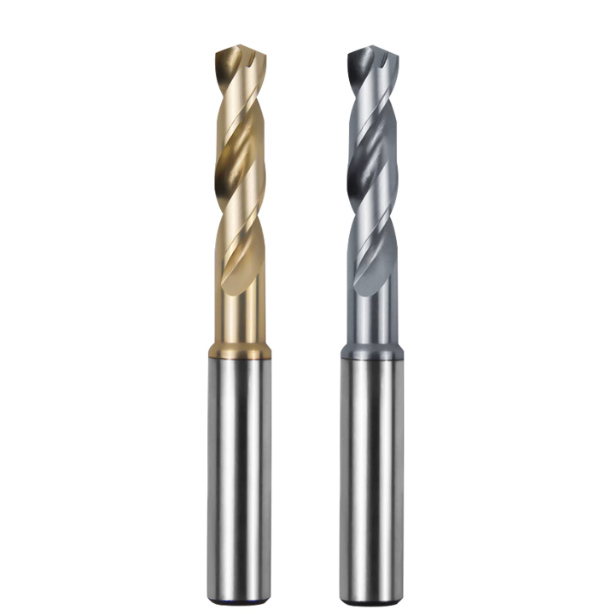
When taking on deep-hole jobs in hardened mold cavities, you face issues from microstructural segregation. Many assume switching to carbide tools solves everything, but the machine often emits low-frequency vibrations and fractures the drill tip. Our commissioning shows that hardened steel impacts tools far beyond standard components. Preserving the drill tip under heavy cutting loads is the primary criterion for evaluating carbide drill bits for steel.
A mold’s hardened surface and high-toughness core are natural adversaries. When machining above HRC 45, weak cutting edges experience microscopic elastic deflection, inducing secondary work hardening at the hole entrance. Avoid over-sharp general-purpose tools and build a robust defense using optimized margin grinding and multi-layer coatings. This is how carbide drill bits for steel maintain stability during rigorous cutting.
Drilling S136 Mirror-Finish Stainless Steel and Cold-Work Mold Steels (D2/Cr12MoV): Why Standard Coatings Suffer Frequent Micro-Chipping
Troubleshooting deep-hole drilling in S136 stainless steel reveals high susceptibility to built-up edge formation. Standard TiN-coated tools develop crescent-shaped crater wear after shallow penetration when drilling tough cold-work steels like D2. This stems from thermal expansion mismatches between standard coatings and the substrate under instantaneous high temperatures.
High-chromium materials create intense resistance for chips flowing across the rake face. If the coating lacks smoothness or the substrate lacks thermal fatigue resistance, chip particles abrade the cutting edge. Edge chipping often results from chips jamming in the flute, causing stress concentrations that exceed the flexural limits of drill bits for drilling metal.
Root Causes of Micro-chipping: The Impact of Negative Chamfering and Ultrafine-Grain Substrates on the Performance of Carbide Drill Bits for Steel
To address edge chipping, we grind a negative chamfer of 0.05 mm at a -15° angle on sharp edges. High-performance carbide drill bits for steel utilize ultrafine-grain tungsten carbide substrates below 0.4 microns combined with negative chamfers. This design exponentially enhances resistance to mechanical impact and thermal shock during interrupted cuts.
Improving chipping resistance does not mean sacrificing tool sharpness completely. Overly wide negative chamfers increase cutting resistance, leading to spindle overloads. Getting the first step right by balancing cobalt ratios and tungsten carbide ensures your carbide drill bits for steel possess both the red hardness and transverse rupture strength needed for tough molds.
Eliminating Surface Slippage and Work Hardening: Field Testing Feed Rates vs. Self-Centering Chisel Edge Grinding
Machinists often start drilling alloy steels with low feed rates, but this gentle approach causes premature tool failure. Low feed rates force the drill’s chisel edge to rub against the surface, spiking hardness rapidly. Operators must use a firm, positive feed at entry, ensuring these carbide drill bits for steel penetrate the base material instantly.
Chisel edge geometry is crucial for preventing slippage and deflection. Dual clearance angles and S-shaped self-centering grinds reduce axial cutting resistance so bits self-align upon contact. Re-evaluating your feed strategy and tip grinding parameters prevents deflection when drilling deep cooling channels.
Preventing Deflection and Managing Chips in Deep Mold Cooling Channels: Key Features of Top-Tier Metal-Drilling Bits for Heavy-Duty Applications
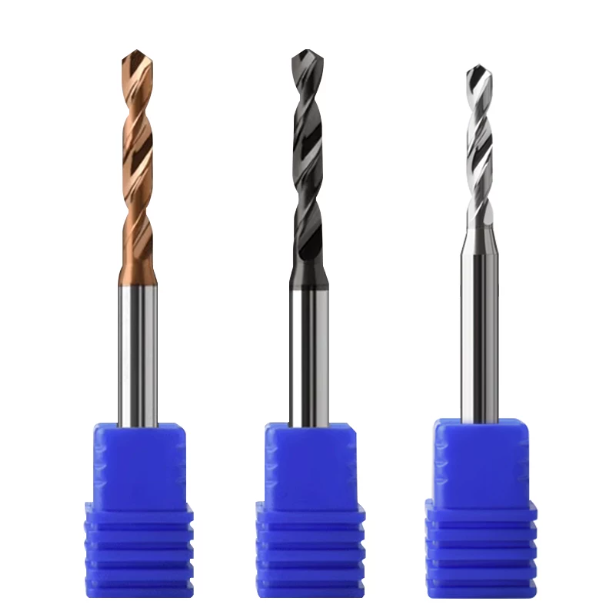
Complex injection mold cooling channels make deep-hole drilling an unavoidable challenge. When length-to-diameter ratios exceed 5D, minute spindle runouts amplify, causing severe hole deviation. Handling heavy-duty cutting requires looking beyond coatings to focus on flute helix angles, margin widths, and cooling structures. Only the best drill bits for metal and steel with high flexural modulus maintain straightness in deep cuts.
The biggest challenge in deep-hole mold machining is chip evacuation from enclosed cavities. Years of support show that flute polishing and margin chamfers dictate whether chips flow smoothly or clog flutes. Mastering these physical details gives you full control over deep-hole machining with the best drill bits for metal and steel.
Real-World Deep-Hole Machining (5D–30D): How High-Pressure Through-Coolant Eliminates High-Temperature Built-Up Edge and Chip Tangling
Assisting a die-casting mold manufacturer revealed that external-coolant drills cause chip tangling past 12D depths. Cutting fluid fails to reach the hole bottom, welding chips onto the drill tip. Switching to high-pressure coolant drills featuring central through-coolant channels forces fluid at 2.0–4.0 MPa directly to the edge, dissipating heat and ejecting ribbon chips.
In ultra-deep holes, through-coolant channel design is critical. Without internal cooling, chips wedge between margins and hole walls, causing localized overheating. Workshops tackling depths exceeding 15D must use high-pressure filtration systems, ensuring that metal-drilling bits receive precise fluid delivery to eliminate downtime risks.
Peck Drilling Cycles (G83) Cause Drastic Tool Life Reduction: Why We Recommend High-Speed Straight Drilling (G73 or Single-Pass) for High-Rigidity Steel-Drilling Bits
Programmers often default to G83 peck drilling believing frequent retraction protects tools. However, when using rigid carbide tools on mold steel, retraction and re-engagement at high speeds chip the edge against work-hardened surfaces. Force measurements show G83 increases mechanical fatigue.
For rigid CNC machines paired with steel-drilling bits, we recommend G73 chip-breaking cycles or high-speed straight drilling. Allowing tools to penetrate in a steady pass reduces cycle times and prevents tip collisions with residual chips. This shift extends and standardizes tool life.
Breakage at Entry/Exit and Oversized Holes: Rules for Derating Speed and Feed When Entering at an Angle or Exiting at a Cross-Hole Intersection
Mold cavities often feature cooling channels entering inclined surfaces or intersecting transverse channels. Angular entry generates massive side loads, causing oversized holes or broken tips. We prohibit forcing drills through intersection points at full speed, mandating strict parameter derating protocols instead.
As drills approach inclined surfaces or breakthrough points within 1–2 mm, operators must reduce feed rates by 50% via macro programs. Using robust web thicknesses and specialized chisel edges resists lateral skidding. Taking extra steps to derate parameters for these steel-drilling bits saves thousands in scrapped blanks.

Reviewing Cost-Reduction Strategies in Western Mold Shops: SAMHO Drill Bit Supplier’s Solutions for Tool Breakage
Workshop cost reduction isn’t about slashing tooling budgets; it means eliminating frequent tool breakage and machine downtime. Over a decade of serving high-end mold manufacturers in Europe and the US, we have seen sudden tool breakage ruin expensive blocks of mold steel. Reviewing operations across dozens of factories shows that establishing a robust tooling supply chain and an effective on-site optimization mechanism is crucial. As an original manufacturer, the SAMHO Drill Bit Supplier team believes that embedding technical support directly into customer machining environments helps achieve exponential tool life improvements.
From fixture rigidity and tool holder dynamic balance to matching parameters for mold steels, any minor variable can cause a tool to fail. In discussions with overseas peers, we emphasize evaluating overall cycle times and yield rates rather than unit prices alone. Bringing industrial-grade reliability to the shop floor remains the only path to sustainable cost reduction.
Real-World Case Study: On-Site Optimization Triples Tool Life for a German Automotive Injection Mold Client
A Stuttgart automotive injection mold workshop recently struggled with poor tool life during deep-hole drilling in P20 pre-hardened steel. Conventional tools suffered thermal fatigue wear or snapped after drilling a few hundred holes. Our technical team spent two days on-site, analyzing cutting fluid concentration, internal coolant flow, and spindle feed curves to optimize high-performance metal-drilling bits.
Optimizing speeds from conservative parameters and implementing efficient feed paths tripled stable tool service life during continuous operations. Observing the declining wear report, the supervisor realized true performance relies on precise control of every cutting detail rather than blind reliance on big brands.
The Hidden Killer—Runout (TIR) Exceeding 0.005mm: How Hydraulic Tool Holders and Dynamic Balancing Safeguard Carbide Drill Bits for Steel
Operators often blame tool chipping on insufficient material hardness without checking spindle or tool holder runout. When radial runout (TIR) at the tool tip exceeds 0.005mm, carbide tips suffer cyclic fatigue impacts from unilateral loading during high-speed rotation. Investigating mysterious micro-chipping revealed that switching to hydraulic tool holders with rigorous dynamic balancing is essential for unlocking peak performance from carbide drill bits for steel.
Brittle materials are vulnerable to high-frequency, low-amplitude vibrations. If tool holders lack clamping precision, carbide tips experience imperceptible micro-wobble upon contact, causing instantaneous stress overloads. Premium tools suffer drastic lifespan reductions if paired with worn-out ER collet chucks, making quality holder investments smarter than frequent replacements.
The Technical Value of Direct Factory Partnership: SAMHO Drill Bit Supplier’s Customized Testing and Consistent Batch Delivery for Non-Standard Deep-Hole Machining in North American Die-Casting Molds
Standard off-the-shelf catalog tools failed to meet complex stepped geometries and tight tolerances for a North American die-casting client. Relying on traditional global traders would have meant waiting weeks for custom samples. Leveraging flexible manufacturing experience, we rapidly customized specialized stepped composite cutting tools and ensured consistency through rigorous batch trial-cutting validation. As an industry supplier, SAMHO Drill Bit Supplier understands uncompromising demands for non-standard tooling speed and quality stability.
From blueprint confirmation and sample production to stable follow-up production, dealing directly with source factories allows immediate process adjustments based on real-time workshop feedback. Bypassing intermediary communications delivers optimal geometric structures and coating solutions directly to the machine spindle, building a long-term, mutually trusting supply chain relationship.

Engineer’s Quick-Reference Guide: Benchmark Cutting Data for Mold Workshops Using Premium Metal and Steel Drill Bits
Visiting countless workshops reveals an interesting phenomenon: machinists invest heavily in top-tier cutting tools yet continue using conservative parameters established a decade ago. The result is often tool tip burnout or suboptimal efficiency. Machining mold steel is never a matter of luck; every step interconnects—from substrate toughness and high-pressure coolant evacuation to final spindle cutting speeds and feed rates. Referencing practical benchmark data helps cross-reference theoretical values with specific machine tool rigidity.
Parameters require dynamic fine-tuning based on workpiece hardness, tool holder runout, and cutting fluid concentration. Addressing on-site challenges like chip entanglement with P20, work hardening with S136, or coolant channel deviation requires a data-driven approach to standardize operations. Only then can quality best drill bits for metal and steel deliver stable, industrial-grade productivity.
Recommended On-Site Cutting Parameters (SFM & IPR) for Common Mold Steels (P20 / 718 / H13 / S136)
Extensive on-site testing has established reliable cutting parameter ranges for pre-hardened and mirror-finish mold steels. When machining standard P20 and 718H (HRC 30–35), the recommended cutting speed (SFM) for carbide drills with internal coolant is 280–350, while feed rates (IPR) range between 0.15 and 0.25 mm/rev based on drill diameter to ensure clean chip breakage.
For tougher mold steels with lower thermal conductivity like S136 or H13, parameters must adjust conservatively with SFM kept around 200–260 and steady feed rates avoiding fluctuations. Overlaying machine tool spindle load curves against machining logs helps verify whether current parameters maximize tool rigidity and performance.
Diagnosing Machining Conditions via Chip Morphology: How to Adjust Cutting Parameters When You See Spiral Ribbon Chips or Powdered Debris
On the shop floor, chips serve as honest messengers between cutting tools and workpieces. Thick, blue-tinted spiral ribbon chips with continuous stretching marks indicate light feed rates or excessive cutting speeds causing heat buildup. Conversely, fine powder or needle-like fragments indicate high feed rates or severe micro-chipping, requiring immediate machine inspection.
Adjusting parameters based on chip observation is a fundamental engineering skill. Sharing specific machining conditions, drawing specifications, or material hardness data helps devise effective cutting strategies for your next deep-hole mold drilling challenge using drill bits for drilling steel.