Late last month, we received an urgent email from a long-standing client in Germany. While they were processing a batch of high-hardness engineering ceramic housings, their production line suddenly ground to a halt. As soon as operators engaged the feed axis, the ceramic surfaces failed to drill cleanly; instead, spiderweb-like cracks appeared, and several newly installed diamond drill bit for ceramic units burned out in under three minutes. On-site technicians suspected a plating defect.
However, after reviewing machining footage, examining worn edges, and comparing spindle speeds, we determined the issue was not tool quality. Rather, it was a classic case of mismatched parameters and cooling—a scenario we encounter constantly while assisting B2B machining clients. Ceramics are extremely sensitive to cutting stress. Whether using standard diamond drill bits or precision diamond coated drill bits, slight parameter deviations are drastically amplified.
Drawing on our technical support experience, we use an effective troubleshooting framework:
- Speed and feed imbalance: Blindly applying carbide parameters generates intense thermal stress, destroying tool sharpness.
- Coolant shortages: Lacking efficient cooling when using small diamond drill bits causes rapid thermal dulling.
- Rigidity issues: Spindle runout triggers resonance, chipping diamond carbide drill bit edges upon contact.
- Matrix mismatches: Poor particle retention causes edge shedding when encountering hard material inclusions.
How can we resolve hidden production line faults by optimizing speeds, peck-drilling, and machine precision?
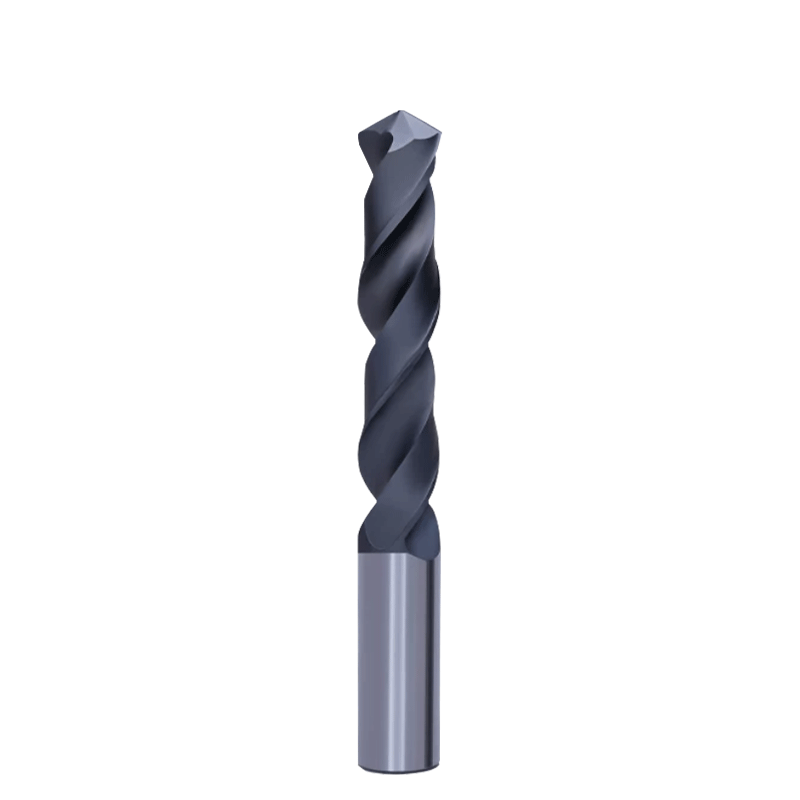
Why does your diamond drill bit for ceramic always cause edge chipping at the moment of engagement?
On the shop floor, the most distressing sight is watching an expensive ceramic workpiece suffer a chipped corner the instant the operator engages the feed. When investigating complaints, we find 90% of chipping happens within the first 0.5 seconds of contact. Ceramics possess immense compressive strength but very poor resistance to shear and impact forces. If the initial impact exceeds fracture toughness, cracks propagate rapidly along grain boundaries, ruining the hole.
To solve this, we must abandon the straight-cut mindset used in metalworking. During setup, we instruct operators to reduce the feed rate below 30% of standard levels, use a light initial load, or program a micro-feed ramp-in path. Only by letting outer diamond particles scribe a tiny circular groove before applying full axial pressure can we prevent catastrophic stress concentration.
Mechanical stress concentration caused by an imbalance between feed rate and spindle speed
When troubleshooting chipping, our first step is checking the CNC logs for a mismatch between rotational speed and feed parameters. Technicians often blindly apply alloy steel turning speeds when driving a diamond drill bit for ceramic, resulting in excessive cutting speeds. This causes violent dry friction, generating extreme localized thermal stress that shatters the glazed surface layer.
Optimal parameters must reflect workpiece hardness. For materials with a Mohs hardness of 9 or higher, we recommend keeping spindle speeds moderate to low with a matched feed rate per revolution. If feed is too slow while speed is high, diamond particles skid across the surface instead of cutting, causing edge chipping and premature tool dulling.
Optimizing the Positioning Process: Preventing Diamond Drill Bit Slippage and Misalignment with Guide Jigs
Ceramic surfaces feature a smooth, sintered glaze lacking microscopic texture to capture debris. During manual drilling, diamond bits for drill skid wildly across the surface upon startup, causing extensive scratching. This lateral slippage subjects the tool body and exposed diamond particles to destructive shear forces, chipping the edge before drilling begins.
The safest workshop practice involves using specialized polymer or cemented carbide guide jigs, or clamping systems with central suction cups. These jigs physically constrain the tool, ensuring the axis remains perpendicular upon contact. Once the initial centering hole is established, the guide plate can be removed, eliminating edge chipping caused by slippage.
Checking for Excessive Wear or Body Deformation in Your Diamond-Coated Drill Bit
Operators often blame material inconsistencies while overlooking the tool’s actual condition. When surface diamond particles suffer micro-chipping or the matrix undergoes thermal fatigue, a diamond coated drill bit loses its sharpness and acts like a blunt pressing head. Cutting high-hardness ceramics with a dull tool is akin to smashing glass with a hammer.
We examine tool tips using a stereomicroscope at 20x magnification. If diamond particles have detached to expose the steel substrate, or if the substrate exhibits runout under high loads, the tool must be scrapped immediately. Maintaining a tool life log and replacing tools before cutting resistance rises ensures high machining yields.
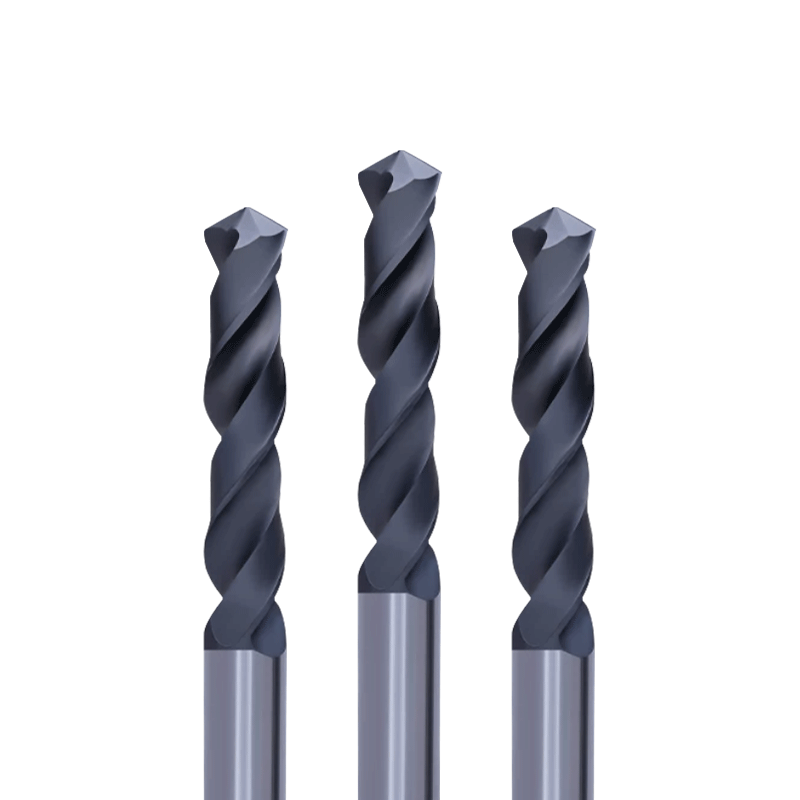
Chip Evacuation Disasters in Deep-Hole Machining: Managing Heat Accumulation and Thermal Degradation with Diamond Drill Bits
When tackling deep-hole projects involving thick-walled ceramics or stone, the most nerve-wracking moment isn’t the initial entry. It is the sudden, abnormal sound and pungent burning smell that emerge from the hole once depth exceeds three times the diameter. We encounter this repeatedly on-site: operators watch as spindle loads spike, and upon tool retraction, find the entire cutting edge has carbonized and detached due to intense heat buildup. Ceramics are poor thermal conductors, trapping friction heat entirely within the confined cutting zone.
To avoid this thermal failure, we must re-evaluate chip evacuation limits during process planning. Continuous drilling causes powdery debris to form an abrasive sludge at the hole bottom, accelerating wear and seizing the spindle. Practical testing shows that only through scientific coolant flushing and dynamic path planning can a diamond drill bit maintain stable cutting performance during deep-hole operations.
The Critical Threshold Between Dry and Wet Cutting: How Coolant Flow Determines Diamond Drill Bit Lifespan
Novices often attempt dry drilling for convenience, but this approach is disastrous when cutting deep holes in brittle materials. Coolant is not merely a cooling medium; it is a powerful force for chip evacuation. Without continuous, high-pressure fluid flushing, cutting zone temperatures surpass critical thresholds within seconds, causing the metal matrix to expand, soften, and lose grip on abrasive particles.
Flow rate and spray angle are decisive factors. Tests on multi-axis centers revealed that a dual-supply approach combining through-spindle coolant with an external ring spray is essential to flush out fine particles. When cooling parameters meet required standards, the actual service life of a diamond drill bit can easily double or exceed expectations.
Chip Flute Clogging Caused by Indiscriminate Selection of Standard Diamond Carbide Drill Bits
When workshop inventory runs low, technicians might grab a standard carbide drill bit, assuming high hardness makes it universally suitable. However, our troubleshooting revealed these tools fail because chip flutes are too narrow or helix angles are mismatched. Once powder gets trapped at the bottom, it causes rapid secondary compression, leading to an exponential rise in cutting torque that snaps the shank.
We prioritize specific chip evacuation needs for deep holes with limited space. For these demanding tasks, we recommend switching to tools featuring large flutes or specialized chip-breaking geometries. A truly effective diamond carbide drill bit requires flute geometry based on fluid dynamics to ensure chips evacuate smoothly, fundamentally preventing tool binding and hole clogging.
On-Site Technical Support Case Study: Solving Chip Evacuation Challenges by Adjusting the Peck Drilling Cycle
Last month at a client’s workshop, we witnessed a vertical milling machine ruin five consecutive drill bits while machining a 15 mm deep hole in alumina ceramic. Their original program used a continuous feedstraight to the bottom in one passwhich made heat dissipation and debris evacuation impossible. We intervened immediately, rewriting the program to use a dynamic peck-drill cycle that fully retracted the tool after every 1 mm of depth.
This strategy of incremental steps and frequent retractions cleared accumulated powder and provided the tool tip with valuable cooling time. When the operator restarted the optimized program, the acrid burning odor vanished, and surface roughness improved significantly. By flexibly adjusting these stepped-feed parameters, we successfully helped the client resolve a long-standing chip evacuation challenge.
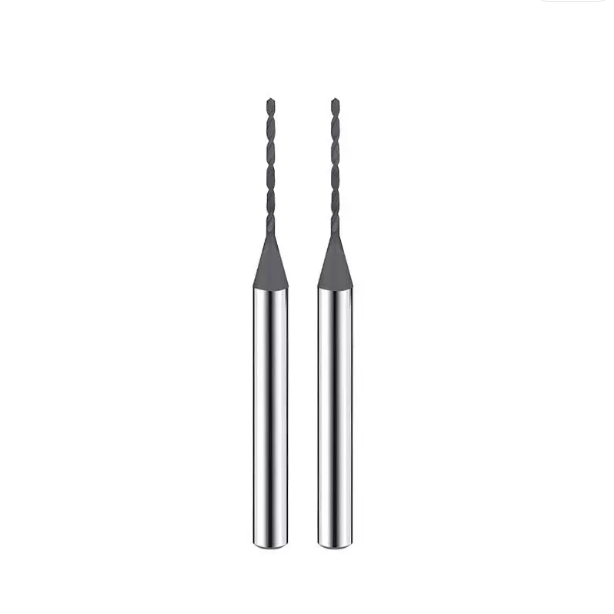
Conquering Micro-Hole Issues and Edge Chipping: Troubleshooting Frequent Breakage in Small Diamond Drill Bits
In workshops machining precision electronics and glass, nothing is more stressful than micro-hole operations under two millimeters. We have witnessed this scenario often: the moment the spindle contacts the workpiece, the micro-tool spinning at thousands of RPM snaps inside the hole with a sharp crack. Many people’s first instinct is to blame the tool’s thin shank, but years of technical troubleshooting reveal fragility stems from failing to calibrate system rigidity.
To eliminate breakage during micro-machining, we must conduct a health check of the entire mechanical drive train. Because micro-diameters offer minimal resistance to torsion and bending, any minute external force amplifies into destructive shear stress. Our practical experience shows that only by eliminating micro-vibrations and controlling spindle concentricity can small diamond drill bits achieve their intended service life.
Resonance Caused by Insufficient Rigidity: Parameter Differences Between Handheld Drills and CNC Spindles When Driving Small Diamond Drill Bits
When addressing breakage complaints, we often find technicians using handheld pneumatic drills to drive micro-tools, resulting in shattering fragments within seconds. Handheld tools cannot provide stable, micron-level axial guidance; even slight tremors trigger violent high-frequency resonance. For brittle micro-holes, such imperceptible vibrations act like continuous hammer blows, causing instantaneous fatigue failure at the tool tip.
We insist that customers transfer this process to a high-rigidity CNC center or a dedicated micro-drilling machine to recalibrate spindle speeds and feed rates. In a CNC environment, while rigidity improves, blindly applying high-speed feeds can still trigger resonance. When using small diamond drill bits, we recommend reducing axial feed rates while increasing spindle speeds to mitigate structural chatter.
Clamping Concentricity Errors: How Excessive Runout Instantly Destroys Micro Diamond Drill Bits
In micro-hole machining, runout in the collet and tool holder is a hidden killer. During troubleshooting for a ceramic substrate project, we discovered that residual iron filings inside the collet caused radial runout to reach 0.03 mm. For a 1 mm diameter tool, this meant every rotation subjected the cutting edge to rhythmic, eccentric lateral impacts that snapped the tool immediately.
The use of standard two-jaw drill chucks to hold micro-tools is strictly prohibited; high-precision ER micro collets or shrink-fit tool holders must be employed. Only when system runout is strictly controlled to within 0.005 mm does the cutting path become smooth. By ensuring small diamond drill bits exhibit zero wobble during high-speed rotation, those baffling high-frequency breakage issues are successfully resolved.
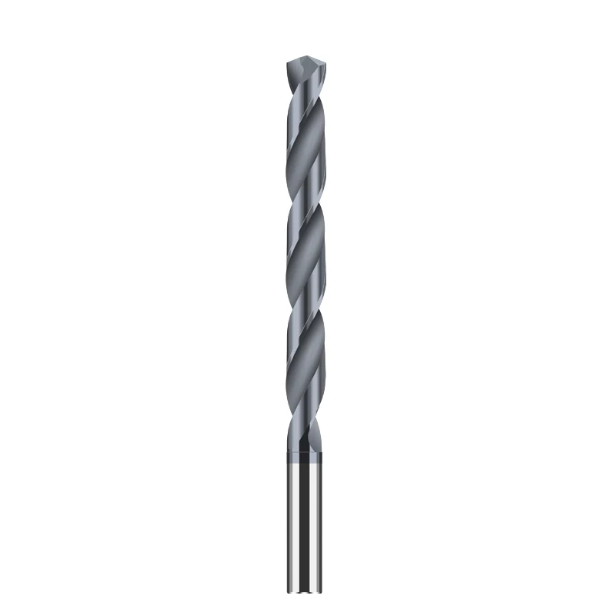
Controlling the Source and Avoiding Quality Pitfalls: A Failure Analysis Report from an Experienced Diamond Drill Bit Manufacturer
After handling countless customer complaints regarding tool breakage on the shop floor, we trace root causes back to manufacturing stages. When purchasing these specialized tools, many machine shops focus solely on unit price, overlooking metallurgical processes. Over sixteen years of R&D, we have dissected thousands of tools that failed prematurely. We discovered that most quality issues stem from inherent defects in upstream electroplating, sintering, or matrix formulation processes.
To eliminate hidden production line failures, process engineers must identify technical pitfalls behind shoddy products. When selecting partners or conducting audits, we apply rigorous standards to evaluate every step. Only by controlling manufacturing details at the source can every diamond drill bit manufacturer ensure tools withstand heavy-load machining on brittle materials without unexpected failures.
The Truth Behind Peeling Low-Quality Plating: Why Cheap Diamond Drill Bits Can Wreak Havoc on Your Production Line
Customers frequently report that newly purchased tools lose diamond abrasive layers after drilling under ten holes. Using electron microscopy scans, we found no effective metallurgical bond between base metals and diamond particles. Errors in electroplating bath current density and additive control result in porous coatings with extreme internal stress.
To cut costs, small suppliers skip nickel pre-plating or surface activation, plating directly onto ordinary carbon steel. Under high-friction ceramic processing, these coatings are torn away by shear forces. Treating laboratory testing of adhesion strength as mandatory is essential, because a subpar diamond drill bit manufacturer introduces massive risks of production line stoppages.
Troubleshooting “Dulling Without Cutting” Caused by Mismatched Matrix Hardness and Diamond Grit Size
During mixed processing of stone and engineering ceramics, operators reported tools slowing down until they felt like plain iron rods grinding workpieces. Upon dismantling tools, we discovered that matrix metal wear resistance far exceeded diamond particle wear rates. Dulled diamonds failed to shed, encasing cutting surfaces in smooth metal and killing micro-cutting capability.
Matching grit size with matrix hardness is a precise metallurgical science. If overly hard cobalt-copper matrices are selected for brittle materials, tools cannot self-sharpen, causing severe friction. When optimizing formulas, we dynamically adjust matrix composition to achieve a balance between wear and erosion rates, ensuring tools from a trusted diamond drill bit manufacturer maintain sharp performance.