In our work over the past few years helping workshops in Europe and the US implement unmanned operations and mold machining, we have repeatedly encountered a costly on-site challenge: workshop supervisors set tool life limits far too conservatively for overnight runs.
Many a metal cutting tool capable of another half-life is replaced prematurely simply because a rigid timer expired. Worse yet, rushing deadlines pushes parameters to the limit, causing sudden micro-chipping during night shifts that ruins expensive forgings or damages spindles.
This crude guesswork is why we introduce Industry 4.0 condition monitoring systems to shop floors. From micron-level torque fluctuations to acoustic emission (AE) sensors capturing grain boundary fractures, we digitize cutting conditions using dynamic spindle data.
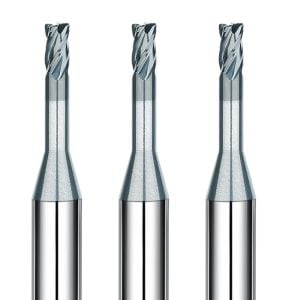
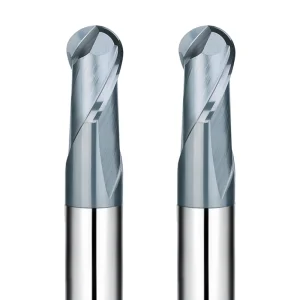
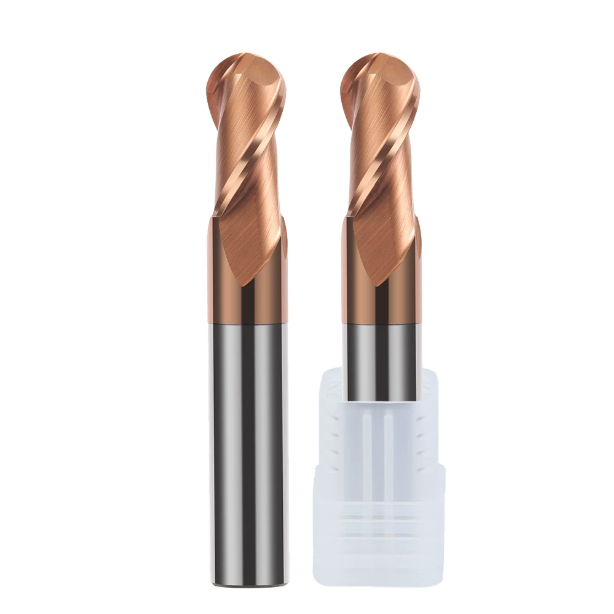
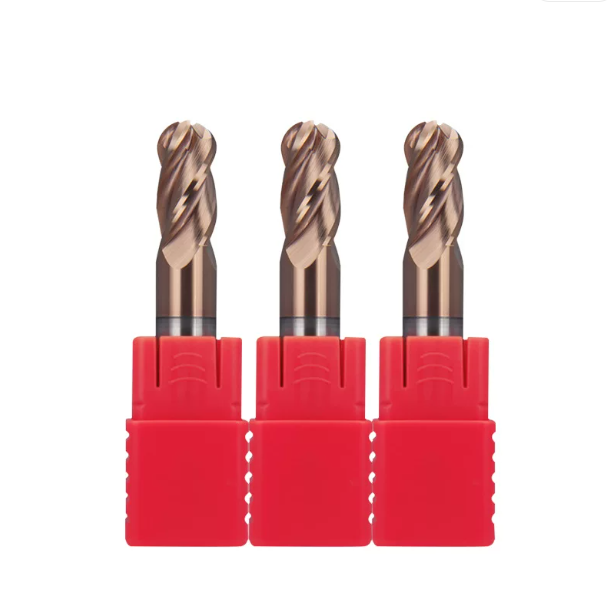
As a team with over a decade of tool design and manufacturing expertise, we find smart monitoring redefines tool limits. Whether managing heat when cutting titanium, establishing acoustic baselines for carbide ball nose end mills during 3D corner cleaning, or keeping vibration in check for finishing end mills in deep cavities, real-time data delivers microsecond responses.
For high-output factories consuming bulk wholesale carbide end mills, dynamic monitoring transforms tool consumption from a cost black hole into a data asset. When every metal cutting tool communicates via data, are you unlocking the final 15% of its lifespan—or still gambling every time you retract it?
Why we no longer advise clients to judge metal cutting tool wear solely by “listening to the sound” based on experience
While upgrading an automotive mold facility in Bavaria for lights-out manufacturing, we watched veteran operators still trying to judge metal cutter tool wear by listening for harsh noises or watching spark patterns. While this traditional “artisan instinct” might work for manual small-batch jobs, it becomes a severe liability in unmanned, continuous cutting environments.
Modern high-speed machining creates intense thermal and mechanical stress within milliseconds. Inside sealed machine enclosures flooded with high-pressure coolant, by the time an operator hears abnormal screeching, the cutting edge has already suffered severe flank wear or catastrophic fracture. Relying on sensory perception inherently lags behind physical reality and cannot support modern automated production.
Preventing micro-chipping: How smart systems capture power and vibration anomalies in metal cutting tools in real-time
While calibrating a 5-axis machine for a high-precision supplier in Ohio, we tackled a stubborn micro-chipping problem on difficult superalloys. After two hours of continuous cutting, the cutting metal tools would routinely develop micro-chips under 0.05 mm at the tip. These tiny defects are invisible to the naked eye, yet they trigger sudden force spikes that quickly cause violent chatter and total tool failure.
To fix this, we installed a tri-axial piezoelectric accelerometer and linked it directly to the spindle drive’s current bus. The data showed that while the cutting sound remained unchanged during micro-chipping, sharp pulse peaks appeared instantly in high-frequency vibration signals. Our monitoring system captures these transient anomalies and triggers automated retractions before catastrophic breakage occurs.
Hard-Learned Lessons from Western Workshops: The Cost of Scrapped Parts Due to Tool Chipping Far Exceeds the Cost of the Cutting Tools Themselves
During our sixteen years of field support, we have managed numerous disasters caused by undetected tool overloads. A memorable case involved a North American aerospace supplier machining a monolithic wing component, where a cutting tool end mills snapped inside a deep pocket. Carbide fragments jammed between the workpiece and the high-speed spindle, instantly scrapping a $30,000 aluminum blank and destroying the spindle’s angular contact bearings.
Many shop managers focus solely on the initial purchase price of tools while ignoring the catastrophic costs of unmonitored failures. Cutting tools typically account for only 3% to 5% of total machining costs, yet a single ruined workpiece, spindle repair, or line stoppage costs exponentially more. Installing a sensitive monitoring system is essentially an insurance policy for your shop floor’s most expensive assets.
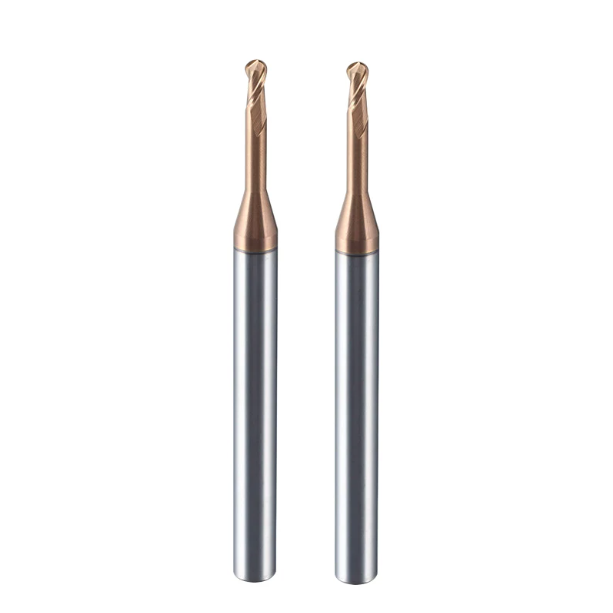
Real-World Monitoring in Complex Surface and Finishing Operations: Smart Monitoring Applications for Carbide Ball Nose and Finishing End Mills
In complex surface finishing and high-gloss operations, monitoring shifts from simple breakage prevention to tight control of surface roughness and geometric tolerances. While helping a German mold maker machine hardened automotive lighting molds, we found traditional power monitoring failed at ultra-shallow depths of cut. Controlling micron-level rake wear and micro-chatter required a specialized sensor strategy tailored to each metal cutter tool.
Machining complex surfaces involves multi-axis interpolation and shifting effective cutting diameters, placing heavy demands on sensor analysis. By time-aligning high-frequency sensor data with CNC axis positions, our team successfully extracted clear signals for specific finishing passes. This strategy allowed us to maximize the life of each finishing end mills unit while maintaining flawless workpiece surface quality.
Monitoring Micro-Wear at the Ball Tip Center of Carbide Ball Nose End Mills Using Acoustic Emission (AE) in 3D Mold Machining
A persistent headache when using carbide ball nose end mills on steep 3D surfaces is that the cutting speed at the ball tip approaches zero. When cutting hardened steels like NAK80 or H13 vertically, the ball center extrudes material instead of shearing it cleanly, causing localized friction. These extreme conditions quickly create micro-thermal cracks and center chipping, which leave permanent, irreparable scratches across the mold cavity surface.
Because force changes from this micro-cutting action are subtle, standard spindle current sensors miss them completely. We deployed acoustic emission (AE) sensors on the spindle sleeve to capture high-frequency stress waves from micro-cracking. When burst energy spikes in specific frequency bands, the system automatically triggers a tool retraction before the tip damages the workpiece.
Optimizing Finishing End Mill Feed Rates via Spindle Load Feedback to Eliminate Wall Chatter Marks
Finishing thin walls and deep cavity sidewalls often causes severe regenerative chatter due to tool deflection. While machining titanium medical housings, engineers previously reduced feed rates to extremely conservative levels to play it safe. However, this extended cycle times and accelerated flank wear on their cutting metal tools from excessive rubbing, paradoxically causing network chatter marks along the wall.
Our solution uses millisecond-level load data from the spindle and feed axes for dynamic closed-loop control. By monitoring torque fluctuations as the multi-flute mill engages the wall, the system determines in real-time if the tool enters a self-excited vibration zone. Upon detecting abnormal torque amplitude, the controller automatically micro-adjusts feed rates or RPM to bypass resonance, maintaining surface roughness (Ra) below 0.4 microns.
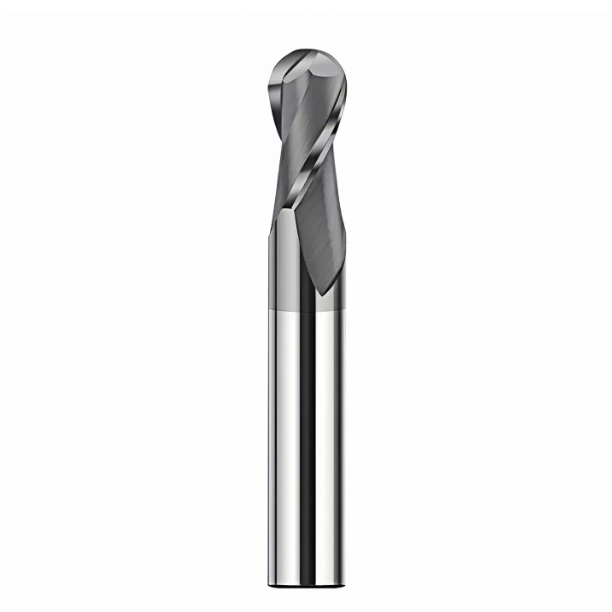
On-Site Tuning Guide: Configuring Optimal Dynamic Alarm Thresholds for End Mills
The most common shop-floor complaint about monitoring systems is frequent false alarms causing downtime or systems failing to react when tools actually break. Setting protection curves for various cutting tool end mills is a delicate balancing act. If thresholds are too tight, normal material hardness variations trigger shutdowns; if too loose, fracture impact forces will destroy the machine spindle.
Over a decade of field implementations, we developed a dynamic fitting algorithm based on cutting torque and vibration spectra. Instead of static limit values, our system dynamically adjusts its monitoring window in sync with the toolpath. By analyzing force profiles during tool entry, arc transitions, and full engagement, we customize envelope limits for every cutting scenario, eliminating uncooperative monitoring behavior.
Overload and Breakage Protection for End Mills: Practical Experience with Dual Thresholds
Relying solely on spindle current or a single vibration signal for breakage protection is risky during heavy-load roughing or deep slotting. While tuning a large vertical machining center for a North American client, we found that when metal cutting tools suffered sudden chipping, mechanical spindle inertia caused a lag in current response. Conversely, relying only on vibration sensors triggered false alarms from rough casting skin impacts.
We resolved this by establishing a dual-criterion mechanism combining current load and high-frequency vibration. The system uses a two-level response: if spindle current exceeds the baseline by 20%, it triggers a Level 1 warning to pause feed and prevent heat buildup. However, if an accelerometer detects a sharp pulse peak with a simultaneous microsecond current spike, the system identifies a hard breakage and executes an immediate Emergency Stop.
Sensor Calibration Using Bulk-Purchased Carbide End Mills to Eliminate False Alarms Caused by Tool Tolerances
When factories use bulk-purchased wholesale carbide end mills for high-volume production, batch-to-batch variations in radial runout and coating thickness create major monitoring issues. Reusing a rigid baseline from a previous tool often triggers false alarms after tool changes due to slight initial torque shifts, prompting operators to disable the system entirely.
To solve this, we guided the client to implement a dynamic learning process during the first workpiece setup. Whenever a new tool batch is loaded, the machine automatically captures baseline centrifugal vibration and initial cutting load during the first 30 seconds of cutting. The system re-fits the envelope curve to account for tool clamping runout, maintaining sensitivity while cutting false alarms by 80%.
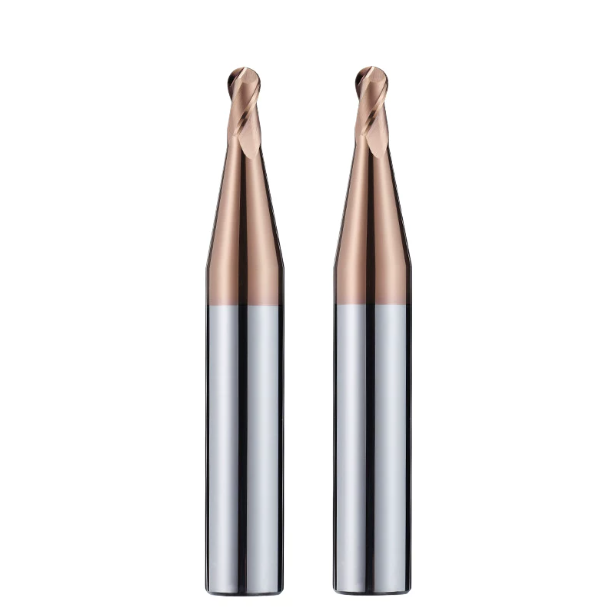
Factory Insights: How Smart Monitoring Helps Squeeze the Last 15% of Useful Life from Wholesale Carbide End Mills
As tool manufacturers, we frequently witness distressing waste on shop-floor visits: supervisors prematurely discard tools just as they enter late-stage steady wear to avoid unmanned breakage risks. On high-output lines consuming large quantities of wholesale carbide end mills, this risk-averse early retirement strategy erodes huge profit margins over time. Data-driven monitoring breaks down these psychological barriers by providing engineers with clear physical evidence.
After initial and steady wear, carbide tools enter a fully controllable golden extension period before rapid failure occurs. Sensitive dynamic monitoring pinpoints the exact moment a cutting edge transitions from normal wear to microscopic chipping. This lets machine shops safely push bulk-purchased cutting tool end mills to their true operational limits while establishing a vital feedback loop between tool design and actual machining conditions.
Optimizing Cutting Parameters with Monitoring Data to Maximize the Safe Service Life of Wholesale Carbide End Mills
While helping a North American shop optimize 304 stainless steel machining, we tackled complaints about inconsistent tool life. Analyzing captured cutting waveforms revealed the root cause: an overly aggressive cutting speed (Vc) caused heat accumulation, while a conservative feed per tooth (fz) caused the edge to rub against work-hardened material.
We recalibrated parameters based on real-time spindle power and acoustic emission signals. Lowering rotational speed managed cutting temperatures, while increasing feed per tooth by 15% allowed the tool to penetrate directly into unhardened base metal. Material removal per wholesale carbide end mills unit jumped by 18% with vibration kept within safe limits. This data-driven approach is the real way to unlock hidden value from your tooling inventory.
Technical Advice for Workshop Supervisors in Europe and the US: A Guide to Avoiding Pitfalls When Setting Up Lightweight Monitoring Systems for Metal Cutting Tools
Many shop supervisors shying away from Industry 4.0 assume it requires complex equipment overhauls. In reality, setting up effective monitoring for metal cutting tools is about avoiding common pitfalls rather than chasing high-end hardware. Typical errors include mounting accelerometers on flimsy machine guards or failing to isolate electromagnetic noise from variable frequency drives.
A practical, lightweight solution focuses strictly on critical bottleneck processes. If you face chatter marks during deep-cavity finishing or hesitate to run overnight shifts on difficult alloys, start by tapping the spindle current bus and adding a single accelerometer. If you want to optimize cutting parameters for complex part geometries or heat-resistant alloys, we welcome the opportunity to exchange technical insights specific to your shop floor.