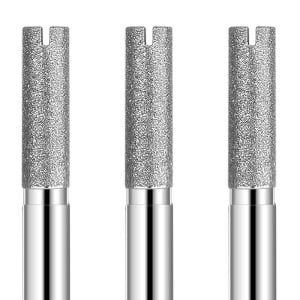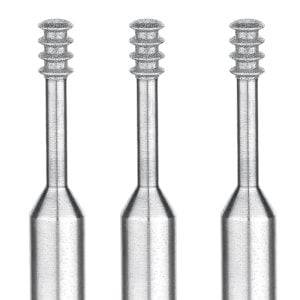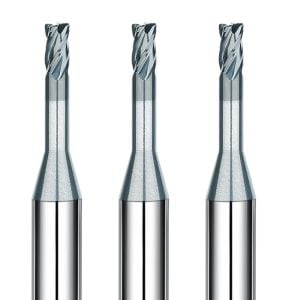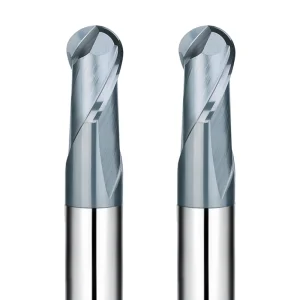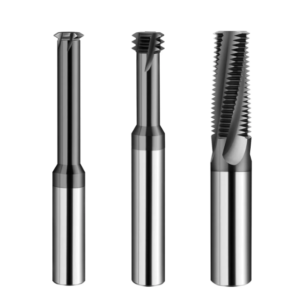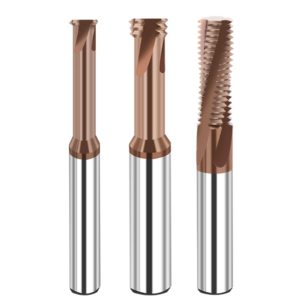
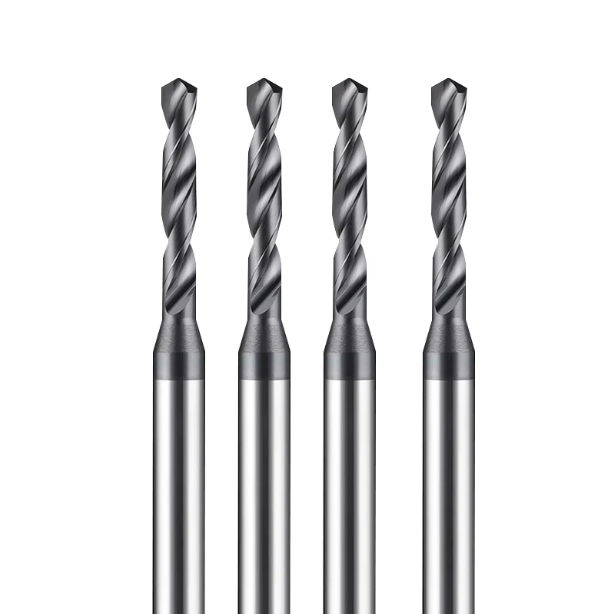
Last month, we troubleshot a recurring failure at an Ohio valve manufacturing plant. Several expensive tooling sets—freshly mounted on a vertical machining center—burned out before completing a dozen blind holes in 316L. The cutting edges annealed, thick white smoke poured from the cutting oil, and the operator was paralyzed. We have spent the last fifteen years tackling these exact headaches for machining clients across North America and Europe: tools burning up on entry, cobalt flutes snapping, and modest spindle increases causing catastrophic failures.
Stainless steel punishes half-measures. When sourcing the best drill bits for stainless steel, shops typically swing between two extremes. Some force standard cobalt tools against severe work-hardening layers until packed flutes shear the tool body. Others blindly mount premium carbide drill bits for stainless steel while ignoring spindle runout or poor clamping, instantly shattering the carbide against raw mill scale.
Through hundreds of tool wear inspections, we have learned that there is no universal “miracle” drill bit for stainless steel. Premature failure rarely stems from bulk hardness alone. It is almost always a direct mismatch between drill point geometry, coating hot-hardness, internal coolant delivery, and your actual machine rigidity.
Should you run micro-grain carbide drills to survive deep-hole cycle times, or stick to tough M42 split-point tools on a loose drill press? When your spindle shrieks inside the cut, are you spinning too fast and rubbing, or feeding too softly and work-hardening the floor right under the cutting lip?
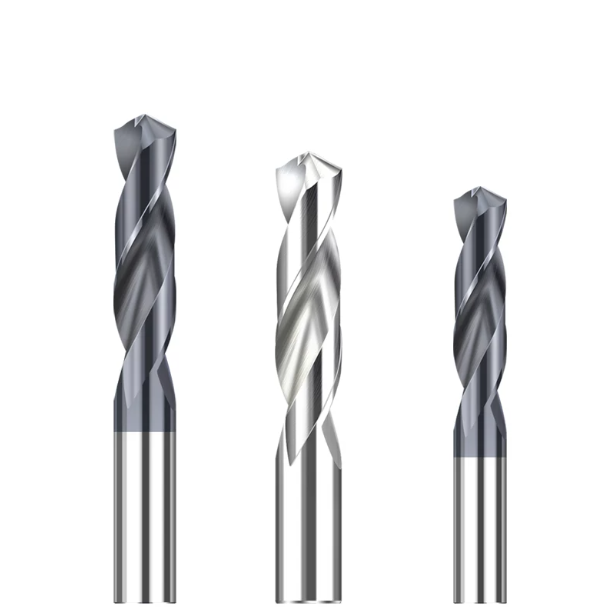
What Type of Drill Bit for Stainless Steel? Real-World Material Performance Based on Scrap Bin Analysis
Whenever we walk onto a client’s shop floor, we head straight for the scrap bin next to the machine rather than the CNC controller. Burned tools with deep blue discoloration, seized margins, and shanks snapped clean at the collet line tell the real story of what happened in the cut. Machinists regularly ask us what type of drill bit for stainless steel solves their problems permanently, but picking a substrate without considering setup rigidity and metallurgy is simply gambling with tool life.
Austenitic alloys run notoriously poor thermal conductivity, meaning shearing heat stays trapped right at the cutting interface instead of escaping with the chip. This environment forces your substrate to strike a delicate balance between hot-hardness and shear toughness. After analyzing broken tooling for German automotive lines and American repair shops, our scrap-bin rule remains firm: a harder substrate is not automatically better, and the wrong tool in a flexible setup will fracture on the very first touch.
Cobalt vs. Carbide Drill Bits for Stainless Steel: The Real-World Limits of 8% Cobalt HSS and Carbide
We routinely compare two opposite shop environments: a structural steel shop in Pennsylvania running loose radial arm drills, and a production plant in Stuttgart running 316L on high-rigidity 5-axis machines. In loose setups or manual operations, we always specify M42 grade alloy with 8% cobalt. Its matrix provides the transverse rupture strength required to absorb severe chatter and runout; even under erratic manual feeds, it wears down predictably on the relief face instead of shattering inside the hole.
However, if your spindle taper maintains runout under 3 microns on a rigid VMC, sticking with cobalt throttles your cycle times. The molybdenum in 316L creates sticky, ductile chips that hold heat, frequently pushing cutting temperatures past 700°C where cobalt quickly tempers back and dulls. Stepping up to micro-grain carbide drill bits for stainless steel delivers the 90+ HRA hardness and compressive strength needed to hold size, boost penetration rates, and produce clean hole finishes across production batches.
Why Do General-Purpose Coatings Fail Immediately? Real-World Performance of High-Aluminum Coatings
A frequent mistake in tool cribs is loading up on generic, gold TiN-coated drills. We ran chip-adhesion simulations alongside destructive tool wear tests in 304 stainless to evaluate edge life. Conventional TiN begins oxidizing around 550°C and offers minimal lubricity against heated chrome-nickel chips; within inches of axial cut, intense thermal stress spalls the layer, causing chip galling and packing that inevitably destroys the tool core.
To stop chip weld, we formulate our stainless steel drill bits using high-aluminum titanium (AlTiN) and silicon-doped nano-composite layers. When cutting zones cross 800°C, surface aluminum oxidizes into a microscopic sapphire-like film (Al₂O₃) that blocks heat transfer and elevates surface hardness past 3300 HV. This barrier drops friction below 0.4, prevents built-up edges, and, when paired with high-pressure water-soluble coolant, triples linear tool life compared to off-the-shelf options.
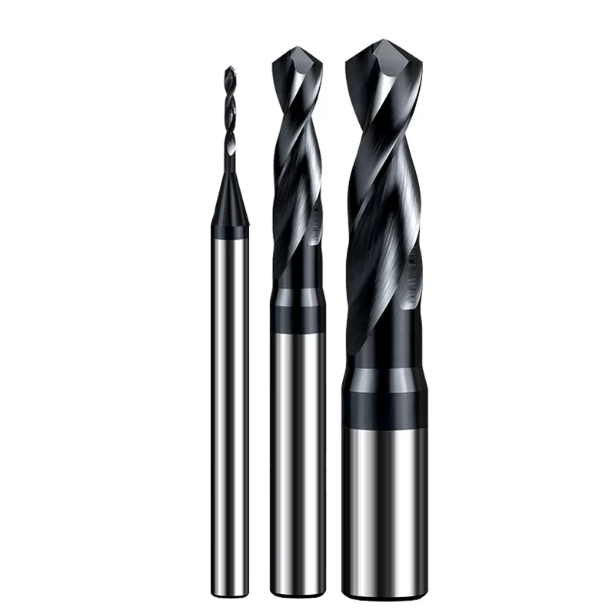
Top Industrial Picks: The Best Drill Bits for Stainless Steel in High-Volume, Demanding Applications
When scheduling tens of thousands of stainless parts, your primary concern shifts from “can it cut?” to “how often will this spindle stop?” We frequently see plants lose thousands of dollars per hour in downtime just to save pennies on tool costs. In high-output machining, selecting the best drill bits for stainless steel depends on batch tolerance consistency, margin wear limits, and predictable tool life—not low purchase prices.
Machining austenitic alloys and 17-4PH demands uncompromising dynamic system rigidity. Toolholder runout and machine backlash multiply the alternating shear stresses focused on the tool tip. If you run basic jobber tooling on heavy production work, excessive cutting heat will quickly weld chips into the flutes, packing the tool until the core snaps off clean inside the bore.
High-Pressure Internal Coolant Solid Carbide Drill Bits for Stainless Steel: High-Volume Solutions for 316L and 17-4PH
At an oil and gas valve supplier in Texas, the shop floor was breaking tools every twenty holes while running 5xD bores in 316L. Flood coolant nozzles could not penetrate the hole depth. As a result, stringy austenitic chips packed the flutes, heat-welded to the margins, and seized the spindle. We immediately pulled the external lines and loaded carbide drill bits for stainless steel featuring through-spindle coolant running at 35 bar.
High-pressure fluid exiting the drill tip suppresses thermal spikes right at the shear zone before material work-hardens. The hydraulic force blasts broken, C-shaped chips up the flutes and clear of the cut without pecking. For 17-4PH and 316L, internal coolant cuts cycle times by 40% while preserving tool margins and delivering consistently tight bore finishes across large batches.
Calculating the Cost-per-Hole Limit for Indexable “U-Drills” in Large Stainless Steel Structural Components
For roughing holes over 20 mm, we usually steer shops away from massive solid carbide tooling. On a large run of 40 mm hot-rolled 304 plates, buying large solid carbide drills would run hundreds of dollars per tool. Raw material inclusions risk chipping cutting edges instantly, and long regrind turnarounds create costly bottlenecks. Instead, we set up high-feed indexable U-drills to balance asymmetric radial loads.
Indexable drills drop the net cost per hole on heavy plate work. The inboard insert balances the center cut while the outboard insert sizes the diameter. If an edge chips on a hard spot, the operator simply indexes the low-cost carbide insert in seconds without touching tool offsets. While they cannot match the bore precision of solid tooling, a quick secondary pass handles final tolerances at a fraction of the operating cost.
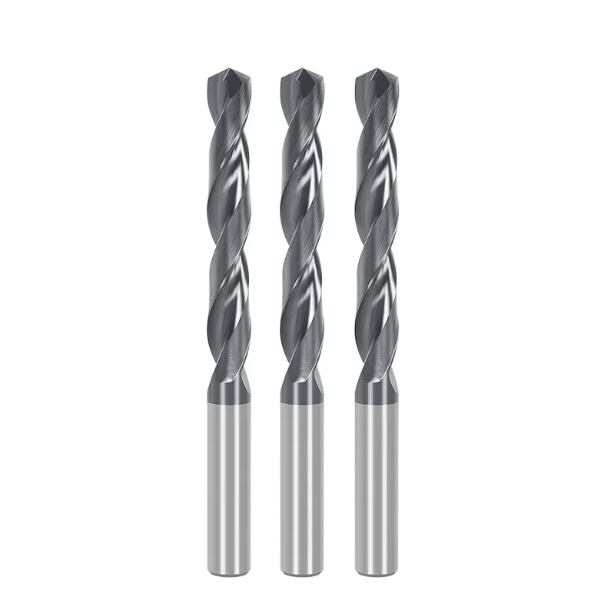
Top Workshop Picks: Best Drill Bits for Stainless Steel for Prototyping and Small-Batch Production
Small job shops and repair operations rarely work with rigid machining centers. Parts are often clamped in loose vises, and machinists frequently run older drill presses or handheld equipment. Chasing aggressive CNC speeds under these conditions leads directly to tool failure. In short-run jobs, the best drill bits for stainless steel are built for vibration damping and structural forgiveness rather than raw penetration rates.
Too many machinists apply rigid production parameters to loose shop-floor setups and end up with scrapped parts. For prototypes, non-standard runs, and field repairs, your tooling must handle erratic hand feeds and lateral flex without chipping. Tool toughness and stable edge geometries must take priority over high hardness to prevent sudden, brittle failures.
M42 Cobalt Drill Bits for Stainless Steel: A Solution for “Biting and Chipping” Issues on Low-Rigidity Machines and Bench Drills
Young machinists starting custom shops often struggle with solid carbide because worn drill press quills and spindle play chip brittle edges instantly. In flexible, low-rigidity setups, we steer operators toward an M42 drill bit for stainless steel. Formulated with 8% cobalt, M42 provides an optimum 66–68 HRC hardness alongside high transverse rupture strength, allowing the tool body to absorb vibrations that would otherwise shatter carbide.
Drill tip geometry is just as critical as substrate toughness. Standard 118° points have broad chisel edges that wander across slick stainless stock, work-hardening the surface before the lips can engage. We grind our shop-grade cobalt bits with a 135° split point. This thins the web, minimizes thrust, and bites instantly into the cut without wandering, preventing the tool from work-hardening the metal upon contact.
Step Drills and Specialized Stainless Steel Drill Bits for Sheet Metal: Preventing Deformation and Tearing in Thin-Walled Tubes and Enclosures
Fab shops making food-grade equipment or enclosures face a tricky challenge: cutting clean 12 mm to 20 mm holes in thin 1 mm sheet metal. Standard twist drills grab the stock upon breakthrough as axial resistance drops. This tears the metal into jagged, out-of-round holes, wrinkles the panel, and throws massive burrs that require tedious manual cleanup.
For sheet enclosures and thin tubing, we recommend stepped stainless steel drill bits with engineered radial relief. Each step acts as a rigid pilot for the next diameter, balancing cutting forces and preventing thin material from grabbing. Paired with straight-flute geometries, these tools cut round holes without warping the workpiece, while the integrated shoulder cleanly chamfers the top edge in the same stroke.
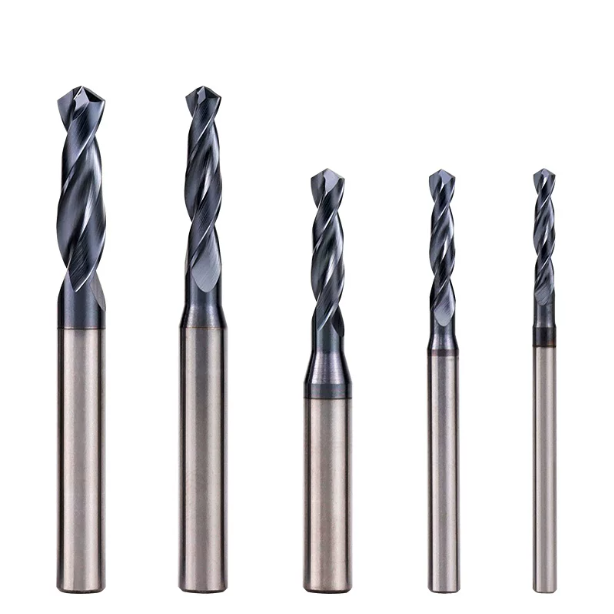
How to Drill Stainless Steel: Practical Techniques for Managing Chip Evacuation and Work Hardening
When mentoring machinists across Western shops, we remind them that drilling stainless is not an exercise in brute spindle force. It is a calculated, split-second operation to stay ahead of rapid work hardening. Operators accustomed to carbon steel often carry gentle habits into tough austenitic alloys, only to see dark discoloration and burned tips. Knowing how to drill stainless steel comes down to decisive, aggressive entry rather than complex canned routines.
When cut forces compress austenitic grain boundaries, intense shear plastic deformation triggers a rapid phase shift into martensite. This leaves a dense, work-hardened “white layer” with double the hardness of raw stock. If your tool hesitates or rubs on contact, the cutting lips will grind against this self-induced shell. Heat feeds straight back into the margins, destroying the edge within seconds.
Strictly Avoid “Rubbing” or “Skidding”: Feed Techniques to Prevent Work Hardening on the First Cut
Stainless steel handles heavy shear loads well, but dry rubbing kills tool edges instantly. Machinists often baby their feed rates or jog manual quills gingerly out of fear of chipping the tool. That high-pitched squeal is not a clean cut—it is metal cold-working into glass-hard skin under pressure. Once that crust forms, even the sharpest drill bits for drilling stainless steel will burn and melt on the surface rather than bite.
Our shop floor rule requires an immediate plunge: the moment the tool touches the stock, the feed must engage fully without hesitation. Set a firm feed per revolution so the lips break straight through surface scale and into clean parent metal. In CNC code, command a positive plunging feed that forces plastic deformation heat out through the flutes. Maintaining a heavy chip load ensures active cutting instead of friction-induced annealing.
Pecking Depth Strategy: G83 vs. G73 Retraction Settings for Tough Stainless Steel Chips
Deep-hole cycles make or break tool life in sticky alloys. We once troubleshot an exhaust manifold job where an automotive supplier ran standard G83 deep-hole cycles, retracting completely every 2 mm to flush chips. Because 304 stretches into ductile ribbons, full retractions pulled bird-nested strings up to the hole mouth. The drill rapid-traversed back in, slammed into the chip cluster, and exploded the tool head.
We switched the program to a G73 chip-breaking cycle with 0.15 mm micro-retracts. This brief axial pressure drop snaps stringy chips into short, manageable C-shapes without pulling the drill from the cut. Paired with high-pressure emulsion directed straight down the flutes, coolant easily washes around the broken chips. This micro-dwell method prevents hole-wall scoring and eliminates dead cycle time spent cutting air.
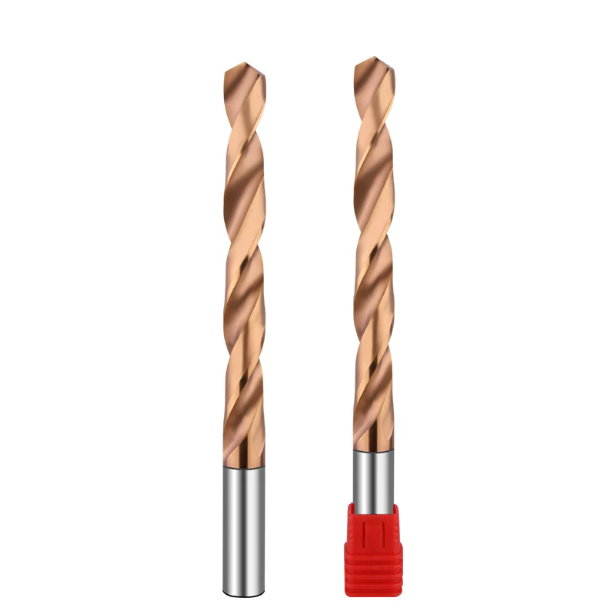
Best Drill Speed for Stainless Steel: A Quick-Reference Guide Based on 16 Years of Machine Tool Commissioning
Most broken drills result from dial settings rather than flawed metallurgy. Over sixteen years on shop floors, we have watched operators crank RPMs chasing cycle times, only to bake cutting lips into scrap. Others drop feed rates out of caution, burning margins through excessive dwell friction. Finding the best drill speed for stainless steel is a balancing act between heat evacuation, dynamic spindle stiffness, and real-time chip formation.
Every successful stainless drilling strategy relies on a simple principle: low surface speed paired with positive chip loads. If you run small-to-medium CNC mills, start at conservative surface footage and let chip shape dictate your adjustments. Chips must exit thick enough to carry shearing heat away with them. If heat backs up into the tool tip, your drill margins will anneal and seize.
Best Drill Speeds for Stainless Steel (Carbide vs. Cobalt-Bearing Drills): Moving Beyond Theoretical SFM Charts
Catalog SFM numbers assume vibration-free, pristine laboratory setups that rarely match a noisy machine shop. When running 304 or 316, we follow firm field limits for the best drill speed for stainless steel. For M42 cobalt tooling, keep surface footage strictly between 35 and 60 SFM (10–18 m/min), leaning slower when rigidity drops. For coated micro-grain carbide, keep speeds between 115 and 180 SFM (35–55 m/min) under continuous flood coolant.
Once you set your spindle RPM from targeted surface footage, you must match it with a firm chip load. For a typical 6 mm (1/4″) carbide drill in 316L spinning near 2,000 RPM, hold feed rates between 0.06 and 0.10 mm/rev (0.0025–0.004 IPR). With cobalt on an older machine at 700 RPM, never drop below 0.04 mm/rev (0.0015 IPR). Controlled cutting force is always better than letting the edge slide and glaze.
Assessing Tool Health by Sound: Quickly Adjusting Cutting Parameters Based on Chip Color and Spindle Noise
Experienced machinists can read a cut through the enclosure window without stopping the spindle. In healthy stainless drilling, the spindle load meter settles into a steady, muted hum. Fresh chips should exit tightly curled with a bright silver sheen or pale straw hue. That indicates coolant is working, heat is leaving with the chip, and the tool margins are cutting cleanly without galling.
If ejected chips turn dark purple or blue-black, or the machine starts whistling with a sharp squeal, hit feed hold immediately. That sound means flank clearance has worn away and the edge is sliding. Workpiece material is work-hardening rapidly right under the lips. If you hesitate for even three seconds, friction will weld the tool to the hole wall and shear the shank off clean.