Last month, while troubleshooting on-site at a mold shop in Stuttgart, Germany, the plant supervisor pointed to a scrap bin half-full of shattered tools with a tired grimace. The parts were 1.2379 (D2) mold slides, heat-treated to HRC52–55. Pushed by tight deadlines, the machinists had burned through three different “universal” carbide drills. Not a single one finished five holes. They either snapped at the chisel edge upon contact with a sickening crunch, or overheated along the outer margin mid-cut, reaming out ugly, bell-mouthed holes.
We have seen this costly disaster unfold in dozens of machine shops across the US and Europe. Many catalogs label their catalog items as the best hard metal drill bits, but your spindle load meter tells a brutally different story. Crossing the HRC50 line changes everything: cutting forces spike, and shear zone temperatures instantly top 900°C. Unless the micro-geometry, substrate grain size, and coating adhesion are tuned for extreme hardness, theoretical catalog specs crumble immediately.
That brings us to the question tooling engineers constantly ask us: what are the best drill bits for hard metal? To stop the scrap cycles and late-night emergency EDM burnouts, we distilled our shop-floor test data into this field guide. We skip the brochure fluff to focus strictly on real-world drills for drilling hardened steel that hold tolerance and survive extreme resistance. If you are tired of broken tools eating your margins on heat-treated parts, check your tool carousel: are you really running the right drill bits for hard metals?
Why Do Most “Best Hard Metal Drill Bits” Chip Immediately Above 50 HRC?
When a tool shatters on contact, do not rush to blame your operator for an aggressive feed rate. Standard carbide tools with sharp cutting edges handle pre-hardened steels easily. However, once alloy tool steels are fully hardened, their ductility drops near zero, and axial cutting forces surge. Many off-the-shelf best hard metal drill bits fail because their cutting edge geometry cannot take the initial impact shock. The tip simply fractures under the steel’s extreme yield strength.
Over our sixteen years in the cutting tool industry, we have seen this problem repeatedly. Most universal bits use thinner web cores and aggressive helix angles to speed up chip evacuation. While that design works great on softer alloys, it turns into a liability in hard turning or drilling. The lack of core rigidity produces minute radial flutter upon entry, which amplifies within milliseconds and triggers sudden fatigue failure.
Three Fatal Flaws of Standard Hard Metal Drill Bits: Field Insights from Scrapped Tools
Whenever we inspect scrap bins at client facilities, our first step is checking broken cutting edges under a 40x shop microscope. Most failures are not caused by standard abrasive wear, but by thermal micro-cracks from alternating thermo-mechanical stresses. In dry machining or unstable coolant setups, the tip undergoes violent thermal shock during rapid pecking cycles. The carbide binder cannot handle this thermal expansion, causing micro-fractures to propagate until the cutting lip flakes off.
The other two culprits are PVD coating delamination and micro-chipping from poor edge honing on typical hard metal drill bits. Standard TiAlN coatings oxidize around 800°C; under high friction, they peel away and expose bare substrate to rapid cratering. Furthermore, without a micro-honed edge prep (K-land), microscopic jagged peaks on an unhoned edge fracture instantly under full cut pressure, blunting the tool within seconds.
True Benchmarks for Drilling Hardened Mold Steel: Cost Per Hole vs. Unit Price
Many purchasing managers focus strictly on the unit price printed on the tool invoice. This practice frequently forces machinists to wonder what are the best drill bits for hard metal when cost cuts hurt tool life. A cheap bit might look attractive on paper, but if it snaps on hole three, you burn machine time and labor using an EDM sinker to extract the broken carbide.
During a technical audit at a North American automotive mold plant, we switched the crew to high-rigidity solid carbide bits tailored for high-hardness alloys. The per-tool price doubled, but tool life jumped from 4 holes to over 30 holes per tool in HRC54 steel, with roundness held inside 0.01 mm. The only true performance metric is the total cost per finished hole, taking into account machine uptime, tool-change intervals, and scrap prevention.

Real-World Workshop Testing: Top 5 Drills for Hardened Steel
In tool manufacturing and spindle testing, we never rely on smooth laboratory cutting charts. True validation happens on the shop floor: coping with spindle thermal growth, material hard spots, and chip packing during deep-hole cycles. The most reliable drills for drilling hardened steel must balance transverse rupture strength (TRS) with red hardness—preventing sudden catastrophic fracturing while avoiding rapid flank annealing at extreme cutting temperatures.
To verify tool life under severe loads, we conducted destructive sampling across dozens of tool geometries on a vertical machining center. We tested pre-hardened tool steels, fully quenched cold-work die steels, and AR plates from 3xD to 8xD depths. The five designs below represent our top field-proven choices based on edge chipping rates, hole tolerance, and wear progression.
Top 1: SAMHO Carbide Drill Bits (Continuous Deep-Hole Machining in HRC50–58 Tool Steels)
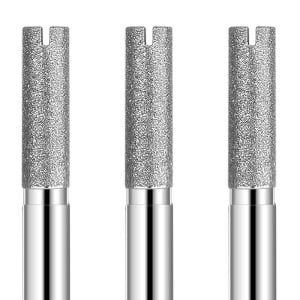
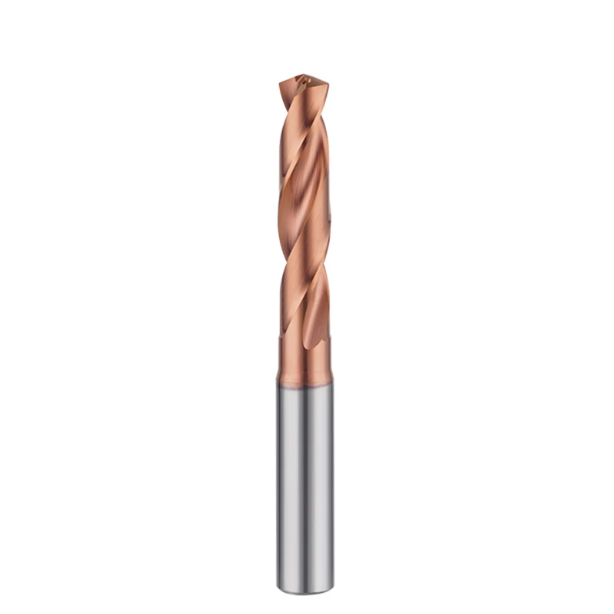
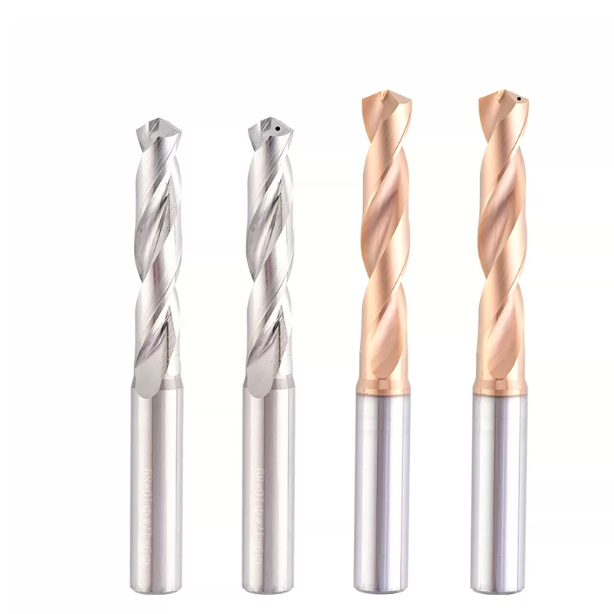
For mass production of die-cast and injection mold inserts, hole positional accuracy is far more vital than simply chasing top feed rates. During our trials on HRC52–56 hardened 1.2344 (H13) steel, SAMHO carbide drill bits with a 140° point angle and reinforced web delivered stable initial self-centering. This geometry eliminates radial tool deflection upon contact, distributing cutting thrust smoothly along both cutting lips.
After drilling 45 continuous 4.5xD through-holes, microscopic inspection showed no chipping along the main cutting edge, with flank wear staying under 0.08 mm. Because the thicker core slightly narrows the chip flutes to maximize torsional rigidity, we recommend pairing these tools with high-pressure coolant or programmed peck cycles to prevent heat buildup from trapped chips.
Top 2: HRC65 Carbide Drill Bits (For SKD11/D2 Tool Steels and Drilling Out Broken Taps)
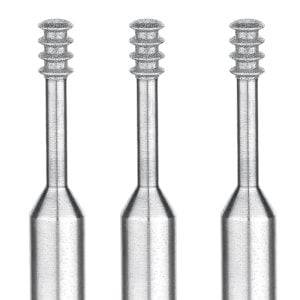
Machining cryo-treated SKD11 above HRC62 or drilling directly through an M6 tap demands dedicated hrc65 carbide drill bits. These tools are sintered from sub-micron tungsten carbide powder with minimal cobalt binder for extreme hardness. Engineered with a negative rake chisel edge, they penetrate quenched alloys through controlled compressive shear at high spindle RPM and micro-feeds.
However, extreme hardness introduces brittle fracture sensitivity. Our testing confirmed that these tools cannot tolerate radial spindle runout exceeding 0.003 mm; using manual feed on a drill press will snap them instantly. With rigid shrink-fit holders and short tool overhang, they pulverize broken taps cleanly without scorching the workpiece hole wall.

Top 3: High-Rigidity Nanocomposite Coated Drills (Tool Life in Dry and MQL Environments)
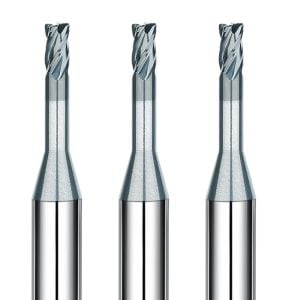
In shops with strict environmental regulations or older machines lacking flood coolant, cutting edges face severe thermal fatigue. In dry setups, finding capable drill bits for hard metals depends heavily on thermal barrier coating adhesion. Modern silicon-titanium nanocomposite layers form an amorphous aluminum oxide film at 900°C, shielding the carbide core from extreme friction heat.
During MQL drilling on HRC50 Cr12MoV slides, conventional TiAlN coatings failed after seven holes due to oxidation and thermal delamination. The nanocomposite coated tool completed 20 holes cleanly with zero flank peeling. Note that if your machine already delivers high-volume through-spindle coolant, standard coating options may provide a more cost-effective choice.
Top 4: Double-Margin Solid Carbide Drills (Preventing Hole Drift and Bell-Mouthed Entries)
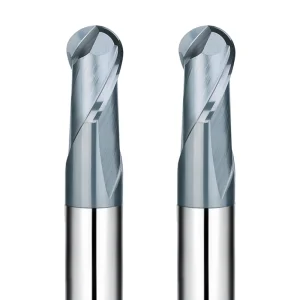
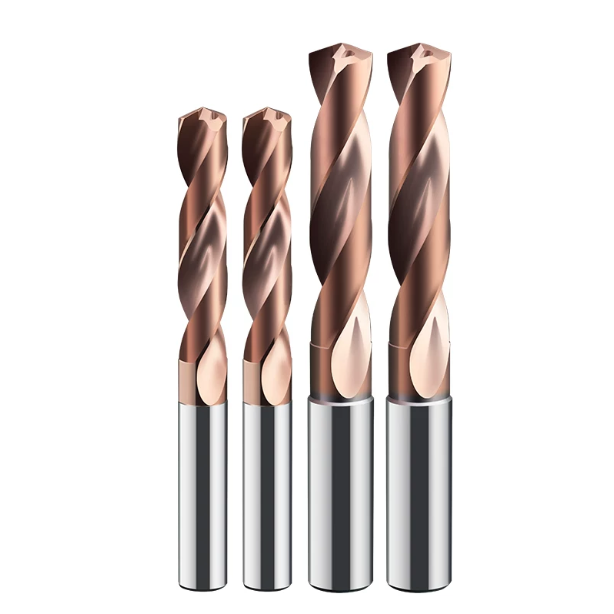
When drilling deep holes in hardened steel, off-axis drift is often a bigger headache than broken tools. Wander creates bell-mouthed holes that leave uneven stock allowance for reaming. Premium hard metal drill bits solve this by using a double-margin design that adds four contact lands inside the hole, acting like an integrated bushing to keep the tool aligned.
In our field tests on HRC54 quenched 42CrMo forgings at 6xD depth, these bits maintained axis straightness within 0.015 mm with no entry chatter marks. Keep in mind that extra margins increase contact friction against the hole wall. If coolant flow or lubricity is inadequate, the secondary margin can gall the bore surface, requiring tighter coolant concentration control.
Top 5: Ultrafine-Grain Internal-Coolant Drills (Chip Evacuation in Tough, Quenched Alloys)
Tough, work-hardening alloys like quenched martensitic stainless steels generate stringy, abrasive chips that resist curling. If chips pack tightly in the flutes, hydraulic pressure spikes and snaps the drill shank instantly. To combat this, we tested wide polished flutes combined with dual helical coolant channels delivering 70-bar through-tool emulsion directly to the cutting zone.
High-pressure delivery quenches heat at the tool tip and blasts tough C-shaped chips up the mirror-polished flutes without wall scoring. This design requires a slightly thinner web to maximize flute volume, trading away a fraction of torsional core stiffness. However, as long as your spindle sustains at least 30 bar of pressure, it remains the most reliable solution for tough, hard alloys.
Operational Parameters and Clamping: Maximizing Drill Bits for Hard Metals
Technicians often see expensive cutters chip and assume the tool geometry is flawed, but the culprit is usually system rigidity. Drilling alloys above HRC50 subjects the rotating edge to severe impact against dense grain boundaries. Any micron-level deflection travels back along the shank, fracturing the carbide tip instantly. Sourcing the right drill bits for hard metals is only step one; your spindle balance, gauge length, and toolholding ultimately dictate real tool life.
During setup, operators frequently drop feed rates out of caution, inadvertently grinding the tool against the material. Quenched steels work-harden rapidly, requiring decisive chip load to penetrate beneath the hardened layer. Finding optimal cutting parameters is never about memorizing catalog charts; it demands balancing machine torque reserves, high coolant pressure, and chip formation on the fly.
Rigidity Is Paramount: Why We Mandate Shrink-Fit or Hydraulic Holders for HRC65 Carbide Drill Bits
Whenever part hardness crosses 60 HRC, our first shop-floor rule is removing standard ER collet chucks. Multi-slit collets flex under thousands of Newtons of axial thrust, inducing deflection at high RPM. For brittle hrc65 carbide drill bits, radial runout exceeding 0.005 mm (0.0002″) overloads one cutting lip on entry, causing that edge to fracture immediately.
In contrast, symmetrical shrink-fit chucks and hydraulic holders lock runout under 0.003 mm while damping harmonics. Testing on a hardened stamping die, a bit shattered its chisel edge on hole two in a worn ER32 collet; clamped in a short shrink-fit holder, it drilled twelve holes cleanly. While shrink systems increase initial tooling costs, rigid clamping remains your cheapest insurance against catastrophic tool failure.
Feed Rate Baselines: Eliminating “Rubbing” to Protect Your Best Hard Metal Drill Bits
A frequent mistake when drilling hardened stock is “feed-rate timidity.” Anxious machinists dial the override down, assuming lighter feeds protect the tool. However, if feed falls below the edge honing radius, the cutter rubs like a whetstone instead of shearing metal. This friction triggers localized re-hardening, burns the coating, and destroys even the best hard metal drill bits within seconds.
When optimizing drilling cycles, our main rule is maintaining positive axial feed to prevent rubbing. The breakthrough and retract phases require equal attention. When punching through the exit, resistance drops abruptly; without decelerating spindle RPM and feed, axial rebound chips the drill margins. In peck cycles, verify retract clearances to prevent fine chips from jamming the tool flutes.
Troubleshooting Shop Failures: Diagnosing Breakage in Drills for Drilling Hardened Steel
Your scrap bin is your best engineering asset. Every fracture on a damaged cutter reveals exactly what happened after the safety door closed. When you experience premature chipping using drills for drilling hardened steel, do not simply blame carbide quality and grab a fresh cutter. Without pinpointing the root mechanical cause, your next drill bit will fail at the identical cut depth.
Diagnosing failures in hard turning and drilling is reverse engineering. From center chisel splits to peripheral margin burnishing, damage patterns directly reflect force spikes and thermal breakdown. Like a failure analysis investigation, cross-referencing microscopic edge wear against spindle load, tool runout, and coolant flow turns random tooling scrap into stable, repeatable process data.
Center Chipping vs. Outer Edge Annealing: Reading IPR and SFM from Wear Marks
When inspecting broken cutters, look closely at two zones: the chisel edge at center and the outer corner margins. Chipping at the center—manifesting as axial cracking or spalling—indicates axial thrust exceeded the substrate strength. This stems from aggressive feed rates or excessive runout slapping the web off-center. If you see this pattern on your drill bits for hard metals, inspect spindle runout and lower initial entry feed.
Conversely, if the center web is intact but the outer corners show bluing or peeled coating, excessive surface footage (SFM) caused thermal failure. Peripheral speed peaks at the outer diameter, and trapped friction heat softens the cobalt binder. If your outer margins burn while the center survives, reduce SFM by 15% to 20% and aim high-pressure coolant straight into the cut.
Shop-Floor Case Study: Dialing in SAMHO Carbide Drill Bits on Hardened 4140
At a North American energy supplier, operators faced frequent tool breakage drilling deep holes in 4140 forgings hardened to HRC50–52. Even with our SAMHO carbide drill bits, tool life was erratic until we audited the setup. The operator had dialed feed down to 0.015 mm/rev, causing severe rubbing, while the ER collet displayed 0.02 mm of dynamic runout, slapping the cutter eccentrically against the workpiece.
We switched to a rigid hydraulic holder, cutting tip runout below 0.003 mm. Next, we locked speed at 35 m/min and raised feed to 0.045 mm/rev, forcing the cutting lips cleanly below the hardened layer. The spindle noise dropped from a high screech to a steady cut, producing tight C-chips and boosting tool life from under 8 holes to 42 holes per bit.
If you are struggling with hole runout, edge chipping, or broken cutters in HRC50+ alloys, evaluate your tool runout, holder setup, and feed rates. If you face difficult part prints, non-standard alloys, or extreme depth ratios, share your machine specs and part drawings with us. We can review your cutting data and build a process that gets your toughest drilling jobs running smoothly.