Last quarter, we helped an aerospace client troubleshoot a costly production failure. They were drilling Ti-6Al-4V valve bodies on a 5-axis machining center, holding H7 hole tolerances. On just the twelfth hole, the spindle load spiked to 140%, followed by a sharp screech as the 6mm drill seized and snapped at 3.5D depth. Thousands of dollars in semi-finished components were instantly scrapped.
We see this scenario regularly across job shops. Many machinists assume that ordering the priciest carbide drill bits for titanium eliminates risk. Instead, they hit the same wall: cutting edge micro-chipping on entry, purple chips galling inside the flutes, or premature wear tearing up the bore finish. Titanium is unforgiving not because of raw hardness, but due to rapid work hardening, intense chemical affinity, and poor thermal dissipation.
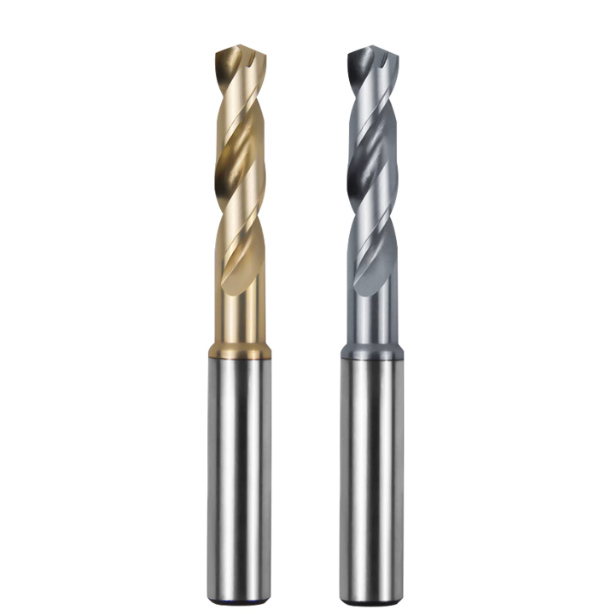
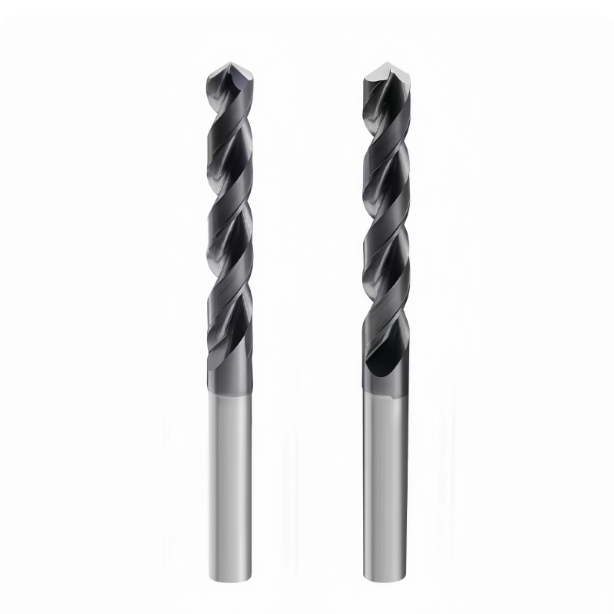
As a dedicated SAMHO drill bit manufacturer team with over 15 years on the floor, we know consistent cycle times come down to specific tool micro-geometries. The best drill bits for drilling titanium balance five factors: substrate flexural toughness, self-centering points, internal coolant channels, hot-hardness coatings, and controlled edge preparation.
Take a close look at your setup: is your tooling cleanly cutting titanium, or is it merely grinding the bore under extreme friction?
Why We Insist on Ultra-Fine Grain Substrates: Understanding the Critical Threshold for Chipping Resistance in Carbide Drill Bits for Titanium
Look through any tooling catalog, and you will see claims of “premium virgin tungsten carbide.” Yet shop-floor results tell a very different story. When running Ti-6Al-4V, we urge engineers to look past simple macro-hardness (HRA/HV) and inspect grain size alongside cobalt binder uniformity. High hardness means little if the substrate lacks fracture toughness; brittle tools shatter the moment spring-back occurs.
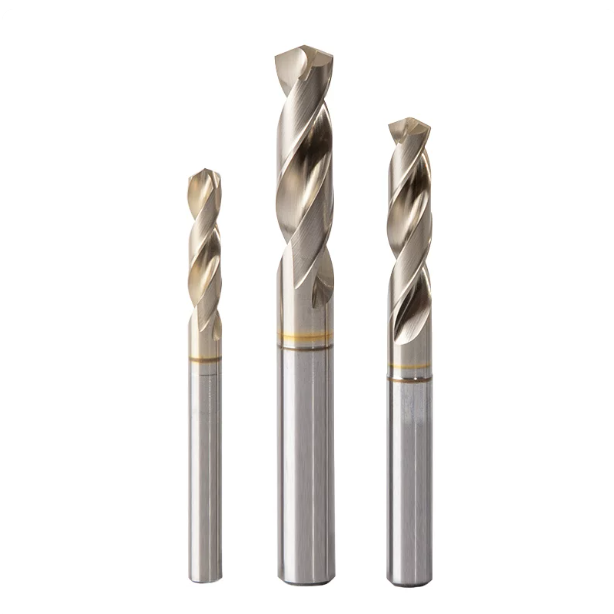
When manufacturing our specialized carbide drill bits for titanium, we hold the grain size strictly below 0.5 microns. This sub-micron structure creates a dense cobalt matrix that pushes transverse rupture strength past 4,000 MPa. When the drill hits variable cutting loads deep inside the bore, this structural toughness absorbs dynamic shocks and keeps the cutting lip intact.
On-Site Feedback from Western Clients: Why Do Standard Drill Bits Titanium Often Suffer Micro-Chipping on the First Cut?
A North American aerospace contractor recently sent us high-magnification micrographs of an early tool failure. Running production with standard drills, their operators noticed outer cutting edge chipping less than two seconds into the cut—before reaching even 1D depth. They initially blamed spindle dynamic runout or axis backlash, but on-site toolholder checks showed less than 3 microns of radial runout.
The failure stemmed entirely from the carbide grade. The shop had used general-purpose drill bits titanium built on a medium-coarse grain substrate (1.0 to 1.5 microns). Under severe shear stress and work hardening, micro-cracks propagated rapidly along the coarse grain boundaries. For aerospace parts with zero tolerance for burrs or wall score marks, that initial chip caused an immediate batch rejection.
Combining High Flexural Strength with Fine Grain Structure: Preventing Catastrophic Substrate Fracture Under High Radial Cutting Resistance
We never evaluate tooling strictly on the premise that “harder is better.” Because titanium does not conduct heat away with the chips, severe thermal stress remains locked in a tiny contact zone near the chisel edge. Combined with aggressive radial deflection forces, a brittle substrate will suffer flank micro-fractures that tear down the flute, ending in sudden tool breakage.
To stop that failure chain, industrial-grade titanium drill bits need the tight grain boundaries of sub-micron tungsten carbide to arrest fatigue cracks early. A uniform grain structure also provides the solid foundation needed to grind a clean, micro-honed edge without notch defects. While sourcing premium sub-micron carbide rods increases manufacturing costs, it eliminates the much higher expense of extracting broken drills from ruined workpieces.
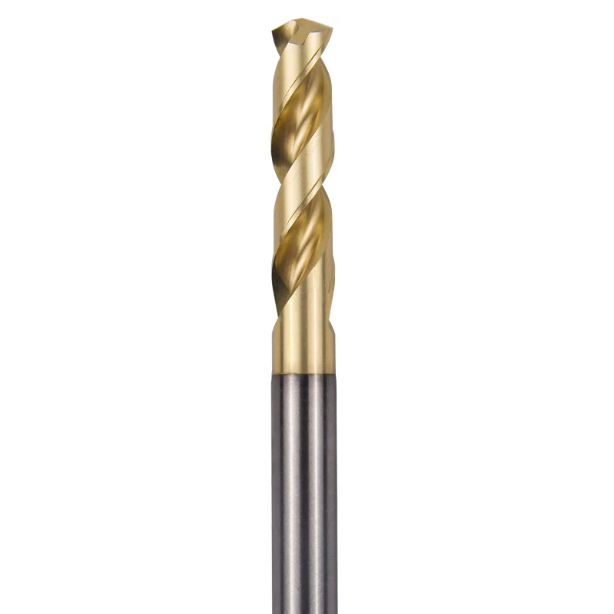
140° Self-Centering Point Angle and Chisel Edge Modification: What Defines a True Titanium-Specific Drill Bit?
When troubleshooting hole walk on the shop floor, operators often reflexively drop their feed rates or add a spot-drilling cycle. However, standard 118° or 135° point angles create an overly long cutting lip in high-yield titanium alloys. This extended contact profile generates severe radial force imbalances, triggering high-frequency chatter at the hole bottom.
By widening the point angle to 140°, we deliberately shorten the active cutting edge engagement. This geometry channels initial cutting resistance inward toward the tool center line rather than deflecting the margins. For high-volume production, choosing a dedicated drill bit for titanium with a 140° self-centering point locks position immediately upon contact, eliminating wander without guide bushings.
Eliminating Entry Wobble: Skipping the Spotting Operation While Ensuring Immediate Penetration of the Work-Hardened Layer
Spot drilling Ti-6Al-4V is often a trap. When troubleshooting scrap rates with customer machinists, we regularly trace failures back to the spot drill’s dwell. Even a fraction of a second of rub glazes the bottom, forming a work-hardened shell. When the primary drill engages this localized hard spot, uneven side-loading chips the outer corners instantly.
A 5-axis CNC ground self-centering chisel eliminates pilot drilling entirely. The specialized web point punches straight into the raw alloy matrix before surface hardening can initiate. To confirm you have the best drill bits for drilling titanium, run an unspotted plunge at target feed on a rigid VMC: clean shear lines confirm immediate penetration, while raised exit burrs reveal rubbing.
Reducing Thrust Load: How an Optimized Split Point Eliminates Friction-Induced Heat Buildup
An unmodified chisel edge does not cut metal—it plows through it as a negative-rake extrusion flat. On our dynamometer tests, 50% to 60% of total axial thrust concentrates directly on this narrow web area. In low-conductivity titanium alloys, that intense localized displacement pushes interfacial temperatures past 600°C within milliseconds, instantly degrading the core.
Thinning the web with a precision split point adds positive rake angles to the center cutting lips, dropping machine thrust requirements by over 30%. Knowing what are the best drill bits simply comes down to checking chip color and shape in the bin. A proper split point ejects tightly curled silver-gray chips right from the center, preventing hot material from welding into a built-up edge.
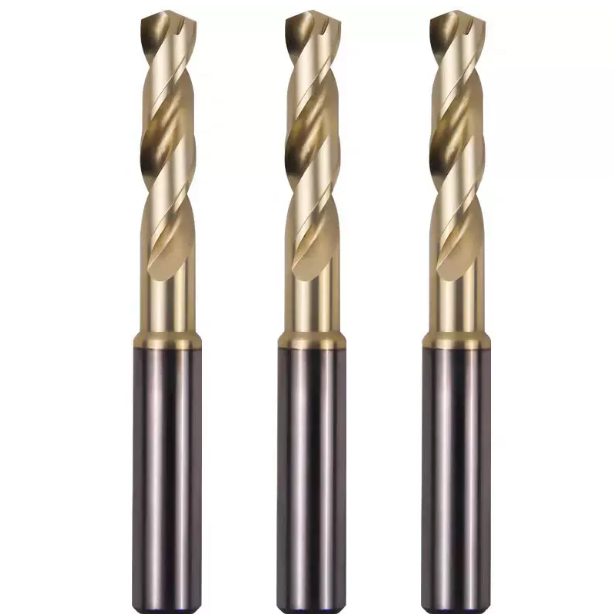
Chip Evacuation Geometry and Internal Coolant Channel Design: Determining the Best Drill Bits for Titanium Alloys
Machinists often blame sudden drill failures on substrate brittleness, but spindle teardowns tell another story: over 60% of catastrophic tool fractures stem from chip pack in the flutes. Titanium chips have high tensile strength and intense elastic memory. Once sheared from the cut, they violently expand outward against the narrow flute channels.
If flute profiles lack generous cross-sectional clearance, chips cannot roll tightly. Instead, they pack against the bore wall, creating severe friction spikes that stall the spindle. To verify what are the best drill bits for exotic alloys, we profile the flute curvature using optical comparators; chips must clear the cutting zone in milliseconds to protect tool life.
Practical Chip Evacuation with Polished High-Helix Flutes: Preventing Secondary Compression and “Seizing”
In medical bone screw and aerospace valve production, drilling past 3xD depth exposes the limits of standard 30° flutes. Titanium chips begin to stall midway up the helix, forcing incoming chips behind them into a dense wedge. This rapid buildup spikes torque until the tool snaps flush inside the workpiece.
We address this by pairing a 30° to 33° high helix with mirror-polished flute surfaces. Micro-polishing removes grinding wheel transverse feed marks, wiping out sliding resistance. This lets our carbide drill bits for titanium glide chips out smoothly at high RPM, preventing flute galling and eliminating wall scratches.
Why External Coolant Is Merely Supplementary: The Decisive Role of 30+ Bar Through-Coolant Channels
Flood coolant on a standard drill provides little real protection when drilling Ti-6Al-4V deeper than 2xD. Centrifugal force and rising chips form an impenetrable barrier at the hole mouth, blocking fluid from reaching the point. The bottom of the cut runs dry, and the tool tip quickly overheats.
Running through-spindle coolant at 30+ bar delivers fluid straight to the shear zone and chisel edge. This creates a hydraulic piston effect that blasts chips out of the hole while dropping interface temperatures instantly. To get maximum tool life from the best drill bits for drilling titanium, high-pressure internal delivery is mandatory to stop thermal wear before it starts.
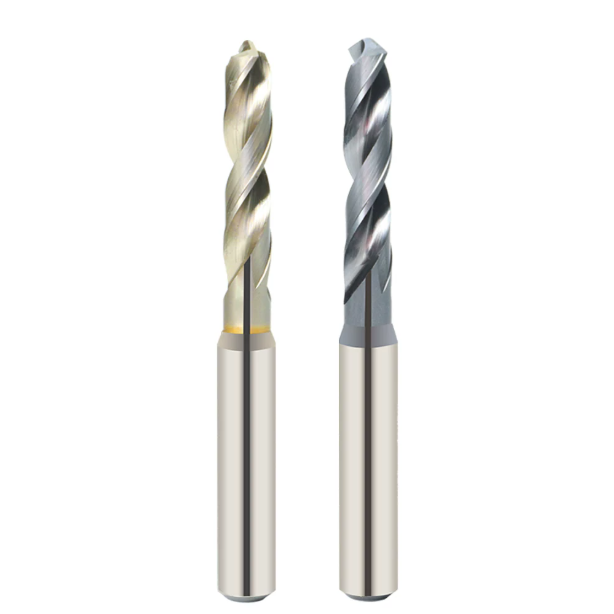
Nanocomposite Coating (AlTiN/TiAlSiN): A High-Temperature Barrier Against Titanium Adhesion
In difficult-to-cut alloys, machinists often repeat “no coating, no machining,” but stacking coating thickness on Ti-6Al-4V quickly backfires. Titanium’s intense chemical affinity causes rapid solid-state diffusion and cold welding against bare carbide. Once a thick coating delaminates under heavy shear stress, the exposed substrate develops micro-pitting immediately.
Our PVD furnace trials prove that stable tool life for titanium drill bits relies entirely on the aluminum-to-silicon ratio within a nanolayered architecture. Introducing silicon into a TiAlSiN structure drops the friction coefficient to 0.35 while delivering outstanding anti-adhesion performance. This allows red-hot chips to glide off the cutting zone rather than welding onto the margin.
Don’t Mistake TiN for a Wear-Resistant Coating: Analyzing Hot Hardness and Oxidation/Spalling Resistance in the 900°C Cutting Zone
Apprentices often mistake bright golden Titanium Nitride (TiN) as the standard for exotic alloys, which consistently causes field failures. TiN begins oxidizing at just 550°C to 600°C. When running deep holes at 30 to 40 m/min, localized cutting zone heat easily spikes past 800°C, causing conventional thin coatings to peel off like burnt paper.
High-aluminum AlTiN and nanocomposite layers react differently under extreme heat: aluminum atoms migrate to the surface, forming an in-situ amorphous Al2O3 passivation shield. This nanoscale armor enables premium carbide drill bits for titanium to maintain hot hardness near 1,000°C. It stops thermal shock from softening the core, preventing catastrophic cutting edge collapse.
Inhibiting Crater Wear and Built-Up Edge (BUE): A Critical Barrier for Maintaining Hole Wall Finish
When drilling titanium components, fluctuating tolerances and stringy bore finishes usually trace back to Built-Up Edge (BUE). Under a 200x toolmaker’s microscope, you will often find workpiece material cold-welded near the main lip. As BUE repeatedly forms and shears away during feed cycles, it plucks carbide grains straight from the surface, leaving crater wear.
To hold an Ra 0.8 finish across 100+ cycles, running high-density drill bits titanium serves as your primary line of defense. An inert, ultra-dense coating surface cuts off chemical affinity with the cobalt binder phase, preventing micro-scale cold welding. Keeping cutting edges crisp and clean controls flank friction and elastic springback, protecting hole diameter consistency.
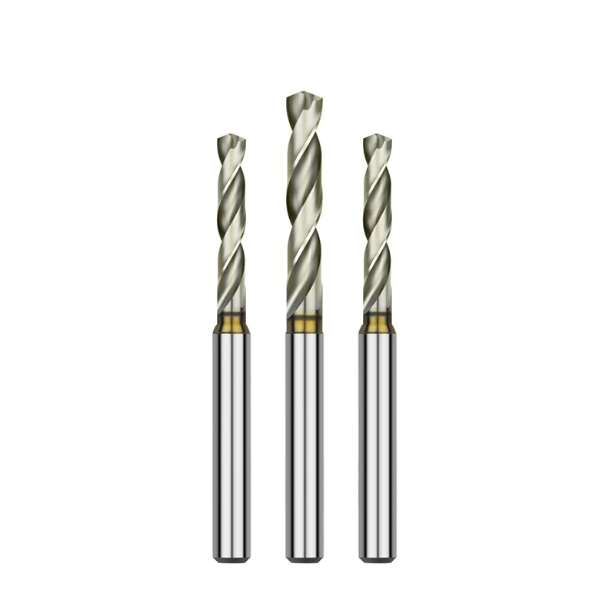
Micro-Honing and Runout Control: Shop-Floor Testing to Identify the Best Drill Bits for Deep-Hole Titanium Machining
Many operators believe cutting gummy titanium requires an edge honed sharp as a razor blade. However, deep-hole production proves that an unconditioned, raw ground edge fails immediately upon workpiece entry. Under magnification, standard ground edges show microscopic grinding fractures that chip away under axial impact, setting off cascading edge failure.
Conversely, an oversized hone turns clean shearing into destructive extrusion, instantly hardening the hole bottom. During our routine batch trials, we evaluate the interaction between controlled edge preparation and dynamic runout to define the best drill bits for drilling titanium. This balance dictates whether your tooling will survive 5D deep-hole cycles or fracture midway.
Controlled 5-Micron Edge Honing: Why Being Either Too Sharp or Too Dull Rapidly Destroys Carbide Drills with Internal Coolant
While consulting for an orthopedic bone plate manufacturer, we tracked erratic tool life swinging unpredictably between 15 and 20 holes per drill. Micro-inspection of their worn drills revealed uncontrolled edge prep: sections of the cutting lip were unhoned at near-zero microns, while other areas had been aggressively polished past 15 microns.
The raw sections suffered instant micro-chipping in cold-worked titanium, while over-honed zones spiked cutting resistance and thermal friction. We switched their setup to fluid-polished 5 to 8-micron uniform edge hones. This provided the ideal balance: sharp enough to shear cold-worked layers while reinforcing coating adhesion, doubling the lifespan of their carbide drill bits for titanium.
Real-World Testing with Shrink-Fit and Hydraulic Holders: The Key to Long Tool Life via Radial Runout Control (Under 3 Microns)
Even optimized tool geometry fails when paired with loose tool-holding setups. Using standard ER collets on extended overhangs often produces runout beyond 10 microns, forcing one cutting lip to take 100% of the initial load while the other rubs. This severe asymmetrical loading fractures the overstressed margin within seconds.
To unleash the full potential of a high-performance drill bit for titanium, total assembly runout must stay strictly within 3 microns. We recommend pairing your drills with precision hydraulic chucks or shrink-fit holders for deep-hole cycles. Hydraulic oil layers dampen high-frequency vibration, ensuring both cutting lips share identical chip loads throughout the cut.
A Manufacturer’s Perspective: How SAMHO Helps Workshops Reduce Cost-Per-Hole
On the shop floor, focusing strictly on tooling purchase orders distorts actual machining economics. True profitability relies on cost-per-hole—factoring in tool longevity, spindle uptime, and scrap rates. Substrate toughness, self-centering tips, polished flutes, nanocomposite coatings, and edge prep must work seamlessly with your spindle rigidity and coolant supply.
As the engineering team behind SAMHO drill bit manufacturer, we never push generic catalog solutions for complex alloys. We study machine stability, operating horsepower, and batch sizes to balance edge strength against wear life. If you face constant tool fracture, hole taper, or torn finishes in titanium, look past simple tool swapping and re-evaluate your full setup.
Reducing Scrap Rates via Geometry Customization in Batch Production of Aerospace Components and Medical Titanium Bone Screws
Standard catalog drills often struggle across the differing needs of aerospace brackets and medical TC4 ELI bone screws. Thin-walled aerospace components vibrate under heavy cuts, while miniature bone screws require deep-hole straightness up to 8D. In both cases, minor exit burrs or inner bore tears result in immediate scrap.
During our custom grinding runs, we alter web thickness, back-taper, and clearance angles on carbide drill bits for titanium to match the component’s exact physical rigidity. If you are struggling with deep-hole ratios or chatter on thin-walled parts, send us your part prints and fixturing details so our engineers can configure a custom flute geometry.
Cutting Parameter Guidelines for CNC Production Scheduling: Spindle Speed, Feed per Revolution, and Tool-Change Thresholds
Drilling titanium allows virtually zero process margin: running outside the target envelope causes rapid heat collapse. For Ti-6Al-4V running 30+ bar through-coolant and under 3-micron runout, we recommend a surface speed (Vc) of 28 to 42 m/min. Maintain chip load firmly at 0.03 to 0.08 mm/rev to slice through work-hardened zones without rubbing.
Never wait for spindle load monitors to alarm before swapping your drill bit for titanium. Set a strict tool-life protocol: inspect the secondary flank using an optical loupe at fixed hole counts, pulling the tool once flank wear hits 0.15 mm or chips turn from silver-gray to purple ribbons. If you are establishing an aerospace or medical production run, contact us with your material specs to benchmark speeds and feeds together.